Two-Bounce Rule vs Double Bounce Fault: What Every Pickleball Player Needs to Know

If you have ever heard someone yell "Let it bounce!" mid-rally, you already know pickleball has some unique rules. The two-bounce rule and the double-bounce fault sound almost identical, yet they govern completely different situations on the court. Mixing them up is one of the most common mistakes new players make.
Here is the confusion: one rule tells you what you must do at the start of every point. The other describes a mistake that can happen at any moment during play. Get them backwards, and you will hand your opponents free points without even realizing why.
The good news? Once you understand the difference, you will never second-guess yourself again. Let's break down both rules so you can step onto the court with confidence.
So, What Exactly Is the Two-Bounce Rule?
The two-bounce rule applies only at the start of every rally. According to USA Pickleball Rule 7. A, Each side must make one groundstroke before either team can volley. In plain terms, the served ball must bounce once on the receiver's side, and then the return must bounce once on the server's side.
Only after those two bounces can players legally hit the ball out of the air.
Why Does the Two-Bounce Rule Exist?
Pickleball's founders designed this rule for two important reasons:
- Longer rallies: Tennis players often dominate with serve-and-volley tactics. The two-bounce rule neutralizes that advantage and keeps points competitive for all skill levels.
- Fair positioning: Forcing the serving team to wait for a bounce gives the return team time to advance toward the non-volley zone (kitchen).
Wait, Then What Is the Double Bounce Fault?
A double-bounce fault can happen at any moment during a rally, not just the opening sequence. According to USA Pickleball Rules 7.E and 11.A.1, a fault occurs when the ball bounces twice on the same side before a player returns it. The instant that the second bounce hits the court, the rally ends. No recovery is possible.
Quick Comparison: How These Rules Differ?
Two-bounce rule: A mandatory sequence at the start of every point. The serve bounces, the return bounces, and then volleys become legal.
Double-bounce fault: A mistake that ends the rally whenever the ball bounces twice on one side. Applies throughout the entire point.
One is a requirement you must follow. The other is an error you want to avoid.
Mistakes That Cost You Points
Many recreational players lose points because they confuse these rules or forget the sequence:
- Volleying the serve: Hitting the serve before it bounces results in an immediate fault.
- Volleying the return: The serving team must let the return bounce. Rushing to the net too early often leads to this violation.
- Slow court coverage: Failing to reach a ball before its second bounce turns a playable shot into a lost point.
How to Use the Two-Bounce Rule to Your Advantage?
For servers: Stay behind the baseline after serving. You need room for the return to land. Use a split-step as your opponent strikes the ball, then decide whether to hit a third-shot drop into the kitchen or drive the ball if the return sits up high.
For receivers: Hit a deep return with height. A high-arcing return buys you time to move toward the kitchen line and establish position before the serving team's third shot arrives.

Why Does Your Paddle Matter for Ball Control?
Mastering the two-bounce rule requires precise shot-making, especially on third-shot drops and deep returns. A paddle with good touch and control helps you place the ball exactly where you need it.
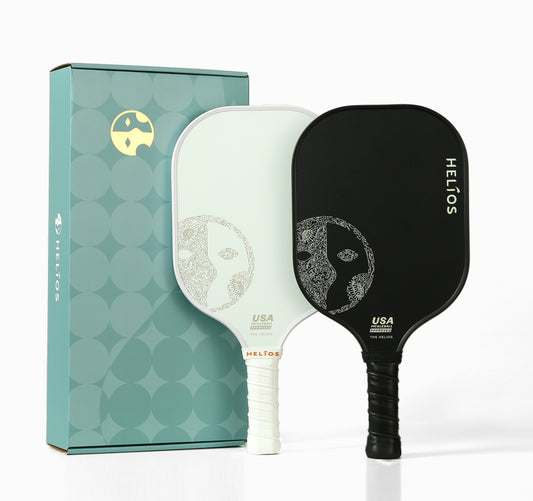
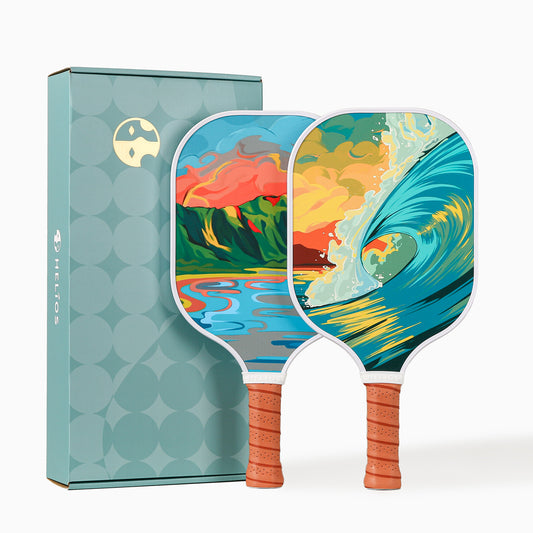
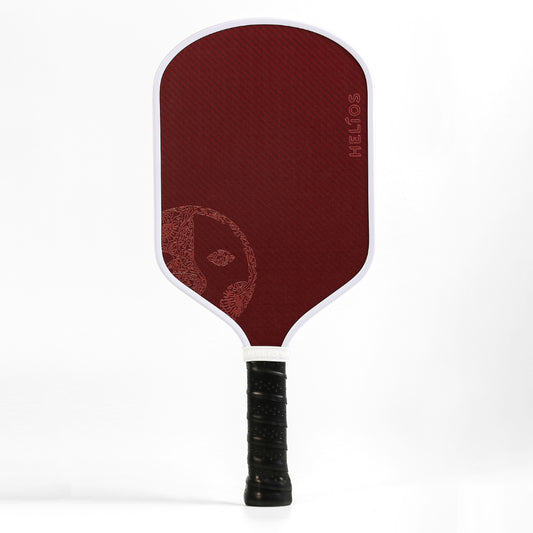
At Helios, we design paddles specifically for players who value both power and precision. Our Helios paddle delivers the balance and feel needed for soft kitchen drops, while the Apollo offers more power for aggressive drives. If you are just starting, the Helios Beginner Paddle Set provides everything you need to learn proper technique from day one.
Frequently Asked Questions
Q: Can I volley the third shot after both required bounces happen?
Yes. Once the serve and return have each bounced, volleys are legal. Just stay out of the non-volley zone while doing so.
Q: What if my opponent volleys my return of serve?
That is a fault against the serving team. The return must bounce before they can hit it.
Q: How many bounces are allowed in pickleball?
Only one bounce per side is allowed. If the ball bounces twice on your side before you return it, you lose the rally.
Q: Does a half-volley count as a groundstroke for the two-bounce rule?
Yes. A half-volley (hitting the ball immediately after it bounces) counts as a groundstroke because the ball touched the ground first. It satisfies the bounce requirement.
Q: Can I stand in the kitchen to return the serve?
You can stand anywhere on your side, including the kitchen. The non-volley zone only restricts volleys. Since the serve must bounce before you hit it, returning from inside the kitchen is legal.
Q: What happens if the serve clips the net and lands in? Do I still let it bounce?
Yes. The let-serve rule was eliminated in 2021. Any serve that lands in the correct service court is live, even if it touches the net. You must still let it bounce before returning.
Q: Is the ball dead immediately after the second bounce?
Yes. The rally ends the instant the second bounce occurs. Any swing after that point does not count.
Take This to the Court
Remember the simple distinction: the two-bounce rule is a required opening sequence (serve bounces, return bounces, then volleys are allowed). The double bounce fault is an error that happens when the ball bounces twice on one side.
Master this difference, and you will stop giving away free points. Now grab your paddle and put it into practice.