Third Shot Drop vs Drive: When to Use Each

You served, the return is on its way back. You have a fraction of a second to decide: soft drop into the kitchen, or hard drive at the opponent's feet? That decision shapes the entire rally. Get it right and you control the net. Get it wrong and you are pinned at the baseline watching the other team dictate every shot.
The third shot drop vs drive choice is the single most talked-about decision in pickleball. And for good reason. It is the shot that transitions you from defense (serving team, stuck at the baseline) to offense (at the kitchen line, controlling the point). Here is how to make that call.
What Each Shot Does and Why It Matters

Both shots serve the same goal: getting you and your partner to the kitchen line. They just do it differently. The right paddle helps with both, but the drop vs drive decision comes down to reading the ball, the court, and your opponent.
The Third Shot Drop
A third shot drop is a soft, arcing shot that travels upward from your baseline, clears the net by 2 to 4 feet, and lands softly in or near the opponent's kitchen. The ball should bounce low and take pace off the rally.
Why it works: the drop forces your opponent to hit up on the ball from below net height. That limits their attack options and gives you time to move forward through the transition zone toward the kitchen line.
The Third Shot Drive
A third shot drive is a fast, flat shot aimed low over the net, usually targeted at your opponent's feet, hip, or backhand side. The ball stays on a straight line with very little arc.
Why it works: the drive puts immediate pressure on your opponent. A well-placed drive can force a weak return (a "pop-up") that your partner can put away at the net. It also keeps your opponent on the defensive and disrupts their rhythm.
The Decision Framework
Knowing when to use third shot drive versus drop comes down to four reads. Check these before you swing.
| Read | Drop | Drive |
|---|---|---|
| Ball height at contact | Below the net | At or above the net |
| Return depth | Short (you are inside the baseline) | Deep (you are behind the baseline) |
| Opponent position | Both opponents settled at the kitchen | One or both still moving forward |
| Your comfort level | You trust your touch game | You trust your power game |
If two or more of those reads point the same direction, the decision is made. A low ball from deep in the court with both opponents at the kitchen screams drop. A high ball from mid-court with an opponent in transition screams drive.
Third Shot Drop Technique

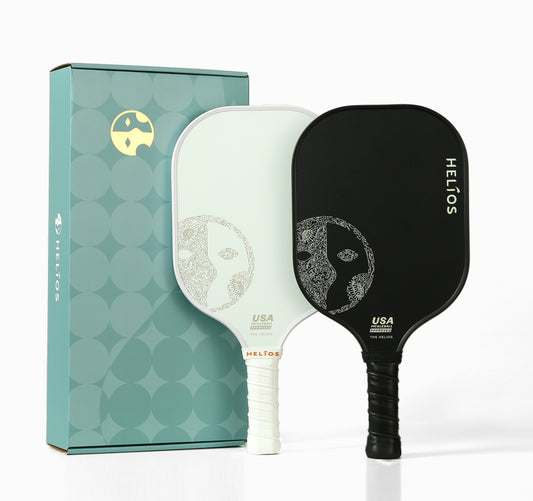
The third shot drop technique is about touch, not power. Your arm does less work than you think. The performance paddle collection with carbon fiber faces gives crisper feedback on drops, which helps with distance control.
Grip Pressure
Loosen your grip to about 3 out of 10. A tight grip kills the softness you need. A fresh overgrip gives you enough tack to hold the paddle securely even with light pressure.
Paddle Face
Open the face slightly (angled upward about 30 to 45 degrees). The open face puts lift on the ball so it arcs over the net and drops down into the kitchen.
Contact Point
Hit the ball in front of your body, not beside or behind you. Forward contact gives you the best angle and the most consistent depth.
Motion
Push forward, do not swing. Think of guiding the ball rather than hitting it. Your arm extends toward the target with a smooth, controlled motion. No wrist flick. No backswing larger than 12 inches.
Follow Through
Low and forward. Your paddle should finish pointing toward your target at about waist height. A high follow-through sends the ball long.
When to Use Third Shot Drive
The drive is the aggressive option. Use it when the situation gives you a ball you can attack.
Ball Is at or Above Net Height
If the return bounces high and you contact the ball at chest or shoulder height, you have a downward angle. A drive from above the net is much harder for the opponent to handle than a drop from the same position.
Return Is Deep and Fast
A deep, pacy return pushes you behind the baseline. From that distance, a quality drop is harder to execute because the ball has to travel farther with more precision. A drive is a higher-percentage play when you are 5 or more feet behind the baseline.
Opponent Is in Transition
If one or both opponents are still moving forward (not yet at the kitchen line), a drive aimed at their feet catches them in no-man's-land with no time to set up. Driving at a player in the transition zone is one of the highest-percentage plays in the sport.
You Want to Set Up Your Partner
A drive to the opponent's body or backhand often produces a weak return (a pop-up). If your partner is already at the kitchen line, that pop-up becomes a put-away volley. The drive does not have to win the point. It just has to create the opening.
The Mix Is the Real Weapon

Pickleball third shot strategy at higher levels is not about choosing one shot and sticking with it. It is about mixing. If you drop every third shot, your opponents stop respecting the drive and cheat forward. If you drive every third shot, they sit back and block. The unpredictability of mixing both keeps your opponents guessing and off-balance.
A simple pattern: drive the first third shot of the game to establish that you are willing to attack. Drop the second. Then read the situation and choose based on the four reads above. Over time, the drop vs drive decision becomes instinct rather than calculation.
Gear That Supports Both Shots
A paddle that handles both drops and drives gives you the flexibility to mix without compromising either shot.
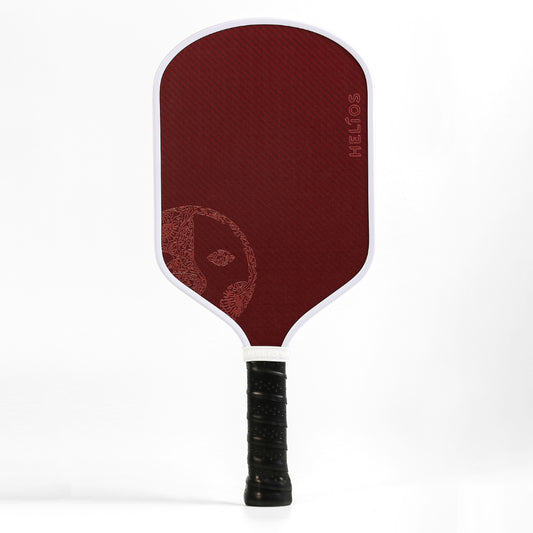
- Performance paddles with carbon fiber faces give precise control on drops and firm response on drives
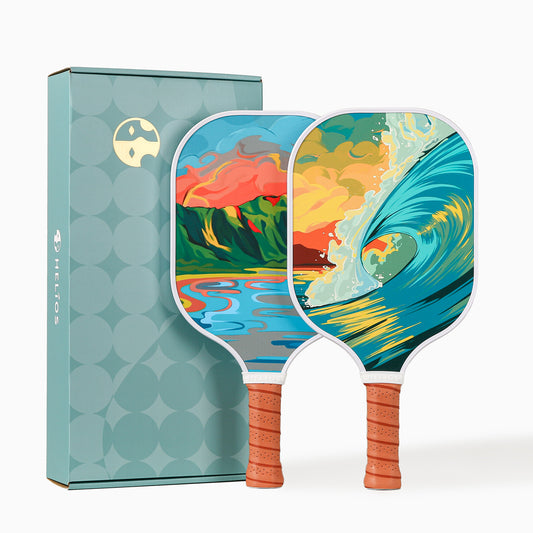
- Recreational paddles with fiberglass faces offer a softer touch on drops with natural pop on drives
- A 13mm core balances touch and power; 16mm favors touch, under 13mm favors power
- A paddle set with two paddles lets you test different feels for each shot type
Make the Read, Make the Shot
The third shot drop vs drive debate does not have a single answer. Both shots win points. The players who improve fastest are the ones who stop defaulting to one and start reading the situation. Ball height, return depth, opponent position, and your own confidence tell you which shot to hit. Trust the read, commit to the shot, and move forward.
Browse the Helios collection for paddles built to handle soft kitchen drops and hard baseline drives with equal control.
Frequently Asked Questions
Should beginners focus on the drop or the drive?
Start with the drop. A reliable third shot drop is the foundation of getting to the kitchen line, which is where most points are won. Add the drive once your drop is consistent enough to clear the net 7 out of 10 times from the baseline.
What is the biggest mistake players make on the third shot drop?
Trying to hit it too perfectly. Aiming to skim the net tape from 30+ feet away is a low-percentage play. Give yourself 2 to 3 feet of clearance over the net. A drop that lands mid-kitchen is better than one that hits the tape.
When should I always drive the third shot?
When the return bounces high (above net height), when you are pushed deep behind the baseline, or when an opponent is caught in the transition zone. In all three cases, a drive is a higher-percentage play than a drop.
Does paddle weight affect the third shot drop?
Yes. A lighter paddle (7.3 to 7.8 oz) gives more wrist control for soft drops. A heavier paddle (8.0+ oz) adds stability on drives but can make delicate drops harder to control. Most players find the best balance between 7.5 and 8.0 oz.
How do I practice the third shot drop alone?
Stand at the baseline and aim drops into the kitchen over the net. Place a target (towel, cone) in the kitchen and try to land 7 out of 10 within a paddle-length of the target. Focus on open paddle face, forward push, and low follow-through.
What grip pressure should I use for a drop vs a drive?
Light grip (3 out of 10) for drops. Firm grip (6 to 7 out of 10) for drives. A tacky overgrip helps you maintain a secure hold at low grip pressure without squeezing. Replace your overgrip every 2 to 4 weeks with regular play.