T700 Carbon Fiber vs T300: Which Pickleball Paddle Material Is Worth It?

You have seen T700 and T300 all over paddle descriptions, but what do these numbers actually mean for your game? Should you spend more on a T700 carbon fiber paddle, or will T300 do the job just fine?
Let us cut through the marketing and look at the real differences between these two carbon fiber grades, backed by material science and on-court performance.
Buy Carbon Fiber Pickleball Paddles
What Do T700 and T300 Actually Mean?
T700 and T300 are grades of carbon fiber used in paddle face construction. The numbers refer to tensile strength, which measures how much stress a material can handle before breaking. Both grades share the same stiffness (230 GPa), but their strength differs significantly.
- T300 tensile strength: 3,530 MPa
- T700 tensile strength: 4,900 MPa (approximately 39% stronger)
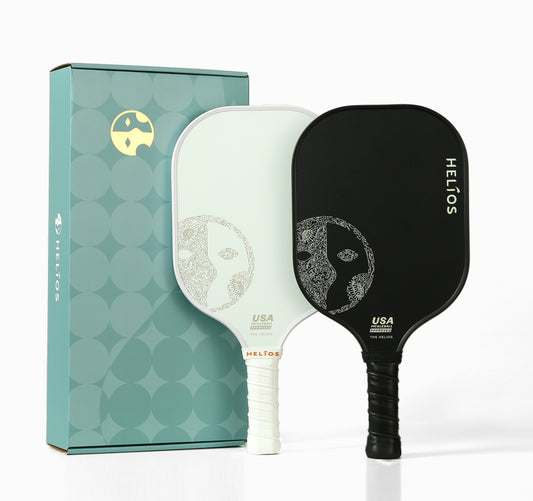
In plain terms, T700 can handle more punishment before it fails. That extra strength gives paddle manufacturers more flexibility to create faces that feel crisp, responsive, and durable over time. Our Toray Performance Pickleball Paddle Set uses premium carbon fiber for exactly that reason.
Here's How T700 and T300 Actually Compare
If you want the quick version, here are the key differences between these two carbon fiber grades and what they mean for your game.
|
T700 Carbon Fiber |
T300 Carbon Fiber |
|
|
Tensile strength |
4,900 MPa |
3,530 MPa |
|
Stiffness |
230 GPa |
230 GPa |
|
Feel at contact |
Crisp & responsive |
Softer & forgiving |
|
Durability |
Higher |
Moderate |
|
Surface texture |
Smoother (naturally) |
Naturally rougher |
|
Spin potential |
Same as T300 |
Same as T700 |
|
Mishit tolerance |
Less forgiving |
More forgiving |
|
Lifespan |
1–2 yrs (longer) |
1–2 yrs (shorter end) |
|
Price |
Premium |
Budget-friendly |
|
Best for |
Competitive players, frequent play, baseline power & responsiveness |
Beginners, recreational players, casual play, value-focused buyers |
Strength
T700 is 39% stronger than T300 at the fiber level. In practical terms, this means T700 faces resist micro-deformations and surface wear better over months of play. When you hit thousands of balls, that extra strength helps the paddle maintain its original performance characteristics.
Feel at Contact
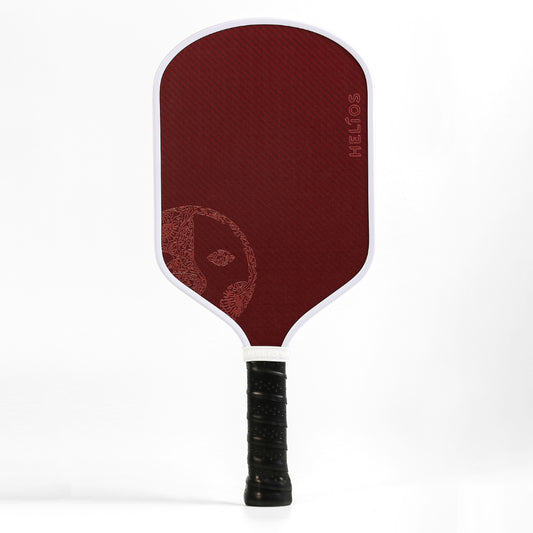
T700 plays crisper and more responsive, giving you clear feedback on every shot. T300 feels softer with more natural flex, which some players prefer for touch shots at the kitchen line. The Helios paddle is designed to balance soft touch with enough responsiveness for confident net play.
Durability
T700 maintains its pop and consistency longer, especially for players who hit hard and play multiple times per week. T300 performs reliably but may show signs of wear sooner under heavy use. Keep in mind that core construction and edge guards also play a major role in how long any paddle lasts.
Surface Texture
T300 has a naturally rougher surface due to its manufacturing process, while T700 appears smoother. However, both grades can be textured by manufacturers to maximize spin within USA Pickleball legal limits. The fiber grade alone does not determine how much spin you can generate.
Price
T300 paddles typically cost less because the material is more affordable to produce. T700 commands a premium, but many competitive players find the performance and longevity benefits justify the extra investment.
Who Each Grade Is Best For
T700 suits competitive players who want maximum durability, crisp feedback, and a paddle that performs consistently over time. T300 works well for recreational players, beginners, and anyone who prioritizes value without sacrificing quality.
So Which One Should You Choose?
Your playing style and goals matter more than the carbon fiber grade alone. Here is a simple framework:
Consider T300 if:
- You are new to the sport and want a forgiving paddle
- You play casually a few times per week
- Budget is a primary concern
Consider T700 if:
- You play competitively or multiple times per week
- You want maximum responsiveness and feedback
- Long-term durability matters to you
For players who want aggressive power at the baseline, the Apollo delivers the responsive feel and durability that competitive players demand.

One Thing Most Comparisons Miss
Core thickness and swing weight often affect feel more than the carbon fiber grade. A 16mm T700 control paddle can play softer than a 13mm T300 power build. When making your carbon fiber paddle comparison, look at the complete paddle specs, not just the face material.
New to the game and not sure where to start? The Helios Beginner Pickleball Paddle Set takes the guesswork out of your first purchase with a balanced design that grows with your skills.
Frequently Asked Questions
Q: Is T700 worth the extra cost?
For competitive players who value durability and crisp feedback, yes. For recreational players, T300 offers solid performance at a lower price.
Q: Does T700 generate more spin than T300?
No. Surface texture determines spin potential, not fiber grade. Both must comply with USA Pickleball roughness limits.
Q: Can beginners use a T700 paddle?
Absolutely. The stiffer feel might be less forgiving on mishits, but it provides excellent feedback that can help you improve faster.
Q: How long do carbon fiber paddles last?
With regular play, expect 1-2 years before noticeable performance decline. T700 paddles typically maintain their characteristics longer than T300.
Q: I actually feel the difference between T700 and T300 on court?
Most players notice T700 feels crisper with more defined feedback, while T300 feels slightly softer. The difference is more apparent on hard hits and fast exchanges than on soft dinks.
The Bottom Line
The T700 vs T300 paddle debate comes down to how you play and what you prioritize. T700 offers higher strength, better durability, and crisper feedback. T300 delivers reliable performance at a friendlier price point. Either way, carbon fiber beats most alternatives for consistency and feel.
Ready to find your perfect paddle? Browse our full collection and get on the court.