Pickleball Singles vs Doubles Rules What You Need to Know Before Playing
Most Players Get Confused Between Singles and Doubles Rules

You show up at the court, ready to play. Your partner's sick, so you decide to try singles for the first time. You serve from the right side, call out "3-2," and everyone stares at you. What went wrong?
The confusion between pickleball doubles rules and singles pickleball rules trips up even experienced players. Scoring calls sound different. Serving rotation changes completely. Court boundaries shift. Strategies flip upside down.
Most players learn doubles first because recreational courts fill up with four people naturally. But when you switch to singles, every assumption you made about pickleball court positioning, side-out rules, and doubles serving rotation suddenly doesn't apply. You're not just covering more ground, you're playing a fundamentally different game with distinct regulations.
Whether you're trying singles for the first time or you keep mixing up the rules between formats, understanding the differences prevents embarrassing mistakes and lost points. Both formats share the same court and basic structure, but the nuances separate players who truly understand the game from those just hitting balls.
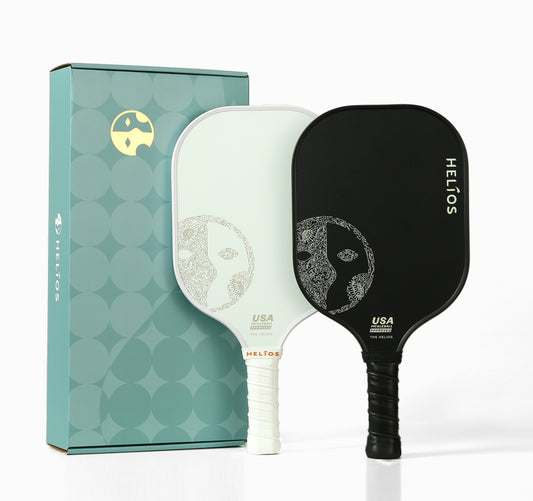
Want a paddle that performs equally well in both formats? A widebody paddle with accelerated core delivers raw power for singles while maintaining control for doubles net exchanges.
What are the main scoring differences between singles and doubles?
Scoring differences between formats cause more confusion than any other rule variation. The numbers work differently, and calling the score requires different patterns.
Doubles scoring uses three numbers
In pickleball doubles rules, you call three numbers before every serve: serving team's score, receiving team's score, and server number (1 or 2).
Example: "7-3-2" means your team has 7 points, opponents have 3, and you're the second server on your team.
The server number changes everything. When the first server loses a rally, the second server takes over. Only after both servers lose rallies does a side-out occur and possession passes to opponents.
Singles scoring uses two numbers
Singles pickleball rules simplify scoring dramatically. You call only two numbers: your score and your opponent's score.
Example: "5-2" means you have 5 points and your opponent has 2.
No server numbers exist because you're alone. When you lose a rally, your opponent immediately serves. No second chances, no partner backup.
First serve exception in doubles
At game start, only one player serves in doubles before the first side-out the player on the right side. Call the score as "0-0-2" to indicate you're starting as the second server. After losing that first rally, opponents gain serve immediately.
Why start as server 2? Prevents the first serving team from having an unfair advantage with two servers before opponents get a chance.
Serving side determination
Both formats use the same rule: serve from the right court when your score is even (0, 2, 4, 6, 8, 10). Serve from the left court when your score is odd (1, 3, 5, 7, 9, 11).
In doubles, the serving team switches sides after winning rallies. The receiving team never switches sides until they win serve through a side-out.
In singles, you personally switch sides based on your own score. Win a point? Switch sides and serve from the opposite court.
If you're just starting out and learning both formats, a beginner-friendly paddle with reactive core offers the ideal blend of control and power for mastering scoring in both games.
Read More About Side Outs in Pickleball: Rules & Strategies
How does serving rotation work in each format?
Doubles serving rotation represents the most complex aspect of doubles play. Singles pickleball rules keep serving much simpler.
Doubles serving sequence
When your team wins serve through a side-out, the player on the right side serves first as server number 1. After winning a rally, that player switches sides and serves from the left court. Continue serving and switching sides until losing a rally.
After the first server loses, the partner becomes server number 2. Now the partner serves, following the same pattern switching sides after winning rallies, continuing until losing a rally.
After both partners lose rallies, a side-out occurs. Opponents gain serve, and the cycle repeats.
Singles serving simplicity
Singles pickleball rules eliminate all rotation complexity. You serve until you lose a rally. Your opponent then serves until losing a rally. Back and forth without any partner coordination.
Serve from whichever side corresponds to your score. Win a point? Switch sides. Lose a rally? The opponent serves from their correct side based on their score.
Common serving mistakes between formats
Doubles players switching to singles often call three numbers out of habit. "4-2-1" makes no sense in singles. Just call "4-2."
Singles players trying doubles forget to call the server number. Calling "6-3" in doubles creates confusion: is the first or second server serving?
Another mistake: forgetting the first serve exception in doubles. Starting the game and calling "0-0-1" is wrong. Always start "0-0-2."
Need an elongated paddle for extended reach during aggressive serves? Extended hitting surfaces help with both singles power and doubles precision.
Does court positioning change between singles and doubles?
Pickleball court positioning rules change dramatically between formats, though court dimensions stay identical.
Court boundaries remain the same
The full court measures 20 feet wide by 44 feet long. Both singles pickleball rules and pickleball doubles rules use identical court boundaries. The full 20-foot width applies to both formats. No boundary restrictions exist.
Non-volley zone (kitchen) rules
The kitchen remains 7 feet deep on both sides of the net in both formats. Rules stay identical; you cannot volley while standing in or touching the kitchen line.
What changes is positioning strategy. In doubles, partners coordinate kitchen line positioning, staggering or stacking based on shot selection. One player might hang back while the other moves forward.
In singles, you alone control kitchen positioning. No coordination required, but covering the entire 20-foot width becomes exhausting. Most singles players stay deeper, using the kitchen only for specific shot opportunities.
Strategic positioning differences
Doubles players typically advance to the kitchen line together, dominating the net as a team. The pickleball court positioning strategy focuses on cutting off angles and putting away high balls.
Singles players stay back more often. Advancing to the kitchen line leaves the entire backcourt exposed. One well-placed lob and you're sprinting backward while your opponent sets up at the net.
How do side-out rules differ between formats?
Side-out rules function differently between formats due to the server number system in doubles.
Doubles side-out complexity
In pickleball doubles rules, side-out occurs only after both partners lose their serving opportunities. First server loses? Partner serves. Second server loses? Now side-out happens and opponents gain serve.
The exception happens at game start. Only one player serves before the first side-out prevents the initial serving team from having an unfair double-server advantage.
Track server numbers carefully. Losing track means confusion about who should serve next and from which side. Tournament referees call faults for out-of-rotation serving.
Singles side-out simplicity
Singles pickleball rules make side-outs automatic after every lost rally. You lose? Your opponent gains serve immediately. Your opponent loses? You regain serve instantly.
No tracking, no coordination, no confusion. Just straightforward possession changes after every rally.
Strategic implications
Doubles side-out delays create momentum swings. Your team might dominate, scoring 4-5 points on a single serving rotation before opponents finally earn side-out. Those runs build or destroy confidence.
Singles' side-out frequency keeps games tighter. Momentum swings happen faster because possession changes after every single lost rally. Comebacks feel more achievable.
Looking for a thermoformed paddle with maximum surface grittiness? Advanced construction delivers reliable power and control when serving opportunities are on the line.
What faults happen more in doubles vs singles?
Doubles pickleball faults happen more frequently in certain scenarios due to coordination issues. Singles faults stem from different causes.
Doubles-specific fault scenarios
Doubles serving rotation errors cause frequent faults. Serving out of turn, serving from the wrong side, or calling the wrong server number all result in faults and confusion.
Partner interference creates another doubles-specific fault. If both partners swing at the ball, potentially causing contact between players, or if one player blocks the other's shot attempt, faults may be called depending on the situation.
Kitchen violations happen more in doubles. With two players jostling for position at the net, partners accidentally push each other into the kitchen during volleys. One player's momentum might carry them into the kitchen while their partner attempts a volley nearby.
Singles-specific fault patterns
Foot faults increase in singles. Covering more court means more scrambling, leading to rushed serves where foot positioning gets sloppy. Players step on or over the baseline more frequently when fatigued.
Out-of-bounds shots become more common. Without a partner to cover angles, singles players attempt riskier shots trying to win points outright. The gamble leads to more balls sailing long or wide.
Serving to the wrong court happens occasionally. After long rallies, singles players lose track of their score and serve from the incorrect side.
Common faults in both formats
Kitchen violations occur equally in both formats. The seven-foot non-volley zone catches everyone; eventually momentum carries you forward, or you misjudge your position and step on the line during a volley.
Double-bounce rule violations happen more with beginners in both formats. Forgetting to let the serve bounce before returning, or rushing to the net and volleying the return of serve before the ball bounces.
When should you choose singles vs doubles?
Choosing between formats depends on fitness level, skill development goals, and court availability.
Physical demands favor doubles for beginners
Doubles requires less running. Partners split court coverage, allowing longer rallies without extreme fatigue. Beginners build skills without cardiovascular demands overwhelming their technique development.
Singles demand peak fitness. You cover the entire 20-foot width and 44-foot length alone. Points become shorter because fatigue forces errors. Players over 50 often prefer doubles purely for physical sustainability.
Skill development through both formats
Playing both formats makes you better overall. Doubles teaches net positioning, coordination, and strategic patience. You learn soft game skills, drinks, drops, and resets because the kitchen line becomes your home.
Singles develops court coverage, shot selection, and power. You learn to hit winners because grinding out long rallies becomes physically impossible. Defensive skills improve because no partner backs you up.
Court availability and social aspects
Most recreational courts default to doubles because four players per court maximizes facility usage. Singles requires two courts for four players, less efficient for busy recreation centers.
Doubles offers more social interaction. Partner communication, strategy discussions, and shared wins/losses create bonding. Singles provides solitary competition just between you versus an opponent in a pure athletic contest.
Tournament considerations
Tournaments offer both formats, but doubles draws more participants. Prize pools and competition levels typically favor doubles. Singles tournaments exist but remain less popular.
Advanced players compete in both formats. Playing singles sharpens individual skills that translate to doubles dominance.
Want a paddle optimized for fast hands at the net? Widebody sweet spots deliver the power needed for aggressive baseline play in both formats.
How does equipment choice affect each format?
Paddle characteristics impact each format differently. Understanding how weight, balance, and surface properties affect gameplay helps you choose wisely.
Paddle weight for format-specific needs
Heavier paddles (8.5+ ounces) work better for singles power. Extra weight generates pace on groundstrokes and serves without requiring full swings conserving energy over long matches.
Lighter paddles (7.5-8 ounces) suit doubles quick exchanges. Fast hands at the kitchen line benefit from reduced swing weight. A lightweight carbon fiber paddle at 7.8 oz provides swift doubles reactions while maintaining enough mass for occasional singles play.
Balance point considerations
Head-heavy paddles generate singles power naturally. Momentum does the work on baseline drives and overhead smashes. Covering the full court alone demands every advantage.
Handle-heavy or evenly balanced paddles provide doubles control. Quick resets, soft blocks, and precise dinks require maneuverability over raw power.
Surface material and game style
Carbon fiber surfaces provide exceptional feedback and control ideal for doubles net battles requiring touch and precision. Gritty surfaces also generate spin for singles passing shots.
Fiberglass surfaces offer power and forgiveness. Beginners playing either format benefit from paddles with reinforced fiberglass surfaces because the flexible material creates a trampoline effect for easier power generation without perfect technique.
Grip length and handle design
Standard 5-inch handles work for most players in both formats. Extended 5.3-inch handles benefit singles players who use two-handed backhands for extra reach and power on groundstrokes.
Doubles players rarely need extended handles. Quick one-handed exchanges at the net work better with standard handle lengths that allow faster transitions.
Core thickness for format demands
Thinner 13mm cores provide power better for singles where generating pace matters. Thicker 16mm cores offer control ideal for double touch shots at the kitchen line.
Many advanced players own multiple paddles, switching based on format. Tournament players commonly carry different paddles for singles and doubles events.
Play both formats to improve your complete game
Understanding pickleball doubles rules and singles pickleball rules differences elevates your game regardless of format. Scoring differences, doubles serving rotation, side-out rules, pickleball court positioning, and doubles pickleball faults mastering each variation makes you adaptable and confident.
Doubles demands teamwork and strategy. Singles require fitness and power. Playing both formats creates well-rounded players who understand every aspect of the game. You develop soft touch from doubles net battles and aggressive power from singles baseline grinding.
The confusion between formats disappears when you practice both regularly. Scoring becomes automatic. Serving rotation feels natural. Court positioning adjusts instinctively.
Ready to perform at your peak in both singles and doubles? Helios Pickleball builds paddles for versatile players who refuse to limit themselves to one format. From beginner paddles with forgiving sweet spots perfect for learning both formats to pro-level paddles with DuPont Kevlar construction that dominate singles and doubles equally every paddle earns USAPA approval and comes backed by a lifelong warranty.
Your understanding of both formats is complete. Give your versatility equipment worthy of championship aspirations. Browse the complete Helios collection and feel the difference when format mastery meets premium paddle construction.
Frequently Asked Questions
Can you play pickleball singles with the same paddle you use for doubles?
Yes, one paddle works for both formats, though paddle weight and balance affect performance differently. Heavier paddles (8.5+ oz) provide singles power while lighter paddles (7.5-8 oz) offer doubles maneuverability and quick hands at the net.
Is singles or doubles pickleball harder for beginners?
Doubles is easier for beginners due to shared court coverage requiring less running and cardiovascular endurance. Partners also provide support, teaching opportunities, and split defensive responsibilities, making the learning curve less steep.
Do tournament rules differ for singles vs doubles pickleball?
Basic rules remain identical underhand serves, kitchen restrictions, and scoring to 11 points apply equally. Tournament match structures may vary, with doubles typically offering more competition opportunities and larger prize pools than singles events.
How does the non-volley zone work differently in singles vs doubles?
The non-volley zone (kitchen) rules are identical in both formats: no volleys while standing in or touching the 7-foot zone. Positioning strategies change dramatically, with doubles players dominating the kitchen line while singles players stay deeper.
Can you switch between singles and doubles during practice?
Yes, practicing both formats improves overall court awareness and adaptability. Singles develops power, court coverage, and aggressive shot-making while doubles builds soft game skills, positioning strategy, and teamwork making you a more complete player.
What's the biggest mistake players make when switching from doubles to singles?
Not adjusting court positioning and trying to cover the same kitchen line positions as in doubles. Singles requires staying deeper, using more defensive positioning, and conserving energy because no partner covers the open court.
How do scoring calls change between singles and doubles?
Doubles requires three numbers (team score, opponent score, server number like "7-3-2") while singles uses two numbers (your score, opponent score like "5-2"). Forgetting server numbers in doubles or adding them in singles causes confusion.
Does singles or doubles require better fitness?
Singles demands significantly better cardiovascular fitness and court coverage abilities. You run 2-3 times the distance covering the full 20x44-foot court alone, while doubles partners split coverage, reducing individual physical demands substantially.