Pickleball Paddle Face Thickness Explained: 13mm vs 14mm vs 16mm

Your paddle's face material and weight get all the attention, but paddle core thickness quietly shapes every shot you take. The difference between a 13mm and a 16mm core changes how the ball leaves your paddle, how much touch you feel on a soft dink, and how much pop you get on a full drive.
We put together this pickleball paddle thickness guide to break down what each measurement actually delivers, so you can make a confident choice next time you shop for a new paddle.
What Does Paddle Core Thickness Actually Mean?
Core thickness is the measurement, in millimeters, of the honeycomb or composite layer between your paddle's two face sheets. Most paddles today range from 13mm to 16mm. Even a small shift in paddle core thickness changes how energy transfers on contact, affecting feel, power, and forgiveness.
How Paddle Thickness Affects Your Game
Core thickness is one of the biggest factors in whether a paddle favors power or control. Thinner cores (13mm) flex more at contact, generating more pop and power on drives. Thicker cores (16mm) flex less, absorbing more energy at contact, which softens the ball off your paddle face and improves touch on dinks and resets, at some cost to raw power.
A thicker core compresses more on impact, creating a softer feel and longer dwell time. A thinner core compresses less, releasing energy faster for a snappier response. Neither is objectively better. Your play style, court position, and comfort preferences determine the ideal pick.
13mm Core: Best for Power-First Players
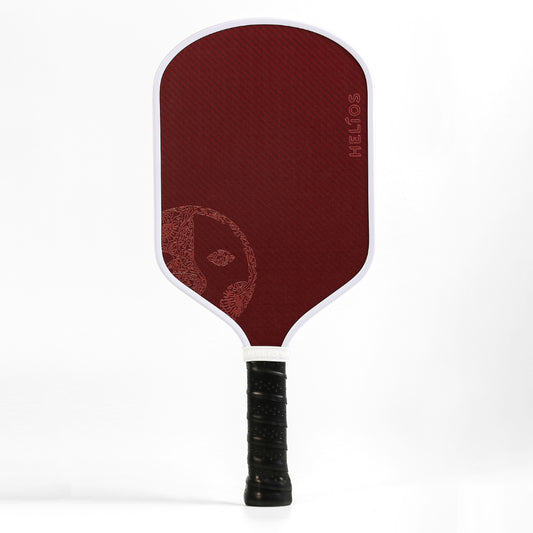
A 13mm core, like the Reactive PP Honeycomb core in the Helios, gives you more pop off the face with less swing effort. A good match for players who want to drive through the ball rather than finesse it. When comparing a thick vs. thin pickleball paddle, the trade-off is clear: you gain speed but give up some of the cushioned feel that thicker cores offer.
Who Should Play with a 13mm Core?
A thinner core fits specific play styles and preferences. Consider a 13mm paddle if any of the following describe your game:
- You play a drive-heavy, aggressive style and want maximum ball speed off the face.
- You prioritize quick hand exchanges at the net where a snappy response matters more than deep touch.
- You prefer a lighter setup. The Selene pairs a 13mm reactive core with a 7.8 oz design, ideal for fast hands and spin.
14mm Core: The Middle Ground
A 14mm core splits the difference between power and control. For many players, the 13mm vs 14mm pickleball paddle debate comes down to one question: Do you want more forgiveness without losing much speed? A 14mm core delivers exactly that. The slight increase in thickness widens the effective sweet spot, meaning off-center hits still produce a clean, predictable response.
Who Benefits Most from 14mm?
A 14mm core bridges raw power and comfortable control. Here are the players who get the most out of that balance:
- Intermediate players transitioning from recreational to tournament-level play.
- Doubles specialists who alternate between dinks, resets, and counter-attacks.
- All-court players who refuse to be pigeonholed. A well-crafted paddle in the 14mm range keeps your options open in every rally.
16mm Core: Best for Control-First Players
A thicker 16mm core, like the Accelerated Core (patent-pending) in the Apollo, dampens power in exchange for more consistent touch. At 16mm, you are working with the thickest cores commonly available. A pickleball paddle 16mm thick absorbs more impact, creates a softer feel on contact, and offers superior vibration dampening. For control-oriented players, a thicker core is a serious advantage.
Who Should Choose a 16mm Core?
A 16mm core rewards precision over raw speed. Here are the scenarios where a pickleball paddle thick enough to absorb impact truly shines:
- Soft-game specialists who live at the kitchen line. The Apollo features a 16mm Accelerated Core paired with Toray T700 carbon fiber, giving you both control and enough pop for put-away shots.
- Players dealing with arm fatigue or tennis elbow. A thicker core absorbs more shock, reducing strain during long sessions.
- Advanced competitors who rely on shot placement and deception over brute force.
Which Thickness Should You Choose?
Knowing the specs matters, but matching them to your actual game is what counts. Your ideal paddle core thickness depends on your physical condition, court position, and the type of points you build.
| If you... | Choose |
|---|---|
| Want maximum power on drives | 13mm |
| Want a balance of power and control | 14mm |
| Prioritize touch, dinks, and resets | 16mm |
| Have elbow or wrist sensitivity | 16mm (more vibration dampening) |
Ask yourself a few honest questions about how you actually play, not how you wish you played:
- Win most points with drives and overheads? Lean toward 13mm for that extra pop.
- Mix dinks, thirds, and occasional power shots? A 14mm core gives you flexibility across the board.
- Rely on patience, placement, and soft resets? A 16mm option will feel like an extension of your hand.
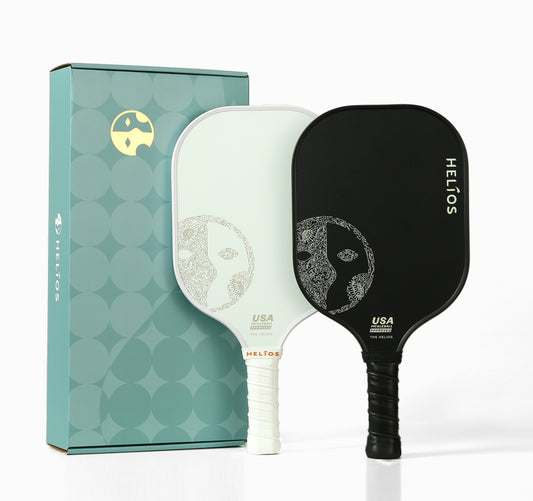
Also factor in arm health. If you play frequently or have joint discomfort, the extra cushioning in a thicker core makes a real difference over time. Paddles like the Astraeus and the Helios paddle set pair USAP-approved construction with ergonomic handles that complement the core's feel.
Where Helios' Line Fits
- The Helios: 13mm Reactive PP Honeycomb Core, from $49 (reg. $109)
- The Apollo: 16mm Accelerated Core (patent-pending), $139 (reg. $229)
Browse the full paddle collection to compare core thickness across every Helios model, or build a custom paddle matched to your play style.
FAQ
Is a 16mm pickleball paddle better than a 14mm paddle?
Neither is universally better. A 16mm core favors control and touch by dampening power at contact, while a 14mm core offers a more balanced feel between power and control. The right choice depends on whether your game leans toward finesse or drives.
Does core thickness affect paddle weight?
Generally yes, though the effect varies by material. A thicker core doesn't always mean a heavier paddle, since manufacturers adjust other materials to hit a target weight. Check the specific paddle's weight spec rather than assuming thickness alone determines it.
What core thickness is best for beginners?
Many beginners do well with a 13-14mm core because the snappier response helps generate power with less refined technique, though players who gravitate toward soft-game shots early on may prefer starting with a thicker, more control-oriented core.
Does paddle core thickness affect spin?
Core thickness has a small indirect effect. A thicker core increases dwell time, which can help the surface texture grip the ball longer. However, face material and texture play a much bigger role in spin generation. For maximum spin, pair your preferred core thickness with a raw carbon fiber face like Toray T700.
Which core thickness do professional pickleball players prefer?
Preferences vary by play style. Control-focused pros tend to favor 16mm cores for enhanced touch at the kitchen line. Power-oriented players often choose 13mm to 14mm cores for faster ball speed. Most touring professionals prioritize feel and consistency over pure power.
Can I feel the difference between 13mm and 14mm?
Yes, most intermediate and advanced players notice the difference. A 13mm core feels firmer and snappier, while a 14mm core offers a slightly softer, more cushioned response. If you're choosing between the two, consider whether you want more pop on drives (13mm) or a bit more forgiveness on off-center contact (14mm).