Pickleball Paddle Comparison Guide: How to Compare Specs & Features

Walking into the world of pickleball paddles can feel like stepping into a sports equipment jungle. Carbon fiber face? Polymer core? Sweet spot size? If you're scratching your head, wondering how to compare pickleball paddles, you're not alone.
Here's the truth: a great pickleball paddle comparison doesn't need to be complicated. You just need to know which specs actually matter for your game. Whether you're chasing power, control, or that perfect all-around feel, knowing paddle specs helps you cut through the noise and choose equipment that plays like it was made for you.
Let's break down exactly how to compare pickleball paddles so you can step on the court with confidence.
Why Paddle Specs Matter More Than You Think
Picture two players: one with a heavy, control-focused paddle and another swinging an ultra-light speed demon. Same court, totally different games. Paddle specs aren't just numbers on a website; they shape how you move, how hard you can hit, and how much finesse you bring to the kitchen.
When you compare paddle specs side by side, you're essentially building a blueprint for your playing style. Love aggressive baseline drives? You'll want different specs than someone who lives for soft dinks and resets. Knowing these differences transforms paddle shopping from guesswork into strategy.
The Seven Specs You Actually Need to Compare
Here are seven parameters to assess before buying a pickleball paddle.
Weight: Your Goldilocks Zone
Weight might be the most personal spec on your paddle. Lightweight paddles (under 7.8 oz) give you lightning-fast hands at the net. Midweight options (7.8–8.4 oz) balance power and control. Heavyweights (8.5 oz and up) bring serious pop to your groundstrokes.
Our Selene sits in that sweet midweight range, enough heft for power without sacrificing hand speed. Meanwhile, if you want to feel like you're wielding a feather with serious bite, check out The Apollo.
[[product:the-selene-pickleball-paddles]]
Paddle Shape: Widebody vs. Elongated vs. Hybrid
Paddle shape is one of the most overlooked specs in a pickleball paddle comparison, yet it determines sweet spot size and reach more than almost any other factor.
Widebody paddles (typically 8 inches or wider) deliver the largest sweet spot. Off-center hits still produce consistent, playable shots making widebody shapes the most forgiving option for beginners and recreational players who haven't yet developed precise contact habits.
Elongated paddles (16 inches or longer) shift mass toward the top of the face, generating more leverage and reach on drives and two-handed backhands. The trade-off is a smaller sweet spot, so mishits are penalized more. Players who can consistently hit center benefit most from elongated shapes.
Hybrid shapes split the difference slightly wider than elongated, slightly longer than widebody and suit all-court players who want balanced performance across net play and baseline drives.
When comparing paddles, match shape to your current skill level first. Build consistency with a widebody, then move to elongated as your contact point sharpens.
Face Material: Where the Magic Happens
Your paddle face is where ball meets business. Carbon fiber faces deliver a crisp, powerful response, perfect for players who want every shot to pack a punch. Fiberglass offers a softer touch with excellent control for finesse players. Graphite splits the difference with a balanced feel.
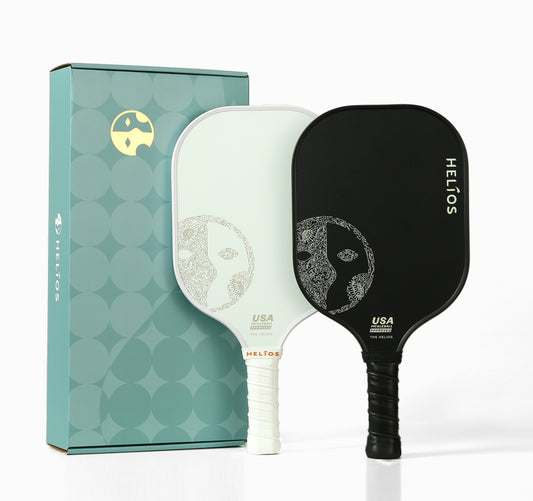
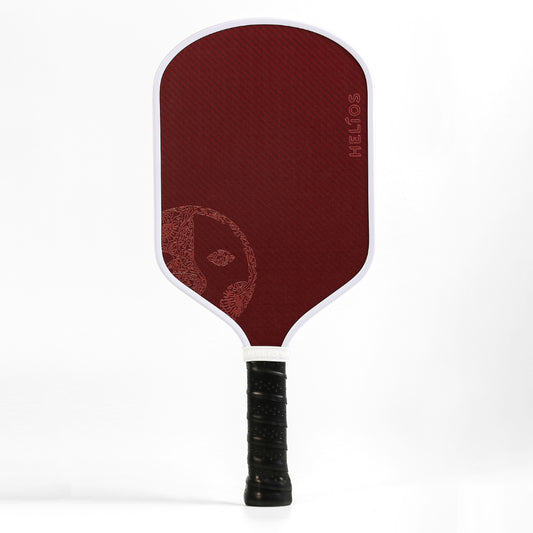
When you compare pickleball paddles, pay attention to face texture too. A textured surface adds spin potential, letting you curve balls around opponents like you're drawing on air. Our Helios paddle features premium carbon fiber that gives you that responsive feel shot after shot.
[[product:the-helios-pickleball-paddles]]
Core Material: The Paddle's Heart
Hidden inside your paddle, the core material might be the most underrated spec in your comparison. Polymer cores (honeycomb structures made from plastic) offer outstanding touch and a quiet, controlled response. Aluminum cores bring extra power but can feel stiffer.
Nomex cores, made from aramid fiber, deliver explosive power but tend to be louder and less forgiving. For most players, a polymer core strikes the right balance. Our Astraeus combines a responsive core with precision engineering to give you a feel exactly where you need it.
[[product:the-astraeus-pickleball-paddles]]
Grip Size: Comfort Meets Control
Grip circumference might not sound exciting, but holding the wrong size for hours will give you blisters, fatigue, and weak shots. Most paddles come in circumferences from four to four-and-a-half inches. Smaller grips allow more wrist snap for spin. Larger grips offer stability and reduce hand fatigue.
Can't decide? Start with a smaller grip, you can always add an overgrip to customize the feel. Once you dial in your size, your hand will thank you.
[[product:the-overgrip]]
Sweet Spot Size: Your Margin for Error
The sweet spot is that magical zone where everything feels perfect powerful yet controlled. A larger sweet spot forgives mishits and gives you consistent performance across the paddle face. Smaller sweet spots demand precision but can offer more feedback for advanced players.
Our Gaia paddle was designed with a generous sweet spot that makes every hit feel like it came off the center. Perfect for players who want reliability without sacrificing performance.
[[product:the-gaia-pickleball-paddles]]
Pickleball Paddle Price Comparison: What Each Tier Delivers
Understanding price tiers is essential when you compare pickleball paddles. Here is what each investment level actually delivers on court:
Entry-level ($30–$70): Typically fiberglass or basic composite construction with aluminum or Nomex cores. Functional for casual play, but face texture wears quickly and cores can develop dead spots within months of regular use.
Mid-range ($80–$130): The performance sweet spot for most players. Real carbon fiber faces (Toray T300 or T700), polymer honeycomb cores with genuine quality control, and ergonomic grip systems. Helios paddles sit in this tier built with aerospace-grade Toray carbon at nearly half the cost of $250-plus options.
Premium ($150–$250): Thermoformed construction, precision-calibrated swing weights, and foam-injected perimeter systems. Performance gains over mid-range are real but incremental meaningful for tournament competitors, largely marginal for recreational players.
Beyond $250: Sponsorship markup territory. Independent testing consistently shows diminishing returns above $200 for recreational and intermediate play.
When comparing paddles by price, evaluate core thickness and face material alongside the sticker price not brand reputation alone.
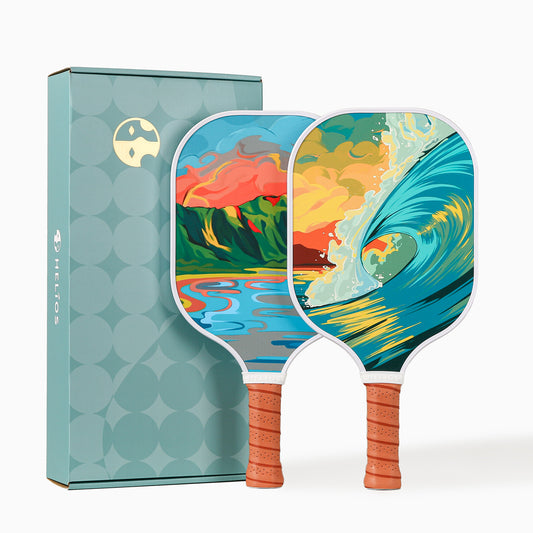
We designed our Helios Beginner Pickleball Paddle Set to give new players premium quality at an accessible price because everyone deserves equipment that performs.
[[product:helios-beginner-pickleball-paddle-set]]
Putting It All Together: Your Paddle Comparison Checklist
Now that you know what specs to look for, here's how to actually compare pickleball paddles.
Start with your playing style. Are you a power hitter who loves driving balls from the baseline? Look for heavier paddles with carbon fiber faces. Prefer soft hands and kitchen mastery? Lighter paddles with larger sweet spots and polymer cores will serve you better.
Next, make a shortlist of paddles that match those needs. Compare their specs side by side: weight, face material, core type, grip size, and price. Don't get paralyzed by minor differences. A fraction-of-an-ounce weight variation won't change your life.
Finally, remember that specs tell part of the story, but feel completes it. If you can, demo paddles before committing. Many clubs offer loaner equipment, or you might find players willing to let you hit a few shots with theirs.
Your Next Move
Comparing pickleball paddles doesn't have to feel overwhelming. Armed with knowledge about weight, materials, grip, and sweet spot, you can confidently evaluate any paddle that catches your eye. Remember: the best paddle isn't the one with the fanciest specs or the highest price tag. It's the one that complements your playing style and feels like an extension of your arm.
Ready to meet your perfect match? Browse our complete collection of paddles designed with precision, tested for performance, and crafted to help you shine on every court. Whether you're drawn to the power of The Khione or the balanced brilliance of our Toray Performance Pickleball Paddle Set, we've got the specs and the soul to match your game.
Light up your game. Compare smart. Play with purpose.
Frequently Asked Questions
Q. What's the most important spec when comparing paddles?
Weight and face material tend to have the biggest impact on how a paddle plays. Weight affects your swing speed and power generation, while face material determines touch and responsiveness. Start your comparison with these two specs and build from there.
Q. Should beginners focus on different specs than advanced players?
Beginners benefit from larger sweet spots and midweight paddles that forgive mistakes and build consistency. Advanced players might prefer specific combinations like lightweight with elongated shape for maneuverability, or heavyweight with carbon fiber for maximum power.
Q. How much should I spend on my first paddle?
Plan to invest in a quality mid-range paddle for your first purchase. Going too cheaply often means sacrificing durability and performance. Going ultra-premium might give you features you're not ready to appreciate yet. A solid mid-range paddle lets you develop your skills without breaking the bank.
Q. Can I trust online paddle specs, or do I need to test in person?
Specs are reliable starting points, especially from reputable brands that quality-test their equipment. However, personal feel matters. If possible, combine spec research with hands-on testing. Many players discover their perfect paddle matches their spec preferences exactly but some stumble upon unexpected favorites through demos.
Q. What type of pickleball paddle is best for beginners?
Beginners benefit most from a midweight paddle (7.8–8.4 oz) with a polymer core and widebody shape. This combination maximizes the sweet spot, reduces arm fatigue, and provides forgiving feedback while you build consistent shot mechanics.
Q. How do I choose the right pickleball paddle?
Start with your playing style: power hitters should choose heavier paddles (8.5 oz+) with carbon fiber faces; control players need lighter midweight paddles with polymer cores. Then narrow by shape and budget to finalize your choice.
Q. Is there really a difference between pickleball paddles?
Yes. Pickleball paddles differ meaningfully in face material (carbon fiber, fiberglass, kevlar), core thickness (14mm vs 16mm), shape, and weight each combination producing distinct power, spin, and control trade-offs that affect on-court performance.
Q. Are more expensive pickleball paddles worth the price?
Yes, up to a point. Paddles in the $99–$150 range now match specs that were $200+ two years ago. Above $200, gains shift to foam core construction, grit longevity, and swing-weight precision meaningful only for intermediate-to-advanced players.
Q. What is the difference between elongated and wide-body pickleball paddle shapes
Wide-body paddles offer a larger sweet spot and more forgiveness, making them better for beginners and doubles play. Elongated paddles extend reach and concentrate the sweet spot higher on the face, favoring singles players and those with aggressive baseline games.