Pickleball Line Rules: What Counts as Out, Who Makes the Call, and Proper Etiquette

Nothing sparks more on-court debate than a close line call. That ball looked out from your angle, but your opponent swears it caught the edge. Who is right? More importantly, who gets to decide?
Understanding pickleball line rules keeps games fair and friendships intact. Whether you are new to the sport or sharpening your competitive edge, knowing when a ball is pickleball out of bounds versus safely in play prevents arguments and builds trust with everyone you share the court with.
The Basic Rule: What Counts as In and What Counts as Out
Here are the fundamental pickleball rules explained simply: a ball that touches any part of the line is in. A ball that lands completely outside the painted line is out. No exceptions during regular play.
According to the 2025 USA Pickleball Rulebook, any ball in play that lands in the court or touches any court line counts as in. The keyword is "touches." If even the edge of the ball grazes the paint, it stays in play. You need to see clear daylight between the ball and the line to make an out call.
During a rally, all lines are live. Sidelines, baselines, and even the non-volley zone line are all in if the ball makes contact. The one exception involves serves. A served ball that lands on or in the non-volley zone, including the kitchen line, is out. The serve must clear the kitchen entirely and land in the correct service court.
Who Calls Pickleball Rules on Line Disputes
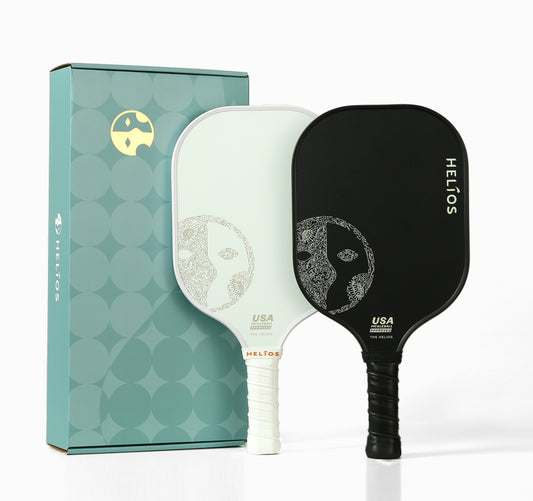
So, who calls pickleball rules when a ball lands close? Players make line calls on their own side of the court. You are responsible for calling balls in or out at your end, while your opponents handle their side. This honor system works whether you are swinging a Helios Selene or any other paddle.
In doubles, either partner may make line calls on their respective side. If you and your doubles partner disagree, with one saying out and the other saying in, the ball is ruled in. Doubt always benefits the opponent. Similarly, if you cannot confidently call a ball out, you must play it as in.
You can ask your opponent for help on close calls. If they provide a clear answer, you must accept it. If they cannot make a definitive call, the ball is ruled in. One important 2025 change: spectators are now completely off-limits for line call consultations. The rule shifted from "should not be consulted" to "shall not be consulted," eliminating any gray area.
[[product:the-selene-pickleball-paddles]]
How to Make a Proper Line Call
Call the ball out only when you clearly see space between the ball and the line at the moment of contact with the ground. Guessing or assuming leads to bad calls and friction on the court.
All out calls must be signaled promptly using your voice, a hand signal, or both. Late calls create confusion and can appear unsportsmanlike. Whether you are playing with a Helios Astraeus or borrowed equipment, the calling protocol remains the same. If you shout "out" while the ball is still airborne, that is partner communication, not an official line call.
[[product:the-astraeus-pickleball-paddles]]
Common Situations Where Pickleball Line Rules Apply
Certain situations come up repeatedly on the court. Knowing how pickleball line rules apply to each one saves time and prevents disputes.
Kitchen Line on Serves
Serves that touch the non-volley zone line are out. The ball must clear the kitchen completely. All other lines, including the sideline, centerline, and service line, are in on serves.
Ball Landing on the Baseline
A ball that grazes even the outer edge of the baseline during a rally is in. When viewing from an angle, be cautious about making calls on lines you cannot see straight-on. If you did not see the ball land clearly, you cannot call it pickleball out of bounds.
Partner Disagreement
When partners disagree, the call defaults to in. Avoid arguing with your partner on the court. Accept the ruling and move on to the next point. Discussing how you will handle close calls before matches helps prevent confusion.
Pickleball Etiquette for Line Calls
Good pickleball etiquette means giving your opponents the benefit of the doubt on close calls. The spirit of the game prioritizes fair play over winning points through questionable calls.
Honesty matters more than you might think. If your shot lands out, call it on yourself. If the ball hits your paddle on the way out of bounds, admit it. These small acts of integrity build trust. Respect your opponents' right to make calls on their end of the court, and if you question a call, do so respectfully.
In casual games, many players allow a replay on truly difficult calls. While official rules do not permit this, pickleball culture often embraces the do-over as a gesture of good faith. Players who carry themselves with class on the court, whether using a Helios Beginner Paddle Set or tournament-grade equipment, earn the respect of their peers.
[[product:helios-beginner-pickleball-paddle-set]]
Play With Confidence on Every Line
Mastering pickleball line rules lets you focus on what matters: sharp volleys, smart placement, and good competition. At Helios Pickleball, we design paddles that help you play with precision and confidence, whether you are making a crucial call or driving a winner down the sideline.
Browse the Helios collection and light up your next match.
Frequently Asked Questions
Q: Can I overrule my own line call?
Ans: Yes. The rules allow players to overrule their own call, their partner's call, or even an officiating team's call, but only to their own disadvantage. If you called a ball out and realize it was in, you can correct yourself and award the point to your opponent.
Q: What if my opponent makes a bad call?
Ans: Ask them respectfully if they are certain. If they stand by their call, accept it, and move on. You may appeal to a referee in officiated matches, but in recreational play, proper pickleball etiquette dictates that you give opponents the benefit of the doubt on their own calls. Keep your grip relaxed with a quality Helios Organic Overgrip and focus on the next point.
Q: Is the kitchen line in during a rally?
Ans: Yes. During regular play, a ball landing on the non-volley zone line is in. The kitchen line is only out on the serve.
Q: What happens if I call out before the ball bounces?
Ans: Verbal communication like "out" or "bounce it" while the ball is airborne is considered partner communication, not an official line call. The ruling is made only after the ball lands.
Q: What counts as pickleball out of bounds on a serve?
Ans: A serve that lands in the non-volley zone, including on the kitchen line, is out. A serve that lands outside the correct service court sidelines or baseline is also out. All other service court lines are in.