Pickleball for Tennis Switchers: The 5 Habits to Break First

Tennis players picking up pickleball for the first time often expect a smooth transition. After all, both sports use a net, a court, and hand-eye coordination. But the tennis to pickleball transition trips up more players than you would expect, because the habits that made you good at tennis can actively hurt your pickleball game.
If you are switching from tennis, here are the five biggest tennis bad habits pickleball players carry over, and how to fix each one before they become permanent.
Why Tennis Habits Hurt Your Pickleball Game
Tennis rewards big swings, powerful serves, and deep baseline rallies. Pickleball rewards compact strokes, soft touch, and net dominance. The court is smaller, the paddle is shorter, and the plastic ball moves slower, which means the timing, spacing, and shot selection that worked on a tennis court often misfire on a pickleball court.
The Adjustment Is Real
Most tennis players pickleball newcomers struggle with feel rather than athleticism. The physical skills transfer, but the instincts do not. Recognizing where those instincts go wrong is the first step toward a faster, cleaner tennis to pickleball stroke adjustment.
Habit 1: Swinging Too Big
A full tennis groundstroke generates topspin and pace over a 78-foot court. On a pickleball court that measures 44 feet, that same swing sends the ball five feet past the baseline.
Compact Over Powerful
Shorten your backswing and follow-through. Pickleball strokes are more like punches than full swings. Keep your paddle out in front, use your wrist and forearm for control, and let the paddle do the work.
- Drill: stand at the kitchen line and rally with a partner using zero backswing. Focus on directing the ball with paddle angle alone.
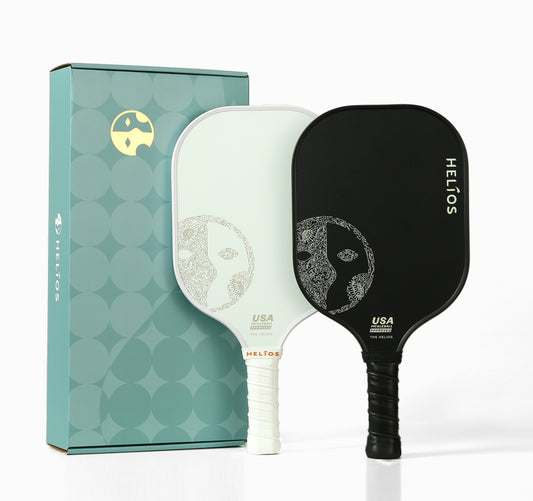
- A paddle with a responsive core helps ex tennis pickleball players control compact strokes. The Astraeus, with its extended handle, feels familiar to players used to a two-handed backhand.
[[product:the-astraeus-pickleball-paddles]]
Habit 2: Hanging Back at the Baseline
Tennis players live at the baseline. Pickleball players win at the net. Staying deep gives your opponents the angles and positioning advantage that controls the point.
Get to the Kitchen
After every return of serve, move toward the kitchen line as quickly as your shot allows. The non-volley zone is where you gain control of the rally. Treat the baseline as a launching pad, not a home base.
- Drill: play a game where you must reach the kitchen line within three shots of every rally. Penalize yourself one point for every rally spent entirely at the baseline.
Habit 3: Using Too Much Wrist on Serves
Tennis serves are overhead weapons. Pickleball serves must be hit underhand, below the waist, and with an upward motion. Former tennis players often add wrist snap and topspin mechanics that violate serving rules or produce inconsistent results.
Simplify Your Serve
A clean, repeatable serve with moderate depth and placement beats a flashy serve that faults half the time. Focus on a pendulum motion from your shoulder, keep the wrist firm, and aim for the back third of the service box.
- Drill: practice 20 serves in a row aiming at a specific target. Count how many land in the correct zone. Consistency matters more than speed.
Habit 4: Overhitting Returns
Tennis returns are aggressive, aimed for depth and pace. Pickleball returns should be deep but controlled, giving you time to advance to the kitchen. Ex tennis pickleball newcomers blast returns that either sail long or set up easy put-aways for the serving team.
Soft Game Wins
Aim your return deep into the court with moderate pace, then immediately start moving forward. The purpose of the return is positioning, not point-ending power.
- Drill: rally with a partner where you play the return and a drop shot, then freeze. If both shots land in bounds with control, you win the point.
- Paddles with forgiving sweet spots help smooth the tennis to pickleball transition. A well-balanced paddle gives you the touch needed for controlled returns without sacrificing pop when you need it.
Habit 5: Ignoring the Non-Volley Zone Rules
Tennis has no kitchen. Pickleball has a seven-foot non-volley zone on each side of the net where you cannot hit the ball out of the air. Tennis players routinely step into the kitchen to volley, earning faults they do not understand until someone explains the rule.
Respect the Kitchen
Stay behind the kitchen line when volleying. Your feet, your paddle, and even your momentum cannot carry you into the zone after a volley. Plant your feet, stay balanced, and let the ball come to you.
- Drill: place a strip of tape one foot behind the kitchen line. Practice volleying without your toes crossing the tape. Build awareness of your position without looking down.
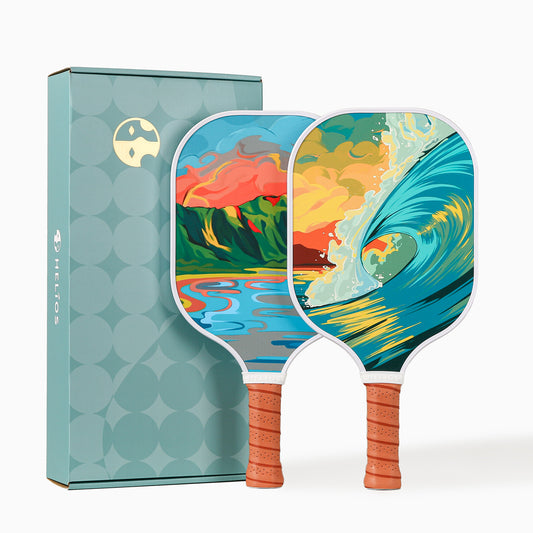
The right paddle makes the transition smoother. Our Selene weighs just 7.8 oz and offers the kind of quick maneuverability that helps tennis players adjust to pickleball's faster exchanges at the net.
[[product:the-selene-pickleball-paddles]]
Final Thoughts
Switching from tennis to pickleball is exciting, but your old habits will follow you onto the court unless you address them deliberately. Shrink your swing, rush the net, simplify your serve, soften your returns, and learn the kitchen rules. Do those five things and the tennis to pickleball stroke adjustment gets easier with every session.
Need a paddle designed for the transition? See our full collection and find equipment that complements your athletic background.
Frequently Asked Questions
Q. Is pickleball easier than tennis?
Pickleball is easier to pick up thanks to a smaller court, underhand serves, and a slower ball. However, mastering the soft game, kitchen play, and shot selection takes just as much practice as any racket sport.
Q. Do tennis skills help with pickleball?
Absolutely. Court awareness, footwork, hand-eye coordination, and competitive instincts all transfer. The main adjustments involve stroke mechanics, positioning, and learning new rules like the non-volley zone.
Q. What paddle should a tennis player start with?
Former tennis players generally prefer paddles with an elongated shape and extended handle for a familiar two-handed backhand feel. The Astraeus is a popular choice for its reach and spin potential.
Q. How long does the tennis to pickleball transition take?
Most tennis players feel comfortable within a few weeks of regular play. Breaking ingrained habits like big swings and baseline positioning can take one to three months of focused practice.
Q. Can I play both tennis and pickleball without confusion?
Yes, many players do. Keeping a mental separation between the two, especially around stroke length and court positioning, prevents crossover confusion. Dedicated warm-up drills for each sport help set the right mindset.
Q. Why do tennis players struggle with the soft game in pickleball?
Tennis rewards pace and power. Pickleball's soft game, dinks, drops, and resets, requires touch and patience that feel counterintuitive to players trained to hit through the ball. Practicing soft shots specifically is the fastest way to close this gap.