Pickleball Age Limit: Is There One, and Best Ages to Start

Your 7-year-old wants to try pickleball because they saw it in PE class. Your 72-year-old father wants to try it because his neighbor plays every morning. Both of them are asking the same question: am I the right age for this?
There is no official pickleball age limit. USA Pickleball does not set a minimum or maximum age for participation. If you can hold a paddle, track a ball, and move around a court, you can play. That open-door policy is a big reason why pickleball has grown faster than any other sport in America for three consecutive years. But the best age to start pickleball depends on what "starting" looks like at each stage of life.
Every Age Group on One Court
Pickleball is one of the few sports where a 10-year-old, a 35-year-old, and a 70-year-old can share a court and all have a competitive game. The smaller court (20 x 44 feet), the underhand serve, and the lightweight paddle and plastic ball remove the physical barriers that keep other racquet sports locked to narrow age windows.
Here is a quick look at what play looks like across the age spectrum:
| Age Group | What Play Looks Like | Recommended Gear |
|---|---|---|
| 4 to 5 | Paddle play, hand-eye coordination, fun over rules | Lightweight paddle, soft balls, mini court |
| 6 to 8 | Real rallies, basic rules, underhand serve, kitchen concept | Beginner paddle set, outdoor balls |
| 9 to 12 | Technique development, competitive games, junior tournaments | Youth or standard-size recreational paddle |
| 13 to 17 | Teen competition, school programs, junior divisions | Standard recreational or performance paddle |
| 18 to 49 | Full competitive and recreational play | Performance or recreational based on goals |
| 50 to 69 | Active recreation, leagues, social play | Mid-weight paddle, overgrips for comfort |
| 70+ | Joint-friendly play, doubles, controlled movement | Lightweight paddle (7.0 to 7.5 oz), fiberglass or Kevlar |
Youngest Age to Play Pickleball
The youngest age to play pickleball in a game-like format is around 6 to 8. That is when most children can grasp the underhand serve, follow the double-bounce rule, sustain rallies, and understand the kitchen. Before that, kids between 4 and 5 can do paddle play, bouncing and hitting a ball back and forth without formal rules. That early exposure builds the hand-eye coordination and confidence that makes real play click a year or two later.
According to the Helios age-by-age guide for parents, "most youth coaches and organizations agree that kids as young as four or five can begin familiarizing themselves with the basics, even if full-game play comes a little later."
Pickleball for Kids Age 6 to 12
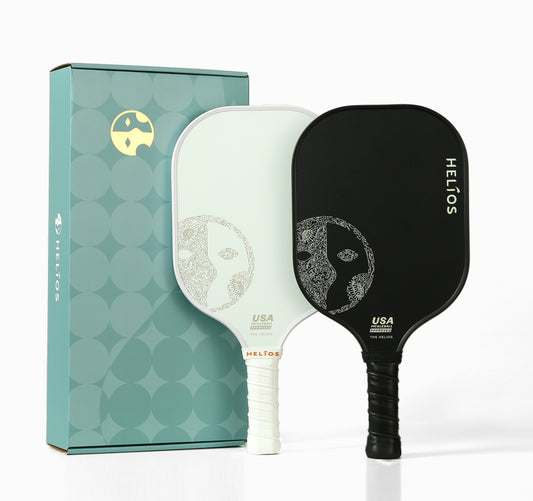
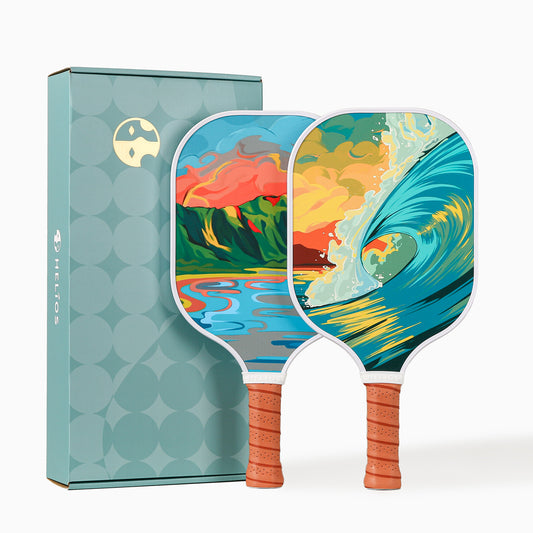
This is the sweet spot for getting kids hooked. The Helios Beginner Pickleball Paddle Set includes two USAPA-approved paddles, tournament-grade balls, and a carrying case, making it easy to hand a child (or a pair of siblings) a complete setup without buying pieces separately.
[[product:helios-beginner-pickleball-paddle-set]]
Ages 6 to 8
- Kids at this stage can rally, keep score, and play actual points.
- Keep sessions short (20 to 30 minutes), focus on fun over technique, and use a standard or slightly shortened court.
- Schools and recreation centers are increasingly adding pickleball to PE programs for this exact age group.
Ages 9 to 12
- Technique refinement starts here.
- Children can work on third shot drops, dinks, and serve placement. J
- Junior tournament divisions (typically 10U, 12U, and 14U) give competitive kids a structured path.
- A standard-size recreational paddle with a fiberglass face works well for developing players because the softer touch and wider sweet spot forgive off-center hits while they build consistency.
Best Age to Start for Adults
- For adults, the best age to start pickleball is whenever you decide to try it.
- There is no learning curve too steep and no fitness requirement too high.
- The game scales to your intensity.
- You can play casual dinks at 40% effort or compete in tournament singles at 100%.
18 to 49
- Peak athleticism meets a sport that rewards strategy over raw power.
- Players in this range often come from tennis, racquetball, or other racquet sports and pick up pickleball quickly.
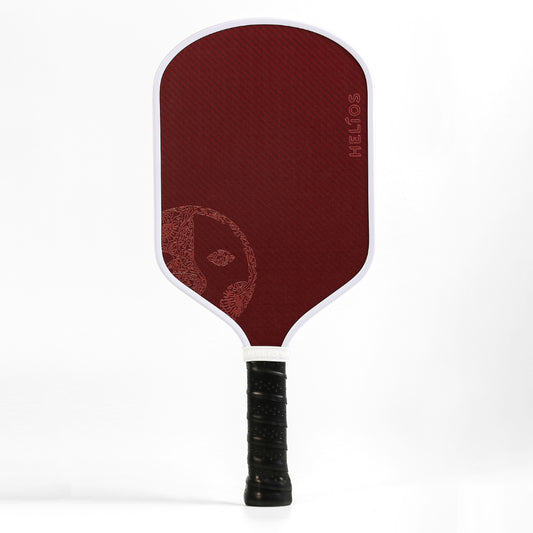
- A performance paddle with a carbon fiber face and textured surface fits this group because it rewards the spin, control, and aggressive play that experienced athletes bring to the court.
[[product:sol]]
50 to 69
- The largest demographic in pickleball.
- Players in this range value the social aspect, the moderate intensity, and the ability to compete without the pounding of tennis or running.
- Mid-weight paddles (7.5 to 8.0 oz) and fresh overgrips for comfortable grip pressure are the right fit.
- Doubles is the most popular format for this age group.
[[product:the-overgrip]]
70 and Up
- Pickleball at 70+ works because the court is small, the ball is slow, and doubles cut your coverage area in half.
- Lightweight paddles (7.0 to 7.5 oz) with fiberglass or Kevlar faces reduce arm fatigue and absorb vibration for players managing joint sensitivity.
- Court shoes with lateral support are more important than the paddle at this stage.
Is Pickleball Good for All Ages
Yes, and the data backs it up. Pickleball's player base spans from under-10 junior divisions to 80+ senior brackets at sanctioned tournaments. USA Pickleball's junior program is growing rapidly, with dedicated youth divisions at regional and national events. At the other end, senior categories at tournaments routinely fill faster than any other age bracket.
The sport works across generations because it was designed that way. The underhand serve removes the shoulder strain of overhead tennis serves. The smaller court means less running. The plastic ball moves slower than a tennis ball, giving every age group more reaction time. And the kitchen rule prevents a single power player from dominating the net, which keeps games competitive regardless of age or athleticism.
A Sport for Everyone at Every Stage
There is no pickleball age limit because the sport was built without one. A 6-year-old can start with paddle play. A 30-year-old can jump into competitive leagues. A 75-year-old can play doubles three mornings a week. The only thing that changes is the gear, the pace, and the format.
If you are starting at any age, browse the Helios collection for paddle sets, recreational and performance paddles, and custom paddles that match your stage of the game.
Frequently Asked Questions
Is there an official age limit for pickleball?
No. USA Pickleball does not set a minimum or maximum age. Junior divisions at sanctioned tournaments start as young as 10U. Senior divisions go up to 80+. If you can hold a paddle and move on a court, you can play.
What is the best age for a child to start pickleball?
Ages 6 to 8 is the sweet spot for most kids to start playing real games with basic rules. Children between 4 and 5 can do paddle play and hand-eye coordination drills without formal scoring or rules.
Can a 4-year-old play pickleball?
A 4-year-old can do paddle play: bouncing and hitting a ball back and forth with a lightweight paddle. Full-game pickleball with rules, scoring, and a regulation court typically starts at 6 to 8 when coordination and cognitive development catch up.
Is pickleball safe for seniors over 70?
Yes, with the right gear and approach. A lightweight paddle (7.0 to 7.5 oz), court shoes with lateral support, and doubles play all reduce injury risk. Playing at the kitchen line rather than chasing wide balls keeps the game joint-friendly.
What size paddle should a child use?
Children under 10 do well with a lighter, slightly smaller paddle. Standard-size paddles work for kids 10 and up. The Helios Beginner Paddle Set uses a balanced design that works for both youth and adult beginners without needing a separate child-size model.
Why is pickleball popular across all age groups?
The small court means less running. The underhand serve removes shoulder strain. The plastic ball moves slower than a tennis ball. And the kitchen rule prevents power-dominant play, keeping games competitive across age and fitness levels. No other racquet sport checks all of those boxes.