Does an Overgrip Change Paddle Weight and Swing Weight

You just wrapped a fresh overgrip and the paddle feels different. A little heavier. Maybe a little more head-light. You are not imagining it. An overgrip does add weight to your paddle, typically 5 to 8 grams. But that number alone does not tell the full story.
Where the weight sits on the paddle matters more than how much you add. An overgrip adds mass to the handle. Lead tape adds mass to the head. Those two locations produce completely different effects on how your paddle swings, hits, and feels during a rally. Here is the breakdown.
How Much Weight Does an Overgrip Add
A standard overgrip adds between 5 and 8 grams (roughly 0.17 to 0.28 oz) to your paddle. The exact number depends on the grip's material, thickness, and length.
| Grip Type | Thickness | Typical Weight Added |
|---|---|---|
| Thin overgrip | 0.4 to 0.5mm | 5 to 6 grams |
| Standard overgrip | 0.5 to 0.7mm | 6 to 8 grams |
| Cushioned overgrip | 0.7 to 1.0mm | 8 to 10 grams |
| Full base grip replacement | 1.7 to 1.8mm | 15 to 25 grams |
The Helios Organic Overgrip falls in the standard range. On a paddle that weighs 7.8 oz out of the box (221 grams), adding a 7-gram overgrip brings the total to about 228 grams. That is roughly a 3% increase in total weight. Noticeable if you are paying attention, but not dramatic on its own.
[[product:the-overgrip]]
Stacking two overgrips (some players do this to build up grip circumference) doubles the weight addition to 12 to 16 grams, which starts becoming a more noticeable change.
Why Handle Weight Barely Changes Swing Weight
Here is where it gets interesting.
- Does overgrip add weight to the paddle? Yes.
- Does that weight change how the paddle swings? Barely.
Swing weight is not the same as total weight. Swing weight (technically called moment of inertia) measures how heavy the paddle feels when you swing it through the air. It depends not just on how much mass the paddle has, but on where that mass sits relative to the pivot point, which is your hand.
The Physics in Plain Language
Think of holding a hammer by the handle versus holding it by the head. Same total weight. Completely different swing feel. That is swing weight.
An overgrip adds mass at the handle, which is at or near the pivot point. Mass at the pivot point contributes almost nothing to how heavy the paddle feels during a swing. It adds to the scale weight but not to the swing weight. The paddle reads heavier on a scale but feels roughly the same during a forehand drive.
Mass added to the head of the paddle (farther from the pivot) increases swing weight dramatically. Every gram at the head matters more than a gram at the handle by a factor of 5 to 10x, depending on how far from the handle it sits.
Overgrip vs Lead Tape Swing Weight
The overgrip vs lead tape swing weight difference comes down to location. Here is how the same amount of added weight behaves in two different spots.
| Weight Added | Location | Effect on Total Weight | Effect on Swing Weight | Effect on Balance |
|---|---|---|---|---|
| 6 grams (overgrip) | Handle | +6g | Minimal (near-zero) | More head-light |
| 6 grams (lead tape) | Head (12 o'clock) | +6g | Noticeable increase | More head-heavy |
| 6 grams (lead tape) | Sides (3 and 9 o'clock) | +6g | Moderate increase | Neutral (balanced both sides) |
| 6 grams (lead tape) | Throat | +6g | Small increase | Slightly head-heavy |
Both additions change the scale weight by the same 6 grams. But the overgrip barely moves the swing weight needle, while lead tape at the head creates a clearly different feel on every swing.
What an Overgrip Actually Changes
If the overgrip swing weight change is minimal, what does the added handle weight actually do? Two things.
Balance Point Shifts Toward the Handle
Every gram added to the handle pulls the paddle's balance point downward. A paddle that felt neutral or slightly head-heavy becomes slightly more head-light after adding an overgrip. For players at the kitchen line who need quick hands during dinking and volleying, a slightly head-light balance can actually help. The paddle feels quicker to move and easier to redirect.
For power-oriented players who rely on drives and overheads, that head-light shift can feel like the paddle lost some punch. If that happens, 2 to 3 grams of lead tape at 3 and 9 o'clock on the paddle head rebalances the swing without removing the overgrip.
Stability in the Hand
A slightly heavier handle reduces the vibration and torque you feel at contact. The added mass acts as a counterweight that dampens the shock of off-center hits. Players managing tennis elbow or wrist strain sometimes notice that an overgrip (or a stacked double overgrip) makes the paddle feel more stable and less jarring during long sessions.
When the Weight Addition Matters
For most recreational players, the 5 to 8 grams from an overgrip is not enough to change their game. The tack, cushioning, and sweat absorption matter far more than the weight. Swap your overgrip for comfort and control, not for weight tuning.
The weight addition becomes worth paying attention to when:
- You are stacking 2 overgrips (12 to 16 grams of handle weight shifts balance noticeably)
- You replaced the full base grip (15 to 25 grams changes both weight and balance)
- You are also using lead tape on the head (the combined total of handle weight plus head weight changes the overall swing profile)
- You play with a lightweight paddle (under 7.5 oz) where every gram is a higher percentage of total mass
Performance paddles in the 7.8 to 8.0 oz range absorb the small weight addition of a single overgrip without any meaningful change in swing dynamics. Recreational paddles on the lighter end (7.3 to 7.5 oz) will show a slightly more noticeable shift.
[[product:flare]]
How to Fine-Tune Weight and Balance on Purpose
If you want to intentionally change how your paddle feels, here is a quick guide to what goes where.
| Goal | What to Add | Where |
|---|---|---|
| More power on drives | 2 to 4g lead tape | Top of paddle head (12 o'clock) |
| Bigger sweet spot, more stability | 2 to 3g lead tape per side | Sides of paddle head (3 and 9 o'clock) |
| Quicker hands at the kitchen | Overgrip only (no head weight) | Handle |
| More comfort, less vibration | Cushioned overgrip or double wrap | Handle |
| Restore balance after adding head weight | Overgrip or handle weight | Handle (counterbalances head tape) |
Stay within USA Pickleball's equipment limits: maximum 24 oz total weight and 17 inches total length. Most players land well under both limits even after adding an overgrip and moderate lead tape.
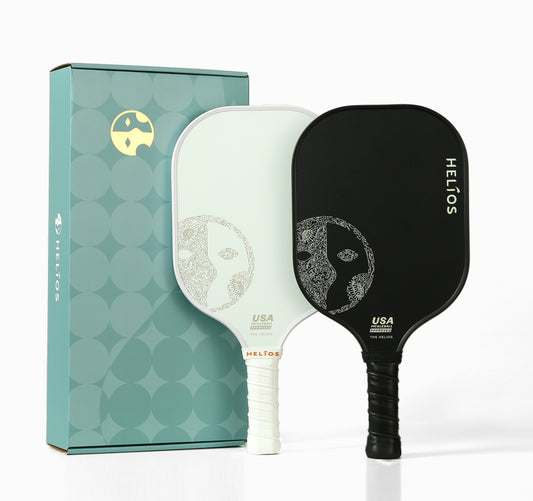
Keep spare overgrips and lead tape in your court bag so you can make adjustments between matches. A paddle set with two paddles lets you set up one with extra head weight for power and one clean for touch, then switch based on matchup.
[[product:the-helios-on-the-court-tote-bag]]
Swap for Feel, Tape for Swing
Does an overgrip add weight to your paddle? Yes, about 5 to 8 grams. Does it change swing weight? Barely. The weight sits at the handle, which is the one place on the paddle where added mass has the least effect on how the paddle swings.
Overgrips are for tack, cushioning, sweat control, and comfort. If you want to change how the paddle swings, lead tape on the head is the tool for that job. The two work well together: an overgrip for the feel in your hand and lead tape for the physics of the swing. Browse the Helios accessories collection for overgrips, paddle covers, and court gear that keep your setup dialed in.
Frequently Asked Questions
Does an overgrip make my paddle heavier?
Yes. A standard overgrip adds 5 to 8 grams (0.17 to 0.28 oz) to your paddle. On a 7.8 oz paddle, that is about a 3% increase. Noticeable on a scale but unlikely to change how the paddle plays in a meaningful way.
Does an overgrip change swing weight?
Minimally. Swing weight depends on where mass sits relative to the pivot point (your hand). An overgrip adds weight at the handle, which is at the pivot. Mass at the pivot has near-zero effect on swing weight. Lead tape at the head affects swing weight far more per gram.
How much weight does stacking two overgrips add?
12 to 16 grams, depending on thickness. Double-stacking adds enough handle weight to shift the balance point noticeably toward head-light. If the paddle starts feeling like it lost power, add 2 to 3 grams of lead tape at 3 and 9 o'clock on the head to rebalance.
Should I use an overgrip or lead tape to add weight?
They do different things. An overgrip adds handle weight for comfort, tack, and slight balance adjustment. Lead tape adds head weight for power, stability, and swing weight. Most players benefit from both: an overgrip for feel and lead tape for performance tuning.
Will an overgrip make my paddle head-light?
Slightly. Every gram added to the handle pulls the balance point toward the butt cap. A single overgrip produces a small shift. Two stacked overgrips or a full base grip replacement produces a more noticeable one. Head-light balance helps with quick volleys and dinks at the kitchen line.
Is there a weight limit for paddles with overgrips and lead tape?
USA Pickleball caps total paddle weight at 24 oz and total length at 17 inches. No standard overgrip or reasonable amount of lead tape will push a paddle anywhere near the 24 oz limit. Most fully loaded paddles (grip, overgrip, lead tape) stay under 9 oz.