Is Pickleball Easier Than Tennis for Kids?

If you have a kid who is ready to pick up a racquet sport, you are probably weighing two options: pickleball or tennis. Both are fantastic for building coordination, confidence, and a love of movement. But they are not the same game, and the differences matter a lot when your player is seven, ten, or even thirteen. The question parents keep asking is simple: pickleball vs tennis for kids, which one is actually easier to learn?
The short answer? Pickleball has a significantly lower barrier to entry for young players. The court is smaller, the equipment is lighter, the rules are simpler, and the pace of play gives children more time to react and build confidence. That does not mean tennis is a bad choice. It is an incredible sport with its own set of benefits. But when it comes to getting kids started, having fun quickly, and building foundational athletic skills without frustration, pickleball has a clear edge. Let us break down exactly why.
Pickleball vs Tennis for Kids: A Side-by-Side Breakdown
From court dimensions and equipment weight to scoring systems and injury risk, every major factor in the pickleball vs tennis which is easier to learn debate points in the same direction for young beginners. Here is how the two sports stack up across the categories that matter most to parents and kids alike.
Court Size: Why Smaller Courts Work Better for Young Players
One of the most immediate differences when comparing pickleball or tennis for children is the court. A standard tennis court measures 78 feet long by 36 feet wide for doubles play. That is a massive amount of ground for a child to cover, especially one who is still developing the speed and stamina to chase down balls in every corner.
A pickleball court, on the other hand, measures just 44 feet long by 20 feet wide. That is roughly a third of the size. For kids, this smaller footprint means they spend less time running and more time actually playing the game. Rallies last longer because the ball stays within reach. Positioning feels natural rather than overwhelming. And because the court does not demand the same level of endurance, younger players can focus on technique and enjoyment instead of just surviving each point.
Equipment: Lighter Paddles, Easier Swings
When it comes to pickleball vs tennis, which is easier to learn, equipment is a major factor. Tennis racquets, even junior models, are heavier and longer than pickleball paddles. They require two-handed grips for most young beginners, and the string bed introduces variability in how the ball responds, which can be confusing for kids still developing their hand-eye coordination.
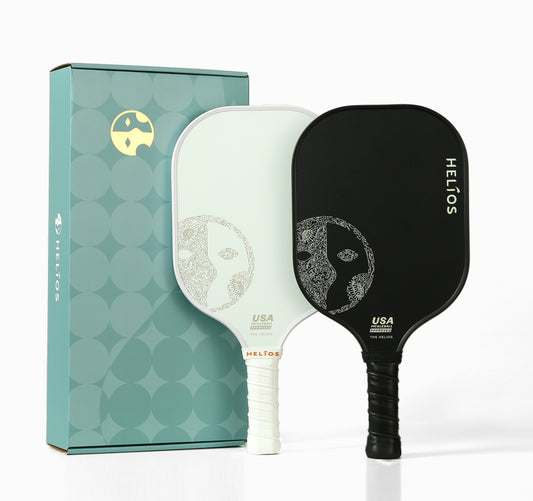
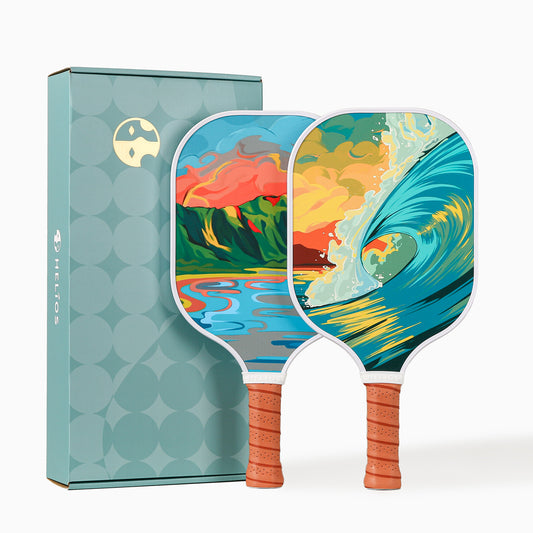
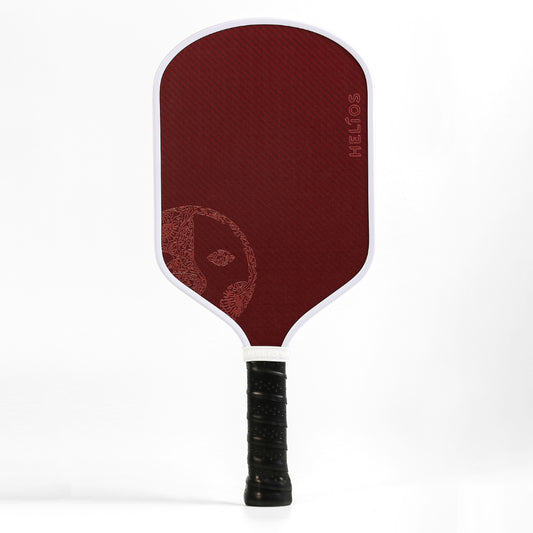
Pickleball paddles are compact, lightweight, and solid-faced. A child can pick one up and start swinging with confidence almost immediately. At Helios, we designed our paddles with exactly this kind of accessibility in mind. Our Energy Series paddles are handcrafted for balance and control, giving young players a responsive feel without the weight or complexity of a strung racquet. The Helios Beginner Pickleball Paddle Set is an especially popular choice for families because it includes everything needed to start playing right out of the box.
The ball itself makes a difference, too. Pickleballs are lightweight, perforated plastic, similar to wiffle balls. They travel slower through the air and bounce lower than tennis balls, giving kids more time to react, set their feet, and prepare for each shot. Tennis balls bounce higher, move faster, and require more precise timing, which can be frustrating for beginners who are still building those reflexes.
The Learning Curve: Quick Wins vs Slow Progress
Ask any youth sports coach, and they will tell you the same thing: kids need early wins. If a child feels like they are failing for weeks on end, they lose interest. If they experience quick progress and genuine fun in their first few sessions, they come back hungry for more. This is where pickleball vs tennis for kids really separates.
In pickleball, the underhand serve is one of the easiest techniques in any racquet sport. Most kids can land a legal serve within their first fifteen minutes on the court. Compare that to tennis, where the overhand serve is one of the most technically complex movements in all of sports. Young tennis players often spend months working on their serve before it becomes consistent. That gap between "I started playing" and "I can actually play" is much wider in tennis, and for many kids, it is the gap where interest dies.
Pickleball's scoring is also more intuitive. Games go to 11 points, scored only on serves, with a simple win-by-two rule. Tennis scoring, with its 15-30-40-deuce structure and game-set-match hierarchy, can feel confusing even for adults. For children, keeping score in pickleball feels natural from day one.
Physical Demands: Safer on Growing Bodies
Parents rightfully worry about the physical toll of sports on developing bodies. Tennis is a high-impact sport that puts significant stress on shoulders, elbows, and backs, especially in young players who are practicing serves repeatedly. Rotator cuff injuries and back issues are not uncommon in competitive youth tennis.
Pickleball is considerably gentler. Most shots are hit below shoulder height, the swing mechanics are less aggressive, and the shorter court means less explosive sprinting and sudden direction changes. For kids between the ages of five and twelve, this lower-impact profile is a real advantage. It lets them build athletic skills, coordination, and sport-specific muscle without the repetitive stress injuries that can come with more demanding racquet sports.
That is not to say pickleball lacks a physical workout. The quick rallies, lateral movement, and fast-twitch reflexes required at the net all contribute to cardiovascular fitness, agility, and reaction time. It is a complete sport. It simply asks less of a child's body in the areas most prone to injury.
The Social Side: Why Kids Keep Coming Back
Pickleball or tennis for children is not just a question of mechanics. It is also about culture. Pickleball has developed a reputation as one of the most welcoming, social, and inclusive sports in the country. The compact court puts players close together, which naturally encourages conversation, laughter, and connection between points. Doubles is the most common format, meaning kids are always playing with a partner rather than standing alone on the other side of the net.
The social dimension is why so many families, schools, and community organizations are adopting pickleball as a go-to youth activity. Stevenson High School partnered with Helios to integrate pickleball paddles into their PE curriculum and student events, and the response from students has been overwhelmingly positive. Georgetown University and Harvard University have also brought Helios paddles into their recreational programs. The common thread is that pickleball gets people playing together fast, which is exactly what young athletes need.
Can Pickleball Prepare Kids for Tennis Later?
Here is the thing parents need to hear: choosing pickleball first does not close the door on tennis. In fact, many coaches believe it opens it wider. The foundational skills kids build in pickleball, including hand-eye coordination, footwork, court awareness, and shot placement, all transfer directly to tennis. Children who start with pickleball often transition to tennis with a head start on the coordination and game sense that pure beginners lack.
Think of it as building a foundation. Pickleball gives young players a positive relationship with racquet sports, a sense of accomplishment, and the physical literacy to pick up tennis with confidence when they are ready. Our Selene Swift Pickleball Paddle Set and Gaia Nature Set are both excellent options for families who want a quality paddle that grows with their child as their skills develop.
How to Get Your Kids Started with Pickleball
Getting started is easier than you might expect. Pickleball courts are popping up in parks, recreation centers, and schools everywhere. Many tennis courts are being lined for dual use, so you may already have one in your neighborhood. All you need is a paddle, a few balls, and a net.
For families looking for premium equipment that will last, our Helios Beginner Pickleball Paddle Set is designed to get players on the court with everything they need. Pair it with our Organic Overgrip for a better grip fit on smaller hands, and the On The Court Tote Bag to carry it all. Your kids will be rallying before the afternoon is over.
Frequently Asked Questions
Is pickleball easier than tennis for kids to learn?
Yes. The smaller court, lighter paddle, slower ball, underhand serve, and simpler scoring system all make pickleball significantly easier for children to pick up. Most kids can rally and keep score within their first session.
At what age can children start playing pickleball?
Children as young as five can start playing pickleball with appropriately sized paddles. The lightweight equipment and low-impact nature of the sport make it safe and accessible for a wide range of ages and abilities.
Does pickleball help kids transition to tennis later?
Absolutely. The hand-eye coordination, footwork, court awareness, and shot placement skills developed in pickleball transfer directly to tennis. Many youth coaches recommend pickleball as a stepping stone for children who eventually want to play tennis.
What equipment do kids need to start playing pickleball?
A paddle, a few pickleballs, and access to a court. The Helios Beginner Pickleball Paddle Set includes everything a family needs to start playing right away.
Is pickleball safer than tennis for growing bodies?
Pickleball places less stress on shoulders, elbows, and backs because most shots are hit below shoulder height, and the swing mechanics are less aggressive. The smaller court also reduces the explosive sprinting and sudden stops that can strain young joints. It is a lower-impact sport overall, which makes it a strong choice for developing athletes.