How to Practice Pickleball Alone: Effective Solo Drills and Tips

Finding a practice partner is not always possible, but that should never stop you from improving your game. Solo practice builds muscle memory, sharpens reflexes, and reinforces proper technique without the pressure of competition. Whether you have access to a court or just a wall at home, dedicated solo training with your Helios paddle can dramatically accelerate your development.
Repeating specific movements strengthens the neural pathways responsible for those actions, making your strokes faster and more automatic over time. Solo drills also let you isolate weaknesses, whether that means a shaky backhand or inconsistent serving, and address them directly.
[[product:the-helios-pickleball-paddles]]
Essential Solo Drills to Sharpen Your Game
The following drills require minimal equipment and can be performed at a court, in your driveway, or inside your garage. Focus on quality repetitions rather than speed, and you will see measurable improvement within weeks.
1. Wall Rally Drill
A smooth wall is your best training partner. Mark a line at 34 inches (net height) and stand 7 to 10 feet away. Hit continuous forehands and backhands, keeping the ball below the line to simulate realistic net clearance.
- Dink variation: Hit soft shots just below the line to develop touch
- Volley variation: Stand 3 to 4 feet away for rapid-fire reaction training
- Target variation: Tape a small box on the wall and aim for precision
2. Static Drop Feed
Drop the ball in front of you, let it bounce once, then hit it with proper low-to-high swing mechanics. Repeat 50 or more times, alternating between forehand and backhand. A portable net or even a chair can simulate net clearance if you want visual feedback. Practicing at home in your driveway or garage makes this drill convenient for daily repetition.
3. Serve Target Practice
Place targets (cones, towels, or buckets) in different zones of the service box. Alternate between deep serves near the baseline and short serves closer to the kitchen line. Aim for 10 consecutive successful serves in each target zone before moving to the next.
Consistent serving wins matches. Dedicate at least 10 minutes of every solo session to serve accuracy.
4. Shadow Swinging
Mimic your strokes without a ball, focusing on proper form and footwork. Pay attention to weight transfer as you step into shots, paddle angle for volleys, and the split-step before each movement.
Recording yourself on video helps identify flaws in technique that feel correct but look different on screen. Shadow practice is effective anywhere and requires no equipment beyond your paddle.
5. Paddle Ball Juggling
Bounce the ball continuously on your paddle face, keeping it airborne as long as possible. Challenge yourself by walking while juggling or alternating between forehand and backhand taps. Juggling improves hand-eye coordination and develops the soft touch needed for dinks and drop shots.
6. Third-Shot Drop Simulation
Stand at the baseline and hit soft shots that arc over an imaginary net and land near the kitchen line. Use a chair or barrier as a net substitute for visual reference. The third-shot drop is one of the most important shots in pickleball, and solo repetition builds the muscle memory needed to execute it under pressure.
7. Footwork Ladder Drills
Use an agility ladder or tape lines on the ground to practice quick foot movements. Focus on lateral shuffles that keep you low and balanced, along with quick in-and-out steps that simulate transitions to and from the non-volley zone.
Good footwork positions you for better shots. Even five minutes of ladder work before hitting drills warms up your legs and improves court coverage.

Practicing Pickleball at Home
You do not need a full court to improve. Home practice options include:
- Garage or basement walls for rally drills
- Driveway space for drop-offs and serving practice
- Portable nets that set up in minutes
- Foam or low-bounce balls for indoor use
Gear Up for Effective Solo Practice
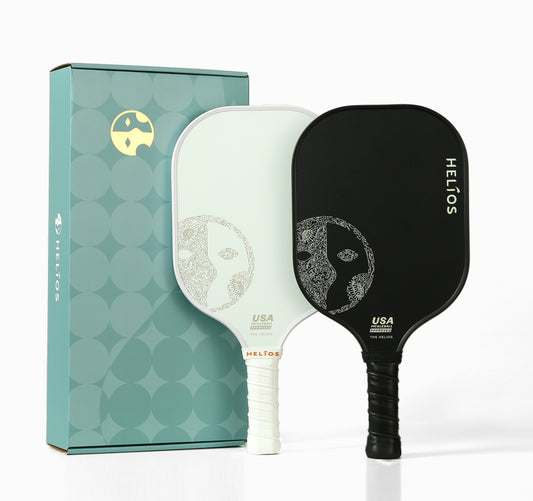
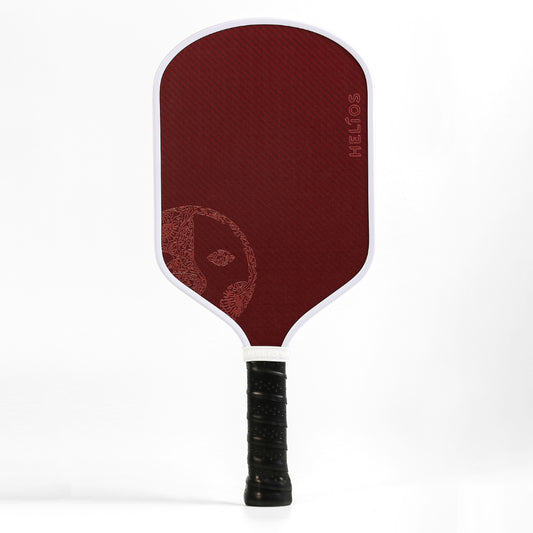
Quality equipment makes solo training more productive. We designed our paddles at Helios to deliver consistent performance whether you are drilling against a wall or competing in tournament play.
The Helios provides the balance of power and control needed for both wall rallies and precision serve practice.
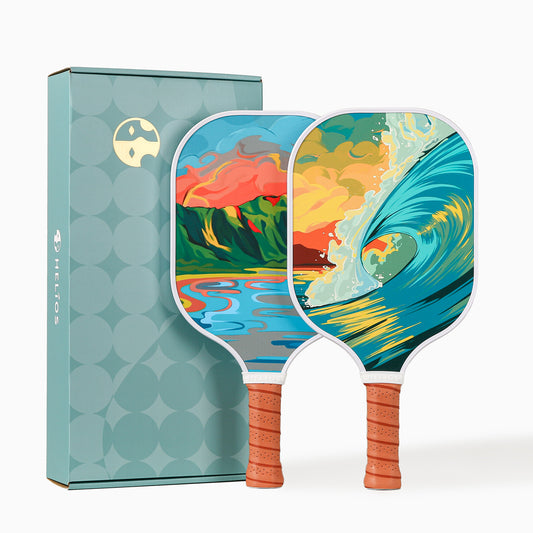
The Gaia excels at soft game techniques, making it ideal for players focused on dink and drop shot drills.
[[product:the-gaia-pickleball-paddles]]
Maintain a fresh grip during intense practice sessions with our Helios Organic Overgrip, which absorbs moisture and provides tacky control swing after swing.
[[product:the-overgrip]]
Frequently Asked Questions
Q: How long should solo practice sessions last?
Aim for 20 to 30 minutes of focused practice. Shorter, consistent sessions produce better results than occasional marathon practices. Quality repetitions matter more than total time.
Q: Can I improve without access to a pickleball court?
Absolutely. Wall drills, shadow swinging, paddle juggling, and footwork exercises all build skills without requiring a court. Many players see significant improvement from consistent at-home practice.
Q: What is the most important solo drill for beginners?
Wall rallies offer the best value for beginners. The drill builds hand-eye coordination, stroke consistency, and reflexes simultaneously while providing instant feedback on every shot.
Q: Should I use a ball machine for solo practice?
Ball machines are excellent for simulating game-like shots but are not required. Wall drills and self-fed exercises provide effective training at no additional cost.
Start Your Solo Training Today
Solo practice transforms idle time into measurable skill improvement. Browse Our Paddle Collection and find the perfect paddle for your training sessions.