How to Convert a Tennis Court to Pickleball: Lines, Nets, and Costs

You have a tennis court that sits empty most of the week. Meanwhile, every public pickleball court in your area has a 30-minute wait. The math is simple: one standard tennis court can hold up to four pickleball courts. And the conversion can cost as little as $100 or as much as $15,000, depending on how permanent you want it.
This court conversion guide breaks down the dimensions, line layouts, net adjustments, and costs so you can go from underused tennis court to packed pickleball hub.
How Many Pickleball Courts Fit on One Tennis Court
A regulation tennis court measures 60 feet wide by 120 feet long (including overruns). A pickleball court is 20 feet wide by 44 feet long. That size difference means how many pickleball courts one tennis court holds depends on the layout you choose.
|
Layout |
Courts |
Spacing |
Best For |
|
Single court (centered) |
1 |
Maximum buffer on all sides |
Casual play, shared tennis/pickleball use |
|
Two courts (side by side) |
2 |
Good spacing between courts |
Competitive play, clubs, rec leagues |
|
Four courts (2x2 grid) |
4 |
Tighter spacing, less buffer |
High-traffic parks, community centers |
A two-court setup is the most popular choice for clubs and HOAs. Four courts work well for parks and recreation departments that need to serve the most players on a single surface.
The Three Ways to Convert
There are three approaches to a tennis court pickleball conversion, and each comes with a different price tag and level of permanence. Pick the one that fits your situation.
Temporary Lines and Portable Nets
The cheapest and fastest option.
- Use court marking tape or chalk to draw pickleball lines tennis court style, then set up a portable net adjusted to 34 inches at the center. You can be playing in under an hour.
- Convert court cost: $100 to $300 (tape, chalk, portable net).
This works for testing demand, occasional play, or shared courts where tennis players still need their lines clear. The downside: tape peels after a few sessions, and portable nets can shift during aggressive play.
Dual-Use Lines (Painted) With Adjustable Nets
This is the sweet spot for most facilities.
- A contractor paints permanent pickleball lines onto the existing tennis court in a different color (usually blue or green against white tennis lines).
- The tennis net stays in place but gets a center strap adjustment to lower it from 36 inches to 34 inches at the middle.
- Convert court cost: $1,000 to $3,000 depending on the number of courts and line complexity.
Both sports share the surface. Pickleball players follow the colored lines. Tennis players follow the white ones. This is the most common setup at community parks and multi-sport clubs across the country.
Full Permanent Conversion
- The tennis court is resurfaced, repainted with only pickleball lines, and fitted with permanent pickleball net posts.
- This removes tennis entirely and creates dedicated courts with clean sightlines and no line confusion.
- Convert court cost: $5,000 to $15,000+ depending on surface condition, resurfacing needs, number of courts, lighting adjustments, and fencing.
This makes sense when tennis usage has dropped and pickleball demand is high enough to justify a permanent switch. Many rec departments and country clubs have gone this route in the past 3 years.
Net Height Matters More Than You Think
A tennis net sits at 36 inches in the center and 42 inches at the posts. A pickleball net sits at 34 inches in the center and 36 inches at the posts. That 2-inch difference in center height changes how the game plays.
For temporary setups, use a center strap to pull the tennis net down to 34 inches. For dual-use courts, adjustable post systems let you switch between tennis and pickleball height in under a minute. For permanent conversions, install dedicated pickleball posts and nets.
What You Need on the Court Once It Is Ready
Lines and nets get you a playable court. But players need gear to go with it. If you are converting a court for a club, HOA, or community center, consider stocking a few items for shared use:
- A set of recreational paddles with fiberglass faces for beginners
- Paddle sets with two paddles, balls, and a carrying case for grab-and-go play
- Outdoor tournament-spec pickleballs (40-hole, harder plastic)
- Replacement overgrips and accessories for regular players
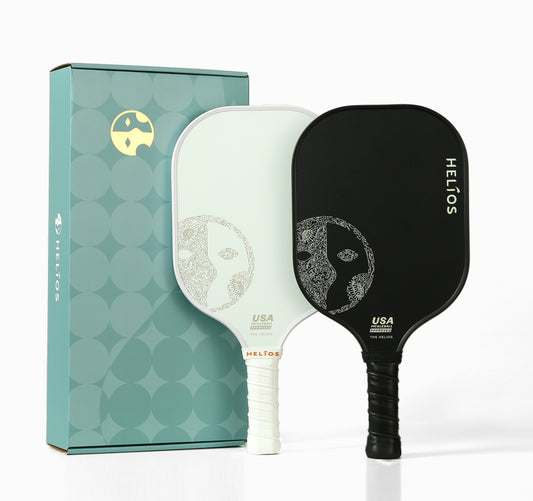
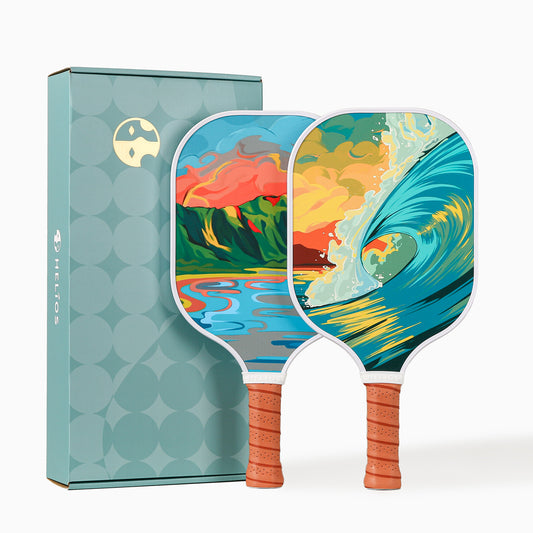
For facilities that want branded gear with their club or community logo, Helios custom paddles start at a 10-unit minimum with a 14-day turnaround.
Players bringing their own gear should carry a performance paddle or recreational model, court shoes, and a court bag to keep everything organized courtside.
From Empty Court to Full Brackets
Converting a tennis court to pickleball is one of the fastest ways to add court capacity without pouring new concrete. Tape and a portable net get you playing today. Painted lines and adjusted nets give you a dual-use surface that lasts years. A full conversion creates dedicated courts for a community that has outgrown its current setup.
Start with the layout that matches your budget and demand. And when the courts are ready, browse the Helios collection for paddles, accessories, and sets that put the right gear in every player's hands.
Frequently Asked Questions
How many pickleball courts can fit on one tennis court?
Up to four. A regulation tennis court (60 x 120 feet) can hold four pickleball courts (20 x 44 feet each) arranged in a 2x2 grid. Two courts is the most common layout for clubs that want better spacing between playing areas.
How much does it cost to convert a tennis court to pickleball?
Temporary (tape and portable nets): $100 to $300. Dual-use painted lines: $1,000 to $3,000. Full permanent conversion with resurfacing: $5,000 to $15,000+. Costs vary by surface condition, number of courts, and whether lighting or fencing adjustments are needed.
Can I play pickleball on a tennis court without any conversion?
Yes, with limitations. Lower the tennis net to 34 inches using the center strap, and use temporary tape to mark pickleball boundaries. The surface works fine, but the tennis lines can cause confusion during play.
Do I need different lines for pickleball on a tennis court?
Yes. Pickleball has a 7-foot non-volley zone (the kitchen) on each side of the net that does not exist in tennis. Sideline and baseline dimensions are also different. Lines should be a different color from tennis lines to avoid confusion.
What is the biggest mistake in tennis-to-pickleball conversions?
Not adjusting the net height. A tennis net at 36 inches center is 2 inches too high for pickleball. That changes the angle of every dink and volley. Always lower or replace the net to meet the 34-inch pickleball standard.
Can a converted court still be used for tennis?
Yes, if you choose a dual-use setup with painted lines in a different color. The tennis net stays in place and gets adjusted up or down depending on the sport. Many community courts successfully share space for both games.