Gen 3 Pickleball Paddle: What It Is and Why It Still Matters in 2026

If you have shopped for a paddle in the past 2 years, you have seen "Gen 3" on product pages, YouTube reviews, and Reddit threads. Sometimes it is a selling point. Sometimes it is a warning. The JOOLA Gen 3 line got pulled from the approved list. Other Gen 3 paddles are still the most popular models on tour. So what is a Gen 3 pickleball paddle, and should you be looking for one or avoiding one in 2026?
Gen 3 is not a brand. It is not a certification. It is industry shorthand for a specific construction method that changed how paddles generate power, spin, and feel. No governing body defines it, but the differences under the surface are real and measurable.
The Four Generations at a Glance
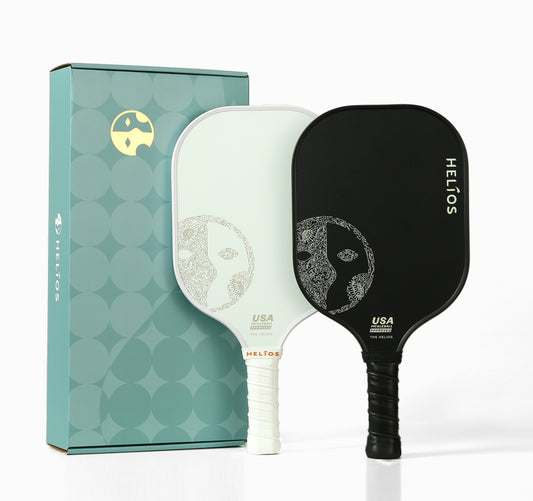
Understanding Gen 3 requires seeing where it sits in the full timeline. Each generation built on the last. The Helios paddle line incorporates the engineering principles that Gen 3 introduced, refined for USAPA compliance and long-term durability.
| Generation | Core Construction | Key Innovation | Era |
|---|---|---|---|
| Gen 1 | Polypropylene honeycomb, sandwich-style bonding | First modern composite paddles (replacing wood) | 2015 to 2020 |
| Gen 2 | Thermoformed edges, fused perimeter | Sealed, one-piece construction for better power transfer | 2020 to 2023 |
| Gen 3 | Foam injected between core and edges, floating core design | Maximum power and spin from foam-enhanced energy return | 2023 to present |
| Gen 4 | Full foam core replacing honeycomb entirely | Consistency and dampening over raw power | 2025 to present |
Gen 3 paddles are not obsolete in 2026. They represent the dominant construction method across competitive play. Gen 4 (full foam core) is emerging but has not replaced Gen 3 as the standard. Most tournament-level paddles sold today use Gen 3 principles.
What Makes a Gen 3 Paddle Different
Three engineering changes define the Gen 3 construction. Each one changes how the paddle plays.
Foam Perimeter Injection
The defining Gen 3 innovation. EVA or TPE foam is placed between the polypropylene honeycomb core and the paddle's edge, creating what engineers call a "floating core" design. The core sits slightly separated from the edge frame rather than being bonded directly to it. That separation creates a "diving board" effect: the face absorbs energy at contact and releases it more efficiently than a hard-edged Gen 2 paddle.
The result is more power with less swing effort. A Gen 3 paddle hit the same way as a Gen 2 produces a noticeably faster ball exit speed. That extra energy return is what made Gen 3 paddles feel revolutionary when they first appeared, and it is also what triggered the PBCoR testing controversy.
Advanced Thermoforming
Gen 2 introduced thermoformed edges. Gen 3 took it further. The entire paddle shell (face, edges, and back) is heat-molded as a single unit under pressure, creating a seamless structure with no internal gaps. That structural integrity means the paddle transfers energy more consistently across the entire face, not just the center.
Raw Carbon Fiber Faces
Most Gen 3 paddles use raw T700 carbon fiber faces rather than coated or painted surfaces. The exposed carbon weave provides maximum surface texture for spin generation. Helios performance paddles use Toray T700 carbon fiber with a particle-printed finish that preserves spin performance longer than raw carbon alone while maintaining the tactile feel Gen 3 players expect.
The JOOLA Controversy and Why It Matters
You cannot talk about Gen 3 paddles without addressing the JOOLA delisting. In May 2024, USA Pickleball removed the JOOLA Gen 3 line from the approved list after field testing revealed that retail paddles contained significantly more foam than the certification samples JOOLA had originally submitted. The retail versions exceeded power limits that the tested samples had passed.
This event had three lasting effects:
- USA Pickleball accelerated the PBCoR (Paddle/Ball Coefficient of Restitution) testing standard, capping energy return at 0.43
- On-site field testing became standard at Golden Ticket and national events
- Players became more aware that "Gen 3" is not automatically USAPA approved, and approval can be revoked after purchase
The controversy was about one brand's quality control, not about Gen 3 construction as a concept. Dozens of Gen 3 paddles from other brands passed PBCoR testing and remain fully approved. All Helios paddles, built with Gen 3 engineering principles, carry current USAPA approval.
Gen 3 vs Gen 4: Which Should You Buy in 2026
Gen 4 paddles (full foam core) are the newest category, but Gen 3 is far from dead. Here is how they compare for the average competitive player.
| Factor | Gen 3 (Foam-Enhanced Honeycomb) | Gen 4 (Full Foam Core) |
|---|---|---|
| Power | Higher (foam perimeter amplifies energy return) | Moderate (foam absorbs more energy) |
| Control | Requires more skill to manage | More forgiving, predictable response |
| Spin | High (raw carbon faces standard) | High (same face materials available) |
| Sweet spot | Large | Very large (foam distributes impact broadly) |
| Feel | Hotter, snappier, more aggressive | Softer, more dampened, more consistent |
| Durability | Good (thermoformed structure) | Still being proven (newer technology) |
| Best for | Power-first players, aggressive doubles, competitive play | Touch-first players, kitchen line specialists, all-around play |
For most players shopping in 2026, Gen 3 remains the safer and more proven choice. Gen 4 is appealing for players who want maximum consistency and dampening, but the technology is newer and the long-term durability data is limited.
Where Helios Fits in the Generation Landscape
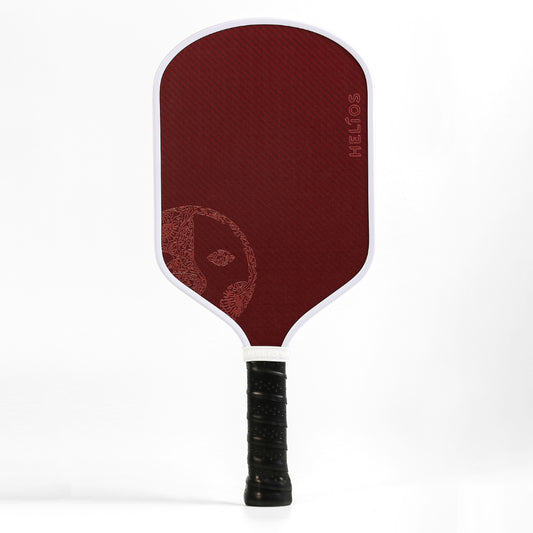
The Helios performance collection uses the core engineering principles that define Gen 3: thermoformed construction, Toray T700 carbon fiber faces, and a reactive honeycomb polypropylene core compressed over 16 hours for uniform cell density. The particle-printed finish extends surface grit longevity beyond what raw carbon delivers alone.
The recreational line uses fiberglass faces with the same core technology for players who want a softer feel and more forgiveness. Both lines carry USAPA approval and a lifetime warranty.
For a detailed breakdown of how the Helios models compare on spin, power, control, and core specs, visit the performance paddle comparison page. For the full Helios Gen 3 deep dive, including model-by-model breakdowns for the Athos, Apollo, Astraeus, Blaze, and Flare, read the complete guide on the Helios blog.
How to Choose a Gen 3 Paddle That Fits Your Game
If you are shopping Gen 3 paddles in 2026, focus on these specs rather than the generation label alone.
- Core thickness: 14mm for speed and kitchen play, 16mm for touch and stability
- Weight: 7.5 to 8.5 oz for the competitive sweet spot
- Face material: raw carbon for maximum spin, particle printed for longer-lasting grit, fiberglass for softer feel
- Grip size: build up with an overgrip from the Helios accessories collection if the stock handle feels thin
- USAPA approval: confirm on the official list within a week of any tournament
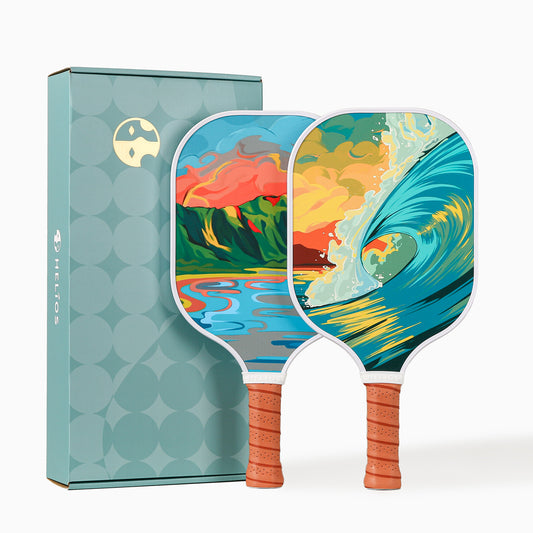
A paddle set gives you two Gen 3-engineered paddles to compare and rotate, which is the fastest way to figure out your preferences without committing to a single model.
The Generation That Changed the Game
Gen 3 pickleball paddles introduced foam-enhanced cores, advanced thermoforming, and raw carbon faces to the sport. They pushed performance boundaries far enough to force a rewrite of the testing standards. Some paddles crossed the line. Most stayed legal. The technology itself is not the problem. Bad quality control is.
In 2026, Gen 3 remains the construction standard for competitive play. Gen 4 is emerging. And for most players, the generation label matters less than the specific specs, the USAPA approval status, and how the paddle feels when you hold it. Browse the Helios collection for paddles built on Gen 3 principles with the compliance and warranty to back them up.
Frequently Asked Questions
What is a Gen 3 pickleball paddle?
A Gen 3 paddle uses foam injected between the honeycomb core and the paddle edge (a "floating core" design), advanced thermoforming for a seamless structure, and typically a raw or treated carbon fiber face. This construction produces higher power and spin than Gen 1 or Gen 2 paddles.
Are Gen 3 paddles still legal in 2026?
Many are. The JOOLA Gen 3 line was delisted for manufacturing variance, not because Gen 3 construction is inherently illegal. Dozens of Gen 3 paddles from brands including Helios, Selkirk, Engage, Six Zero, and others remain fully USAPA approved. Always check the official approved list before competing.
What is the difference between Gen 3 and Gen 4 paddles?
Gen 3 uses a honeycomb core enhanced with foam around the edges. Gen 4 replaces the honeycomb entirely with a full foam core. Gen 3 feels hotter and more powerful. Gen 4 feels softer, more dampened, and more consistent. Both are available in the 2026 market.
Why were the JOOLA Gen 3 paddles banned?
USA Pickleball removed the JOOLA Gen 3 line in May 2024 after discovering that retail paddles contained significantly more foam than the certification samples. The extra foam pushed the paddles past power limits. This was a quality control issue specific to JOOLA, not a ban on Gen 3 technology itself.
Should a beginner buy a Gen 3 paddle?
A beginner can, but Gen 3 power paddles are demanding. The extra energy return means mishits travel farther and faster, which can be harder to control while learning. A Gen 2 or entry-level Gen 3 paddle with a fiberglass face (like the Helios recreational line) offers more forgiveness for developing players.
Is Gen 3 better than Gen 4?
Neither is objectively better. Gen 3 favors power-first players who want maximum energy return. Gen 4 favors touch-first players who want consistency and dampening. Most competitive players in 2026 still play Gen 3. Gen 4 is gaining ground but is newer, with less long-term durability data.