10 Essential Pickleball Rules Every Beginner Should Know

Stepping onto a pickleball court for the first time can feel overwhelming, especially when everyone around you seems to know exactly what they are doing. The good news? Pickleball has straightforward rules that anyone can learn in minutes. Once you understand the basics, you will spend less time confused and more time enjoying rallies with friends. Whether you are playing with a borrowed paddle or your own Helios paddle, knowing the rules makes every game more enjoyable.
The USA Pickleball Official Rulebook contains detailed regulations for competitive play, but beginners only need to grasp a handful of core concepts. Below are the ten rules of pickleball that will get you playing confidently from day one.
[[product:the-helios-pickleball-paddles]]
The 10 Rules of Pickleball You Need to Know
From serving techniques to non-volley zone rules, these fundamentals will help you avoid common mistakes and play with confidence. Master these rules, and you will be ready for any recreational game.
1. The Underhand Serve
Every point in pickleball begins with an underhand serve. Unlike tennis, you cannot swing overhead or use power serves. According to official rules, your paddle must contact the ball below your waist, your arm must move in an upward arc, and the paddle head must stay below your wrist at contact. A drop serve (letting the ball bounce before hitting) is also permitted and often easier for beginners to master.
2. Diagonal Service
Serves must travel diagonally across the court and land in the opponent's service area. Stand behind the baseline, keep at least one foot on the ground, and aim for the box diagonally opposite your position. A serve that lands in the kitchen (the non-volley zone) or on the kitchen line is a fault.
3. The Two-Bounce Rule
One of the most unique rules in pickleball is the two-bounce rule. After the serve, the receiving team must let the ball bounce once before returning it. Then the serving team must also let the return bounce once before hitting. After these two bounces, players can volley (hit the ball out of the air) or play off the bounce. Forgetting to let the ball bounce results in a fault.
4. The Non-Volley Zone (The Kitchen)
The kitchen is a 7-foot zone on each side of the net where volleying is prohibited. You cannot hit the ball out of the air while standing in this area or on its boundary line. Even if momentum carries you into the kitchen after a volley, it counts as a fault. However, you may enter the kitchen freely to play with a ball that has already bounced.
5. Scoring Basics
In traditional (side-out) scoring, only the serving team can score points. Games typically play to 11 points, and you must win by 2. Tournament matches sometimes go to 15 or 21. Key scoring facts include:
- Points are earned when the opposing team commits a fault
- If the receiving team wins the rally, they gain the serve but not a point
- Rally scoring (points on every rally) is now permitted in some tournaments
6. Server Rotation in Doubles
In doubles, both partners get a chance to serve before the serve passes to the opponents. The first server begins from the right side of the court. After scoring, the server switches sides and serves again. When that server faults, the partner serves from their current position. Once both partners fault, the opposing team gets the serve (called a side-out). At the start of each game, only one partner serves before the first side-out.
7. The Three-Number Score Call
Doubles scoring uses three numbers: your team's score, the opponent's score, and which server you are (1 or 2). For example, calling "4-2-1" means your team has 4 points, opponents have 2 points, and you are server number 1. Always announce the score before serving to avoid confusion.
8. Faults and How to Avoid Them
A fault ends the rally and results in either a point for the serving team or a loss of serve. Common faults include:
- Hitting the ball out of bounds or into the net
- Volleying from inside the kitchen
- Violating the two-bounce rule
- Serving into the wrong court or the kitchen
- Letting the ball bounce twice on your side
9. Line Calls
Any ball that lands on a boundary line is considered "in" and remains in play. The only exception is the kitchen line on a serve, which counts as a fault. In recreational play, line calls operate on the honor system. The team on whose side the ball lands makes the call. When in doubt, give your opponent the benefit and call it in.
10. Let Serves and Replays
If your serve clips the net but still lands in the correct service area, it is called a "let," and you get to serve again without penalty. However, if the ball hits the net and lands in the kitchen or out of bounds, it counts as a fault. Replays may also occur if a ball from another court interferes with your rally. To know more about such interesting pickleball rules, check out the official YouTube channel.

Start Your Pickleball Journey with the Right Gear
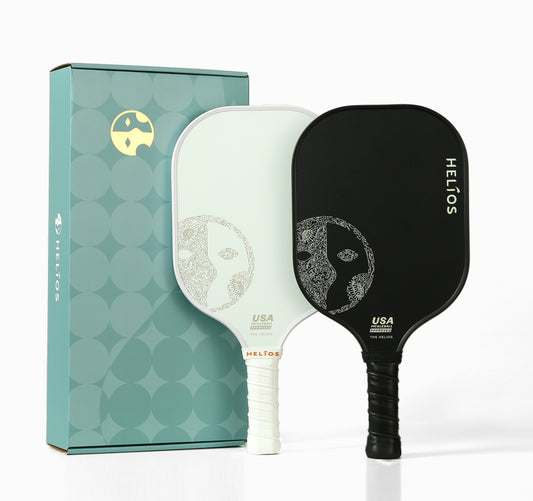
Now that you understand the essential rules, having the right equipment makes learning even easier. We designed our paddles at Helios with beginners in mind, offering forgiving sweet spots and comfortable grips that help you focus on technique rather than fighting your gear.
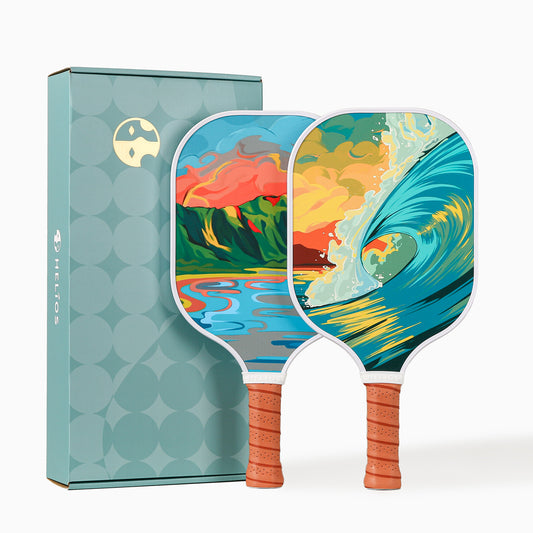
Our Helios Beginner Pickleball Paddle Set includes everything you need to start playing immediately, with paddles engineered for control and consistency.
For players ready to progress, The Gaia offers excellent touch for mastering soft game techniques like dinks and drop shots.
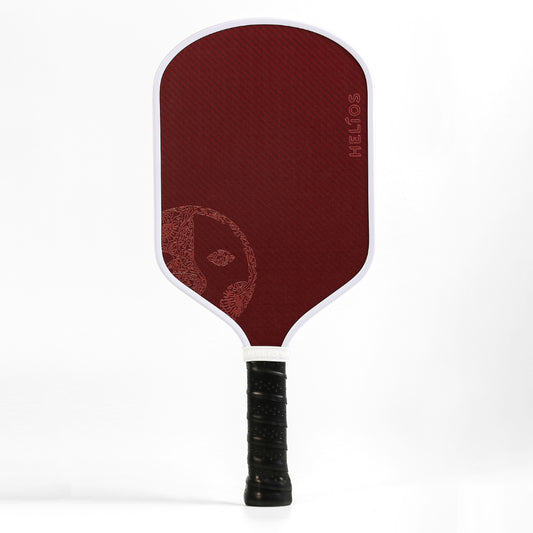
The Helios delivers our signature balance of power and precision, making it ideal for beginners who want a paddle they can grow into as their skills develop.
[[product:helios-beginner-pickleball-paddle-set]]
Frequently Asked Questions
Q: Can I volley from anywhere on the court?
You can volley from anywhere except the non-volley zone (kitchen). After the two-bounce rule is satisfied, volleys are permitted in all other areas of the court.
Q: What happens if the ball hits me?
If a ball strikes any part of your body before bouncing, it is a fault against you. However, contact with your paddle hand below the wrist is considered part of the paddle and remains in play.
Q: Is pickleball singles different from doubles?
The core rules remain identical. Singles uses a two-number score call instead of three, and server rotation is simpler since there is no partner.
Q: Can the ball bounce twice on my side?
No. If the ball bounces twice on your side before you return it, your team commits a fault and loses the rally. You must hit the ball before it bounces a second time.
Q: What happens if I accidentally hit the ball twice with my paddle?
A double hit is legal as long as it is unintentional, occurs during a single continuous stroke, and is made by only one player. The ball remains in play.
Ready to Play?
With these rules under your belt, you are ready to step on the court. Browse Our Paddle Collection and find the perfect paddle to start your pickleball journey.