Equipment Time-Outs and Paddle Inspections: Tournament Rules

You show up to your first sanctioned tournament, paddles in hand, ready to play. Then the referee asks to inspect your paddle before the match starts. If you have never been through a tournament paddle check, the process can catch you off guard. And if your paddle fails, you are either borrowing one or going home.
Pickleball paddle inspection rules have tightened significantly since 2024. New testing standards, on-site equipment checks, and a growing list of de-listed paddles mean that knowing the rules before you register is not optional. Here is everything you need to know about paddle inspections, equipment time-outs, and what gets a paddle pulled from approved play.
What Happens During a Pre-Match Paddle Inspection

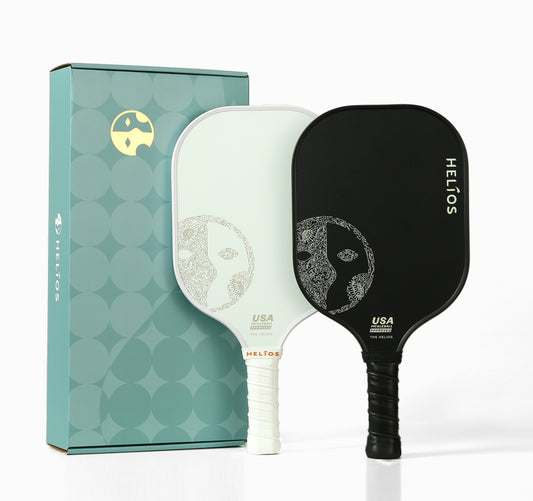
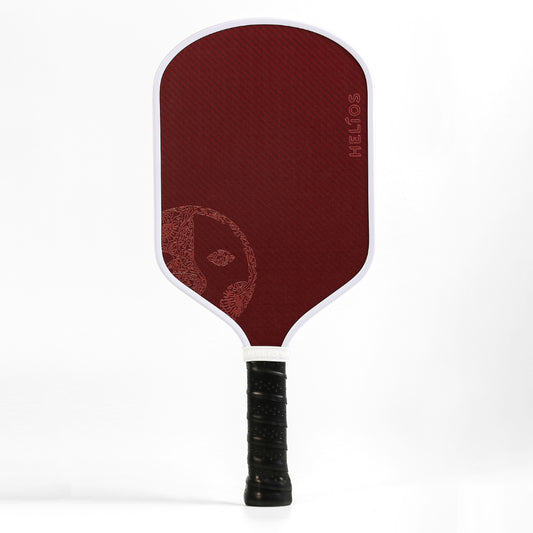
Every USA Pickleball sanctioned tournament includes a paddle check before your match begins. As of 2026, paddle verification has moved from a casual check-in to a mandatory pre-match inspection. The Helios paddle collection carries USAPA approval across the full line, so every model passes inspection out of the box.
Here is what the referee checks under Rules 2.E and 2.F of the USA Pickleball Rulebook:
Approved List Confirmation
The referee confirms your paddle appears on the USA Pickleball Approved Paddle List. Your paddle must display a USAP decal or stamp of approval plus a clearly marked manufacturer brand and model name or number (Rule 2.E.7).
Physical Inspection
The referee touches and visually inspects both sides of the hitting surface. Under Rule 2.E.2, the paddle must not contain:
- Delamination (face separating from core)
- Holes or cracks in the surface
- Rough textures or indentations that break the paddle skin
- Any objects or features that allow excessive spin
If the referee identifies any of these issues, the paddle fails inspection and cannot be used for that match.
On-Site Testing at Larger Events
At Golden Ticket and national-level events, USA Pickleball now runs on-site equipment testing using PBCoR measurement tools. At recent Golden Ticket events, over 2,000 paddles were tested on-site. About 6% failed, meaning roughly 1 in 17 players showed up with a paddle that did not meet current standards.
The Two Standards That Get Paddles De-Listed
USAPA paddle testing focuses on two primary measurements. Failing either one gets a pickleball paddle de-listed from approved play.
| Standard | What It Measures | Current Limit |
|---|---|---|
| Surface roughness | How textured the paddle face is (affects spin) | 30 micrometers maximum |
| PBCoR (Paddle/Ball Coefficient of Restitution) | How much energy the paddle returns to the ball on impact | 0.43 maximum (enforced since July 1, 2025) |
Paddle Roughness Limit
The paddle roughness limit caps surface texture at 30 micrometers. Anything above that generates spin beyond what USA Pickleball considers fair. In April 2022, CRBN paddles were pulled mid-tournament at the US Open Championships after in-field testing revealed their retail models exceeded roughness limits. The paddles were eventually reinstated after CRBN implemented quality control changes.
PBCoR (The Trampoline Effect)
PBCoR measures how fast the ball rebounds off the paddle face. A paddle that exceeds 0.43 returns too much energy, creating what USA Pickleball calls the "trampoline effect", where the paddle face deforms and snaps back, launching the ball with unearned power.
Paddle's sunset under PBCoR testing effective July 1, 2025 included the JOOLA Perseus Mod TA-15 (14mm and 16mm), Gearbox Pro Power Elongated, and several ProKennex Black Ace models. One model (ProKennex Black Ace LG) was later reinstated after re-passing all testing requirements.
How Paddles Go From Approved to De-Listed

A paddle does not have to start illegal to become illegal. Paddles can pass lab testing during certification and then fail on-site testing months later. Here is why.
Core Degradation Over Time
The honeycomb polypropylene cores in most paddles lose structural integrity with repeated high-impact play. As the core softens, the paddle's rebound characteristics change, potentially pushing it past the PBCoR threshold even though it passed when new.
Manufacturing Variance
Some paddles fail because the retail version differs from the sample submitted for certification. The JOOLA Gen 3 line was removed in May 2024 after USA Pickleball found that retail paddles contained significantly more foam than the certification samples JOOLA had submitted.
Surface Wear Changes Roughness
A paddle's surface texture can change with use. Some faces get smoother (losing spin), while others can develop micro-abrasions that increase roughness beyond the 30-micrometer limit.
Equipment Time-Outs: What They Are and When to Use Them

An equipment time-out is a stoppage called when a player's equipment breaks, becomes unusable, or needs replacement during a match. Under USA Pickleball rules, equipment time-outs are separate from regular time-outs and do not count against your standard allotment.
You can call one when:
- Your paddle cracks or develops visible damage mid-match
- Your shoe breaks or becomes unsafe
- Clothing or gear creates a safety issue
The replacement paddle must also be on the USA Pickleball Approved List. Keep a backup in your bag. If you play with performance paddles, carry a second approved paddle so a mid-match failure does not end your tournament.
How to Make Sure Your Paddle Passes

A few simple steps before every tournament keep you on the right side of the rules.
- Check the USA Pickleball Approved Paddle List within a week of the event (approval status can change)
- Inspect your paddle for delamination, cracks, bubbles, or lifting near the edge guard
- Run a bounce test across the face to check for dead spots
- Confirm the USAP approval stamp or decal is visible on the paddle
- Bring a backup paddle that is also on the approved list
- Replace your overgrip so the referee does not flag a deteriorated grip surface
All Helios paddles, including custom orders, carry USAPA approval and a lifetime warranty. If your paddle develops a manufacturing defect that would cause it to fail inspection, the warranty covers the replacement.
Know the Rules Before You Register
Pickleball paddle inspection rules are stricter than ever, and enforcement is getting tighter at every level of sanctioned play. If you are entering a tournament, verify your paddle's approval status, inspect it yourself before the event, and pack a backup. A 5-minute check at home beats a disqualification at the court.
Browse the Helios collection for USAPA-approved paddles, accessories, and paddle sets built to pass inspection and perform under pressure.
Frequently Asked Questions
What does a referee check during a paddle inspection?
The referee confirms your paddle is on the USA Pickleball Approved Paddle List, checks for the USAP approval stamp, and physically inspects both sides of the face for delamination, cracks, rough textures, and any features that create excessive spin (Rule 2.E.2).
What is the paddle roughness limit for tournament play?
USA Pickleball caps surface roughness at 30 micrometers. Anything above that generates spin beyond fair-play standards. CRBN paddles were famously de-listed in 2022 for exceeding this limit during in-field testing at the US Open Championships.
What is PBCoR and why does it matter?
PBCoR stands for Paddle/Ball Coefficient of Restitution. It measures how much energy a paddle returns to the ball on impact. The current limit is 0.43, enforced since July 1, 2025. Paddles exceeding this threshold create a "trampoline effect" that gives players unearned power.
Can my paddle pass lab testing and still fail at a tournament?
Yes. Paddles degrade over time. Core softening from repeated play can push a paddle past PBCoR limits months after it passed lab certification. On-site testing at Golden Ticket events found that about 6% of tested paddles failed, many belonging to players who had no idea.
What is an equipment time-out?
A stoppage called when a player's equipment breaks or becomes unusable during a match. It does not count against your regular time-outs. Your replacement paddle must also be on the USA Pickleball Approved List.
How do I check if my paddle is still approved?
Search the USA Pickleball Approved Paddle List at usapickleball.org. Check within a week of any tournament since approval status can change. Confirm that your specific model and version (not just the brand) appears on the current list.