Your EPP and USAPA Paddle Guide: What Every Player Should Know
What is a USAPA Approved Paddle?
If you want to play pickleball at any official level, understanding what makes a paddle “USAPA approved Paddle” is essential. The United States of America Pickleball Association (USAPA), now known as USA Pickleball, sets the standards for paddle legality in tournaments and leagues. These standards ensure fairness, consistency, and safety for all players.

Understanding USA Pickleball Standards
USA Pickleball sets clear approval criteria:
- Dimensions: Paddles must have a maximum length of 17in, and the combined length and width must not exceed 24in.
- Surface Texture: Paddle faces cannot be overly rough or textured (to prevent unfair spin).
- Core Material: Only approved materials like EPP, polymer, or Nomex are allowed.
- Deflection: The paddle should not have excessive bounce (no “trampoline” effect).
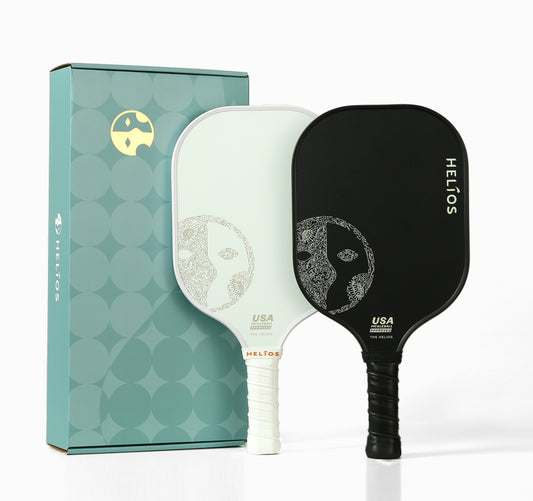
- Labeling: Each approved paddle displays the manufacturer’s name and model.
- Why Approval Matters for Competitive Play
Using an approved paddle is required in all sanctioned events. Tournament directors check paddles before play; if yours isn’t on the official list, you can’t compete. This protects the integrity of the sport and ensures a level playing field.
What makes a paddle USAPA approved?
Beyond just dimensions, USAPA paddle approval relies on strict material testing.1 A paddle must pass the "deflection test" (ensuring it doesn't act like a trampoline) and the "surface roughness test" (ensuring it doesn't generate excessive spin via friction).2 Whether you are evaluating Helios or Arti paddles, USAPA tournament approved status guarantees the gear relies on player skill rather than mechanical assistance.
Speed vs. Compliance
A common debate in coaching is paddlespeed vs USAPA training standards. While players want faster swing speeds (aerodynamics), pickleball paddle regulations limit how "hot" the face can be. A USAPA-compliant paddle ensures that while you can swing fast, the ball rebound remains within a control-focused limit, preventing the game from becoming dangerous or too fast for reaction times.
Read More About Everything About USAPA Certification Cost For Pickleball Paddle In 2025
Read More: What Is A Fault In Pickleball? USAPA Updated Guidelines
How to Check If Your Paddle is USAPA Approved
Before you invest in a new paddle or step onto the court, always confirm its approval status:
- Visit the USA Pickleball website
- Go to the “Equipment” section
- Search for your paddle by brand or model name
- Confirm it’s listed as approved
Markings and Labels to Look For
Look for:
- A “USAPA Approved” or “USA Pickleball Approved” label or stamp (face or handle)
- Manufacturer’s name and model number
- Sometimes, a serial number for added proof
If markings are missing, verify with the manufacturer or the official list.
EPP’s Role in Paddle Design and Regulations
EPP (Expanded Polypropylene) is now common in modern paddle design for its lightweight, durable, and shock-absorbing properties. Its acceptance as a legal core material means you get tournament playability with the comfort and control that EPP delivers.
Influence of Pros on Paddle Standards
Professional players often advise brands, leading to improvement in:
- Balance
- Grip
-
Core technology
When pros endorse a paddle, it raises the bar for quality and compliance—shifting what everyday players seek for performance and legality.
What Makes a Good Pickleball Paddle?
Choosing the right paddle is about your skill, style, and comfort—not just brand or price.
Key Features to Consider
- USAPA approval
- Comfortable grip size
- Suitable weight for your strength and style
- Durable, approved core material (EPP, polymer, Nomex)
- Balanced design
Materials, Weight & Grip Table
|
Core Material |
Weight Range |
Feel |
Best For |
|
EPP |
7.5–8.5oz |
Soft, forgiving |
Control, comfort |
|
Polymer |
7.3–8.3oz |
Balanced |
All-around play |
|
Nomex |
7.0–8.0oz |
Firm, powerful |
Power hitters |
Grip size usually ranges 4–4.5in in circumference—choose what fits your hand best.
Top Rated EPP Pickleball Models Right Now
FLARE (Hybrid EPP balance, USAP-approved)
If you want elongated reach without giving up a widebody-like sweet spot, the FLARE hits that hybrid sweet spot. Its 16.5" × 7.5" profile and 16 mm build are tuned for fast hands, letting you counter, dink, and still drive with pop—great for players who live at the kitchen but need put-away power on demand. Bonus: it’s USA Pickleball approved, so you’re tournament-ready out of the box.

Check out Flare EPP Pickleball Paddle.
SOL (Elongated reach & leverage, USAP-approved)
For players who want maximum court coverage and leverage on drives, SOL leans into an elongated shape with an extended hitting surface. Expect easy depth from the baseline and confident overheads, with a generous sweet spot that keeps your soft game intact. Like the rest of the line, it carries USAP approval for sanctioned play.

Check out Sol EPP Pickleball Paddle.
BLAZE (Widebody forgiveness & stability, USAP-approved)
BLAZE is the widebody option for players who prioritize a big, forgiving face and rock-solid stability on blocks and counters. It delivers raw power without giving up control at the net ideal if you win points by absorbing pace and snapping back clean placements. And yes, it’s USAP approved, so it slides straight into competitive lineups.

Final Thoughts
Choosing a paddle that meets USAPA standards is critical for confident, competitive play. With Helios Pickleball (and models like Flare, Sol, and Blaze), you can trust you’re getting compliance, comfort, and performance—no matter your skill level.
Ready to step up your game? Discover Helios Pickleball’s full pickleball paddle collection.
Key Takeaways
- USAPA approval is required for tournament paddles.
- Always check official lists for your paddle’s compliance.
- EPP core paddles are great for comfort, control, and durability.
- Dimensions, texture, and correct labeling ensure legality.
- Paddle choice directly impacts both performance and enjoyment.
Frequently Asked Questions
What is Expanded Polypropylene (EPP) in pickleball paddles?
Expanded Polypropylene (EPP) is a lightweight, highly durable foam material used in some paddle cores. It’s known for its excellent energy return, shock absorption, and resilience, giving players a blend of power and comfort.
How does an EPP core affect paddle performance?
An EPP core can make a paddle feel more responsive on drives while still dampening vibrations on softer shots. It often creates a livelier “pop” without sacrificing control, making it appealing to players who want balanced performance.
Is EPP the same as Polypropylene (PP) honeycomb cores?
Not exactly. Polypropylene honeycomb cores are rigid plastic grids, while EPP is a bead-foam material that offers a slightly softer, more flexible response. EPP paddles can feel more forgiving on off-center hits compared to traditional PP cores.
What does “USAPA-approved” mean for a paddle?
A USAPA-approved paddle has passed the USA Pickleball Association’s tests for size, surface texture, deflection, and other performance standards. Approval means it’s legal for use in official tournaments and sanctioned events.
How do I know if my EPP paddle is USAPA-approved?
Check the USA Pickleball approved paddle list on their website or look for the “USAP Approved” mark on the paddle or its packaging. Most brands, like Helios, clearly state approval status on product pages.
Can an EPP paddle give me a competitive advantage in tournaments?
If it’s USAPA-approved, yes—mainly because EPP’s combination of durability, power, and comfort can help you play longer and recover faster between points. However, the biggest advantage comes from matching the paddle’s feel to your playing style.
What makes a paddle USAPA approved for tournament play?
To earn the "Approved" seal, a paddle must pass rigorous lab tests by USA Pickleball.3 These check for specific size limits (24" combined length/width), surface roughness (limit on grit), and core rigidity (no trampoline effect). It must also have the manufacturer's branding clearly visible.
What are the key features of EPP core pickleball paddles?
EPP (Expanded Polypropylene) cores are prized for their durability and "dead" feel that enhances control. Key features include high shock absorption, a lightweight profile for faster hand speed, and a softer rebound that makes dinking and resetting easier than with stiffer Nomex cores.
How do different core materials affect paddle rebound and performance?
Polymer/EPP: Softest feel, quietest sound, most control (checking the ball).
Nomex: Hard feel, loud "pop" sound, maximum power but small sweet spot.
Aluminum: rare now; creates a "dead" feel with heavy control but lacks power.
What are the official USA Pickleball paddle specifications?
The paddle cannot exceed 17 inches in length.4 The combined length and width cannot exceed 24 inches.5 There is no restriction on thickness or weight, but the surface cannot have holes, indentations, or rough texturing that exceeds the standardized friction limit.6
Which paddle materials are banned in competitive pickleball?
Pickleball paddle regulations strictly ban rubberized surfaces, sand-textured paint, or "spring-loaded" parts that mechanically enhance performance. EVA foam (soft foam used in tennis shoes) is also currently banned in most sanctioned play because it propels the ball too fast (high deflection).
How is paddle certification tested for tournament compliance?
Labs use a "Starrett Surface Roughness Tester" to measure grit and a deflection machine that applies 3kg of weight to the face to measure flexibility.7 If a paddle bends too much or grabs the ball too aggressively, it fails the USA Pickleball approved paddle list criteria.
What is the difference between USAPA and other paddle standards?
USAPA (USA Pickleball) is the standard for almost all recreational and pro play in North America. However, a new rival standard, "UPA-A" (used by the PPA Tour), allows for slightly "hotter" and grittier paddles. Always check if your local tournament follows USAPA or UPA rules.
How do core materials like Nomex compare to modern alternatives?
Nomex (a cardboard-like honeycomb dipped in resin) was the standard for power in the 90s. Today, it is largely replaced by Polypropylene and EPP because Nomex is loud and degrades quickly (developing "dead spots"). Modern cores offer the same power with significantly better durability and touch.