Dead Spots and Delamination: How to Test Your Paddle

Your shots used to pop off the face. Now some of them thud. You are hitting the same way, but the ball is not responding the same across the paddle. That inconsistency is usually not your technique. It is your paddle telling you something is wrong underneath the surface.
A dead paddle is one that no longer returns energy consistently when the ball strikes the face. Instead of producing a clean rebound, certain areas absorb impact, causing shots to lose power, spin, or control. The two most common causes are delamination and core failure, and both can be detected with a few simple tests before your next match.
What Delamination and Core Failure Actually Mean

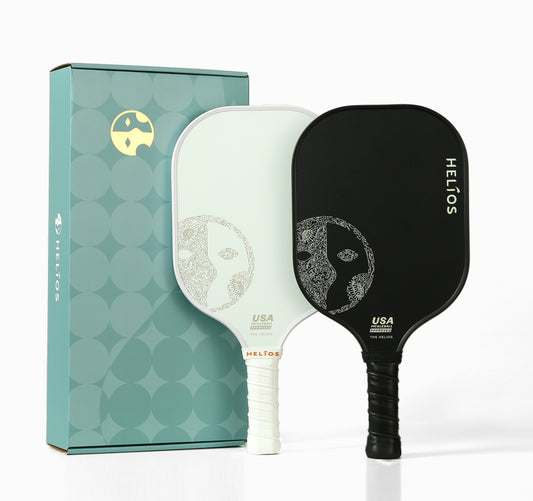
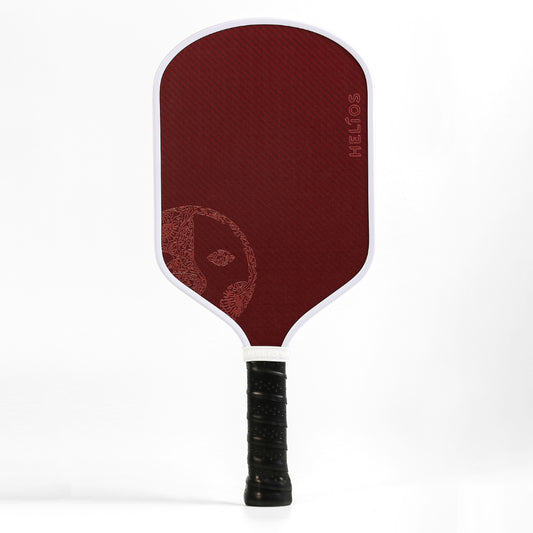
These are the two structural problems that create a pickleball paddle dead spot. Knowing the difference helps you figure out what went wrong and whether the paddle can be saved. A well-built paddle from the Helios collection uses Toray T700 carbon fiber bonded to a 13mm reactive polypropylene honeycomb core, and every unit is backed by a lifetime warranty, but no paddle is indestructible.
Delamination
Delamination is when the paddle face partially separates from the internal core. When this separation occurs, the paddle and ball no longer act as a single spring-like unit. Energy is absorbed instead of returned to the ball, and shots feel flat or dead in the affected zone. Early-stage delamination can also create an illegal "trampoline effect" where the separated face flexes too much and launches the ball with extra power.
Common causes of delamination:
- Impact damage from hitting the court, fence, or net post
- Age and wear (adhesives degrade with heavy use)
- Extreme heat (a paddle left in a hot car trunk weakens the bonding materials)
- Humidity and moisture exposure over time
Core Crushing
Core crushing is a different failure. Core crushing refers to the structural failure of the honeycomb polypropylene core itself. The hexagonal cells lose rigidity and collapse inward, turning a firm responsive core into a soft, mushy surface.
Core crushing happens two ways:
- Repeated high-impact gameplay over months of regular use (progressive degradation)
- Manufacturing defects where loose tolerances in core sizing or poor-quality materials cause collapse during the molding process
The result is the same in both cases: the paddle sounds hollow, feels dead on contact, and no longer transfers energy consistently to the ball.
Four Tests to Check Your Paddle

You do not need special equipment. These four tests take under 5 minutes and will tell you whether your paddle has a problem:
The Bounce Test
- Hold the paddle face-up with one hand.
- Drop a ball from about 12 inches onto the center of the paddle face.
- Note how high it bounces.
- Now repeat across the entire face, moving to each quadrant and the edges.
- If the ball bounces noticeably lower in one area, that zone has lost energy return.
That is a pickleball paddle dead spot.
The Tap Test
- Hold the paddle loosely by the handle.
- Tap the face with your knuckle, moving from center to edges.
- A healthy paddle produces a crisp, consistent sound across the entire face.
- If an area sounds dull, flat, or hollow, the core beneath that spot may be crushed or delaminated.
When a paddle sounds hollow, it usually means the face and core have separated in that zone.
The Hit Test
- Take the paddle to the court and hit controlled shots from different parts of the face.
- Hit 5 balls from the center, 5 from the upper third, and 5 from each side. I
If shots from one area consistently lack power or feel flat compared to the rest of the face, that zone is compromised.
The Visual Inspection
Look closely at the paddle face under good lighting. Check for:
- Bubbling or lifting on the surface
- Gaps or separation near the edge guard
- Soft spots you can press in with your thumb
- Cracks or discoloration along the face
Any visible separation or deformation is a sign of delamination or paddle core failure.
What the Test Results Mean

Here is a quick reference for interpreting what you find.
| Test Result | Likely Cause | Action |
|---|---|---|
| Ball bounces lower in one spot | Delamination or core crush in that zone | Small area: monitor. Large area: replace |
| Dull or hollow sound when tapped | Face separated from core | Inspect visually. If confirmed, replace |
| Shots feel flat from one area | Dead spot from core or face failure | Test further with bounce test. Replace if confirmed |
| Visible bubbles, lifting, or gaps | Active delamination | Replace. Repair rarely restores full performance |
| Soft spot when pressed with thumb | Core crushing | Replace. The honeycomb structure has collapsed |
Can You Repair a Delaminated Paddle
Small delaminated areas can sometimes be re-glued, but repairs rarely restore the paddle to factory performance. If the damage is limited to a small edge section and the rest of the face tests clean, a repair may buy you a few more months.
Replace the paddle when:
- Dead zones cover more than 25% of the face
- Multiple areas fail the bounce or tap test
- The core feels soft or mushy when pressed
- The paddle has visible structural damage beyond cosmetic wear
All Helios paddles, including custom orders, are backed by a lifetime warranty. If your paddle develops a manufacturing defect, that warranty covers the replacement.
How to Prevent Dead Spots and Delamination
Prevention is cheaper than replacement. A few habits extend paddle life significantly:
- Use a paddle cover from the Helios accessories collection to protect the face during transport
- Never leave your paddle in a hot car (heat degrades adhesives and can warp the core)
- Avoid hitting the paddle against the court, fence, or net post
- Replace your overgrip every 2 to 4 weeks so you are not over-gripping and slamming the paddle due to slippage
- Run the bounce and tap tests once a month to catch early signs before they spread
- Store paddles in a cool, dry place away from direct sunlight
A paddle set with two paddles lets you rotate between them, spreading the wear across two faces instead of concentrating thousands of strikes on one.
Know Your Paddle Before It Lets You Down
A pickleball paddle delamination test takes less than 5 minutes and can save you from playing weeks of frustrating sessions with a paddle that is quietly failing. Bounce it, tap it, hit it, inspect it. If something sounds hollow, feels flat, or looks separated, trust the test, not the hope that it will get better.
Browse the Helios collection for recreational and performance paddles built with Toray T700 carbon fiber and reactive honeycomb cores, all backed by a lifetime warranty.
Frequently Asked Questions
How do I tell if my pickleball paddle is delaminated?
Run the bounce test (drop a ball across the face and check for low-bounce zones) and the tap test (knuckle-tap the face and listen for dull or hollow sounds).
What does a dead spot on a paddle feel like?
Shots from the affected area feel flat, weak, or unresponsive compared to the rest of the face. The ball does not rebound with the same energy or spin. You may also hear a dull thud instead of the crisp pop the paddle used to produce.
What causes core crushing in a pickleball paddle?
Core crushing happens when the honeycomb polypropylene structure loses rigidity and collapses inward. This can result from repeated high-impact play over time or from manufacturing defects during the molding process.
Can I fix a dead paddle?
Small delaminated areas can sometimes be re-glued, but repairs rarely restore full performance. If dead zones cover a large portion of the face or the core feels soft when pressed, replacement is the better option. Check your paddle's warranty before paying for repairs.
How often should I test my paddle for dead spots?
Once a month if you play 2 or more times per week. Run a quick bounce test and tap test before a session if the paddle has been exposed to heat, dropped, or hit against a hard surface. Catching problems early prevents you from playing multiple sessions with a failing paddle.
Does heat really damage pickleball paddles?
Yes. Extreme heat weakens the adhesive bond between the face and core, which is the primary cause of delamination. A car trunk on a 90-degree day can reach 140 degrees or higher. Always store paddles indoors in a cool, dry location.