Continental vs Eastern Grip: Which Pickleball Grip Improves Your Game
How you hold your pickleball paddle is one of the most fundamental, yet overlooked, aspects of your game. A simple shift in your hand position can unlock new levels of power, add surgical precision to your dinks, or make your net reactions lightning-fast. For many players, the great debate comes down to the Continental vs Eastern Grip. Your choice here will define your strengths and shape your playing style on the court.
A paddle, and how you hold it, should be a fusion of elegance and high performance. Let’s settle the Continental vs Eastern Grip question for you, guiding you to the grip that will help you find your own champion spirit on the modern court.
Continental vs. Eastern Grip: A Quick Comparison
Here is a simple breakdown of the main differences in the Continental vs Eastern Grip discussion.
|
Feature |
Continental Grip |
Eastern Grip |
|
Primary Strength |
Versatility and Control |
Power and Topspin |
|
Hand Position |
"Hammer grip," V on top |
"Handshake grip," knuckle on side |
|
Net Play & Dinks |
Excellent; no adjustment needed |
Good; requires adjustment for backhands |
|
Groundstrokes |
Good; consistent for all shots |
Excellent; especially for forehands |
|
Best For |
All-court players, net-focused players |
Aggressive baseline players |
|
Recommended Level |
Beginners to Advanced |
Intermediate to Advanced |
How Do the Continental and Eastern Grips Differ in Hand Placement?
Before choosing a side in the Continental vs Eastern Grip debate, you need to know how to form each one. Your paddle's handle has eight sides, or bevels. Imagine the top bevel is number 1 when you hold the paddle on its edge.
The Continental Grip, often called the "hammer grip," is the most straightforward. To find it, hold the paddle on its edge and grip the handle as if you were holding a hammer. The V-shape formed with your thumb and index finger should be on top of the handle. A grip like this places the paddle face in a neutral, open position, ready for any shot.
The Eastern Grip feels more like shaking hands with the paddle. With the paddle face perpendicular to the ground, place your palm flat against the back of the grip. The base knuckle of your index finger will rest on the side bevel (bevel #3 for a right-handed player). A grip like this naturally closes the paddle face slightly, setting you up for powerful forehand shots.
Why is the Continental Grip a Versatile Choice for Pickleball?
The Continental Grip is the jack-of-all-trades in the Continental vs Eastern Grip world. Its biggest advantage is versatility. Because the paddle face is in a neutral position, you don't need to change your grip for forehands, backhands, serves, or overheads.
A quality like this is invaluable during fast-paced exchanges at the net. When you have fractions of a second to react, being able to block, punch, and dink without adjusting your hand is a massive benefit. The Continental Grip excels in the kitchen, offering superior control for your soft game and quick defensive resets. Players who prioritize an all-court game and rapid transitions will feel right at home with the Continental. For players who crave quick dinks and fast hands at the net, a paddle like the Flare, with its widebody sweet spot and aerodynamic speed, is a perfect complement to the versatile Continental Grip .
How Does the Eastern Grip Generate More Power and Topspin?
The Eastern Grip is a power player's best friend. A primary point in the Continental vs Eastern Grip comparison is how each grip generates force. The Eastern Grip naturally positions your wrist and paddle face for a forehand drive. Players with a tennis background often find a grip like this feels more intuitive for hitting powerful groundstrokes from the baseline.
The slightly closed face of the Eastern Grip also makes generating topspin much easier. A longer "dwell time" on the paddle face allows you to brush up the back of the ball, creating heavy, dipping shots that are difficult for your opponents to return. While it excels on the forehand side, an Eastern grip requires an adjustment for backhand shots, which can be a disadvantage during quick rallies. However, for players who build their game around an aggressive, topspin-heavy forehand, the Eastern Grip is a clear winner. To maximize that raw power, you need a paddle built for it. The Blaze is expertly engineered to be one of the most powerful widebody paddles available, delivering exceptional stability without sacrificing control .
How Do I Select a Grip Based on My Playing Style?
Your ideal choice in the Continental vs Eastern Grip discussion depends entirely on your game.
Aggressive baseline players who love to hit driving forehands will benefit from the power and topspin of an Eastern Grip. Net players who thrive on quick volleys, dinks, and defensive blocks will prefer the all-around utility of a Continental Grip.
For skill level, new players almost always benefit from starting with the Continental Grip. Its simplicity builds confidence and allows you to focus on fundamentals without worrying about grip changes. As you progress, you might experiment with an Eastern Grip to add more power to your forehand.
Paddle choice also plays a role. A heavier paddle, which naturally provides more power, can pair well with a control-oriented Continental Grip. Lighter paddles, which are easier to swing fast, can be paired with a power-focused Eastern Grip. A comfortable, extended handle makes any grip feel better. A paddle like The Athos, with its ergonomic handle, added cushioning, and superior shock absorption, provides maximum comfort for any grip style during intense matches .
What Common Mistakes Should I Avoid with a Continental or Eastern Grip?
Choosing a grip is only half the battle; using it correctly is what matters. A common mistake with either the Continental vs Eastern Grip is applying too much pressure. A "death grip" on your paddle restricts movement, reduces feel, and can lead to fatigue or even tennis elbow. Always aim for a relaxed, firm hold.
Another issue is using the wrong grip for the shot. Trying to hit a delicate backhand dink with a strong Eastern forehand grip will often result in the ball popping up for an easy smash. Similarly, a Continental Grip might not provide the topspin you want for a passing shot from the baseline. For advanced players, the biggest mistake is switching grips at the wrong time or failing to get back to a neutral position, leaving you unprepared for the next shot. Practice your chosen grip until your movements become second nature.
How Can I Choose My Optimal Pickleball Grip Style?
So, how do you make the final decision in the Continental vs Eastern Grip matchup? Start with a self-assessment. Are you a power player or a placement player? Do you spend more time at the baseline or the kitchen line? What feels most natural in your hand?
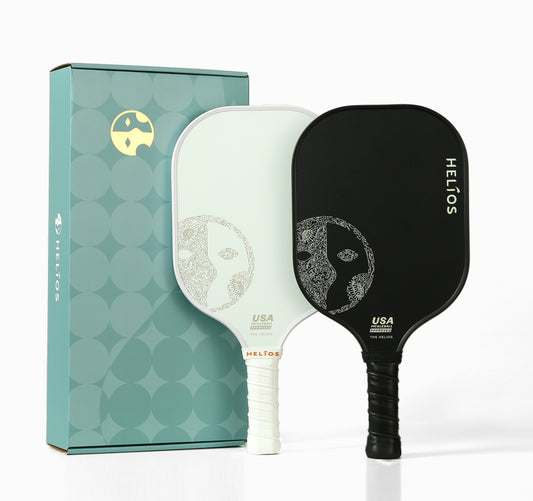
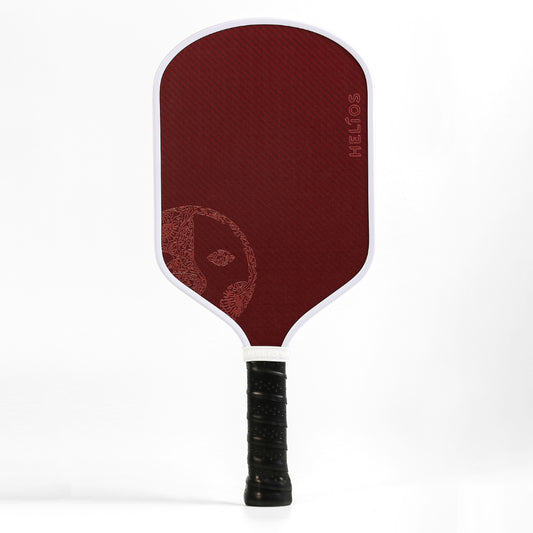
Next, test both grips in a practice setting, not just for a few rallies. Dedicate an entire session to the Continental Grip, hitting every type of shot. In your next session, do the same with the Eastern Grip. Pay attention to your consistency, your power, and your comfort level. A paddle with a great all-around balance of power and control is perfect for this experimental phase. The Helios, with its ideal blend for beginner to intermediate players, allows you to fairly assess each grip style without the paddle being a limiting factor . Be patient; adapting to a new grip takes weeks of consistent practice to build new muscle memory.
Conclusion
The debate over the Continental vs Eastern Grip has no single right answer. The Continental Grip offers unmatched versatility and control, making it a fantastic foundation for any player. The Eastern Grip provides a clear advantage in power and topspin for forehand-dominant players. The best grip is the one that improves your game and feels right for you. Do not be afraid to experiment to find what works.
Helios Pickleball aims to bring the timeless connection of athleticism to the modern court. Your grip is your most direct connection to the paddle. Whether you need the balanced performance of The Gaia or the swift maneuverability of The Selene, finding the right paddle to pair with your optimal grip will help you harness your own strength and grace on the court .
Frequently Asked Questions (FAQs)
Should beginners start with Continental or Eastern grip in pickleball?
Beginners benefit most from the Continental grip because it works for all shots without changing hand position. A quality like this builds consistency and confidence before advancing to more specialized grips.
Can you switch between Continental and Eastern grips during a match?
A: Advanced players can switch grips, but it requires significant practice. Most recreational players should master one grip thoroughly before attempting transitions during competitive play.
Which grip provides better control at the kitchen line?
A: The Continental grip offers superior control for dinking and volleys at the net due to its neutral paddle face position and quick maneuverability.
Does paddle weight affect which grip works better?
A: Heavier paddles often work better with a Continental grip for control, while lighter paddles can accommodate an Eastern grip's power-focused technique more comfortably.
How long does it take to feel comfortable with a new grip?
A: Most players need 2-4 weeks of regular practice to feel natural with a grip change. Muscle memory typically develops after 6-8 weeks of consistent use.
Which grip helps prevent tennis elbow in pickleball?
The Continental grip typically reduces arm strain because it promotes more natural wrist and forearm positioning compared to extreme Eastern grip angles.