Why Are Pickleball Paddles So Expensive? Cheap vs Premium (2026)
Introduction: The Real Pickleball Question Everyone Asks
Walk onto any pickleball court and you'll see someone with a $250 paddle facing off against someone who paid $35 on Amazon. The budget player smirks. "I'm winning just fine with what I've got. You're throwing money away on marketing."
But are cheap paddles really just as good? Or does price actually reflect something tangible?
After breaking down the construction methods, material science, and durability testing behind hundreds of paddles including dissecting what makes premium designs different from budget alternatives, here's what separates a cheap vs expensive pickleball paddle. More importantly, when does that difference actually matter for your game?
Spoiler: The gap isn't about logos or hype. What you're paying for comes down to physics, material engineering, and a manufacturing quality divide so wide you can literally feel the difference on court.
[[product:selene-swift-pickleball-paddle-set]]
Cheap vs Premium Pickleball Paddles Comparison Table
|
Feature |
Budget Paddles ($40-75) |
Mid-Range Sweet Spot ($100-160) |
Premium Performance ($180-260+) |
|
Price Range |
$40-75 |
$100-160 |
$180-260+ |
|
Weight |
8.5-9.5+ oz (heavier) |
7.3-8.4 oz (midweight) |
7.3-8.2 oz (optimized) |
|
Face Material |
Basic fiberglass, smooth surfaces |
Quality carbon fiber, textured surfaces |
Toray T700 carbon, DuPont Kevlar, maximum USAPA-approved grit |
|
Core Material |
Low-grade polymer, inconsistent density |
High-grade reactive polymer, 16-hour compression |
Premium reactive polymer or Nomex, advanced compression technology |
|
Construction |
Glued components, multiple seams |
Glued or entry thermoformed |
Full thermoformed unibody (no seams) |
|
Manufacturing |
Automated robots, minimal QC |
Mixed automated/manual QC |
Hand-checked quality control |
|
Sweet Spot Size |
Small (30-40% smaller than premium) |
Medium-Large |
Extra Large, most forgiving |
|
Spin Potential |
Limited (smooth surfaces) |
Good (textured surfaces) |
Maximum (engineered grit surfaces) |
|
Lifespan |
6-12 months regular play |
1-2 years |
2-3+ years |
|
Warranty |
30-90 days typical |
1 year typical |
Lifetime warranty (quality brands) |
|
Vibration Dampening |
Minimal, high arm shock |
Moderate to good |
Excellent shock absorption |
|
Edge Protection |
Basic edge guards, prone to delamination |
Standard edge protection |
Foam-injected duo protection, prevents delamination |
|
Best For |
Casual players, PE programs, testing the sport |
Regular recreational players (2-3x weekly), skill development |
Serious competitive players (4+ times weekly), tournament play |
|
Injury Prevention |
Poor (high vibration transfer) |
Moderate (some shock absorption) |
Excellent (ergonomic design, proper dampening) |
|
Key Advantages |
Lowest cost, maximum durability for abuse |
Balance of performance and value, quality materials without premium pricing |
Top-tier performance, consistency, durability, injury prevention |
|
Key Disadvantages |
Heavy, small sweet spot, inconsistent performance, dead spots develop quickly |
Not quite pro-level performance |
Higher upfront cost, diminishing returns above $200 |
|
Replacement Cost (2 years) |
$120 (3 paddles @ $40 each) |
$130 (1 paddle with warranty) |
$230 (1 paddle, potentially last you need) |
|
Performance Consistency |
Degrades quickly, dead spots within weeks |
Maintains performance 1-2 years |
Consistent performance for years |
|
Examples |
Generic Amazon paddles, basic wood/aluminum options |
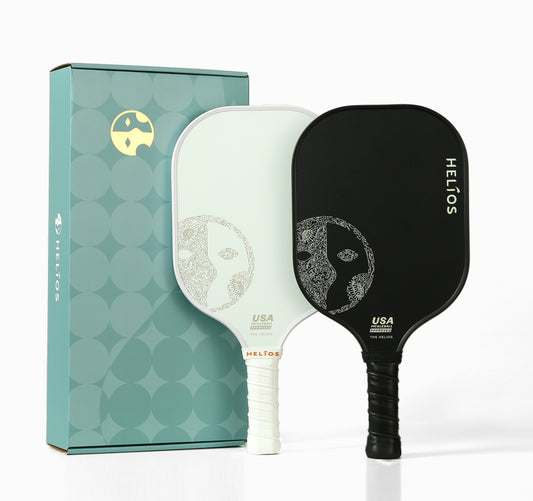
THE HELIOS ($109, sale $76.30), THE GAIA ($129, sale $90.30) |
THE APOLLO ($229, sale $160.30), THE ATHOS ($259, sale $181.30) |
There's a specific price threshold where paddle quality nosedives, and most players don't know where that line sits.
The cliff edge? Around $75-80. Below that threshold, you enter a completely different manufacturing universe, one where robots mass-produce paddles with minimal quality control, using materials that weren't engineered for repetitive impact.
[[product:the-helios-pickleball-paddles]]
Why Most Cheap Pickleball Paddles Fail After Two Months
The Automation Problem Nobody Talks About
Budget paddle manufacturers automate everything. A robot won't notice when an edge guard doesn't fully adhere. The machine won't catch the dead spot developing in paddle #4,847 of today's production run. Automation just keeps moving.
Premium manufacturers check paddles manually. Someone catches delamination before a paddle ships. Someone rejects paddles with inconsistent cores. Not because of romantic craftsmanship because manual quality control prevents the dead spots that plague cheap vs expensive pickleball paddle comparisons after just weeks of play.
When "Carbon Fiber" Doesn't Mean What You Think
See "carbon fiber honeycomb core" on a $40 paddle? Technically accurate the same way "contains real fruit juice" on candy packaging qualifies as truth. Yes, carbon fiber exists in that paddle. But asking whether manufacturers used aerospace-grade Toray T700 carbon (like the APOLLO) versus whatever cost least that quarter is like comparing a commercial airliner to a paper airplane. Both fly. Theoretically.
[[product:the-apollo]]
What You Actually Get With Graphite vs Fiberglass Paddle Construction
Let's cut through the marketing nonsense and talk about real material differences.
Budget Fiberglass: Power Without Precision
Basic fiberglass offers decent power but zero finesse. The ball pings off with minimal grip. You're essentially hitting with a smooth, slightly textured board. Shot placement becomes a guessing game.
Mid-Range Carbon Fiber: Where Quality Varies Wildly
"Carbon fiber" paddles span the entire quality spectrum. Entry-level carbon uses materials that technically qualify but lack the molecular consistency of premium grades. One section might respond differently than another. Your shots become inconsistent.
[[product:the-astraeus-pickleball-paddles]]
Premium Toray T700 Carbon: The Aerospace Standard
Helios uses Toray carbon fiber from aerospace engineering yes, the same material in airplane construction. Why does that matter? Molecular consistency. Every square millimeter has identical properties. Your shots become predictable, spin stays controllable, and the paddle performs identically in month twelve as day one. The ASTRAEUS paddle exemplifies aerospace-grade construction weighing just 7.5oz with 2100+ RPM spin capabilities.
DuPont Kevlar: The Nuclear Option
Want the most aggressive surface legally allowed? THE ATHOS uses actual DuPont Kevlar bulletproof material for superior impact resistance and the grittiest USAPA-approved surface available. Maximum topspin, maximum power, zero compromises.
[[product:the-athos]]
Polymer vs Nomex Core: What Actually Changes Your Game
The core determines how a paddle feels. Budget cores reveal quality problems immediately.
Low-Grade Polymer: The Consistency Problem
Inconsistent density means inconsistent bounce. One area might compress more densely, creating hot spots and dead zones across the face. After a few months, these cores compress unevenly. Your sweet spot becomes a mystery.
High-Grade Reactive Polymer: The 16-Hour Difference
Premium reactive polymer uses 16-hour compression processes that eliminate air bubbles and ensure consistent density throughout. Not faster. Not cheaper. Better. The result? A sweet spot that stays reliable for years, not weeks. FLARE, SOL, and BLAZE all use extended compression technology.
[[product:flare]]
Nomex Cores: Specialized Power
Harder material delivers maximum power, typically found in aggressive play paddles. Less forgiving on mishits, but when contact connects cleanly, the ball explodes off the face.
How Thermoforming Separates Budget From Premium Paddles
Most players have never heard of thermoforming. Yet the technique represents the single biggest performance differentiator in premium construction.
Traditional Glued Construction: Waiting to Fail
Budget and mid-range paddles glue components together. The face attaches to the core, edge guards wrap around, handles connect as separate pieces. Every glue seam creates a structural weak point where delamination begins.
Thermoformed Unibody: Welded vs Glued
Heat and pressure fuse the entire paddle handle included into one solid piece. No seams to fail. Larger, more stable sweet spots. Consistent performance under pressure.
Think of welding metal versus gluing pieces together. One bond stays permanent. One waits to break down.
The Costs in Pickleball Paddle Price Comparison
Here's where budget calculations get interesting.
The Replacement Cost Reality
- Budget paddle lifespan: 6-12 months with regular play
- Mid-range paddle lifespan: 1-2 years
- Premium paddle lifespan: 2-3+ years with lifetime warranty
Buy a $40 paddle three times over two years: $120 Buy a $130 paddle once with warranty: $130 Buy a $230 premium paddle with lifetime warranty: $230 (potentially the last paddle you need)
But the real cost isn't financial.
The Injury Cost Nobody Calculates
Cheap paddles absorb less shock. Your arm absorbs more. Over hundreds of games, that compounds into tennis elbow, wrist strain, shoulder problems. Premium paddles with proper core technology and ergonomic grips (like THE GAIA with shock-absorbing PU exterior) aren't luxury items; they prevent injuries.
One sports medicine visit costs more than upgrading your paddle.
[[product:the-gaia-pickleball-paddles]]
When Expensive Doesn't Mean Better: The Performance Curve
Here's what paddle companies don't want you knowing: The performance curve flattens dramatically above $180.
The 80/20 Performance Rule
A $150 premium paddle delivers approximately 85-90% of a $280 top-tier paddle's performance. That final 10-15%? Matters in professional tournaments. For recreational and intermediate competitive play? Diminishing returns.
The Smart Money Sweet Spot: $120-160
Where you find the best pickleball paddle for beginners transitioning to intermediate play and serious recreational players. Paddles like:
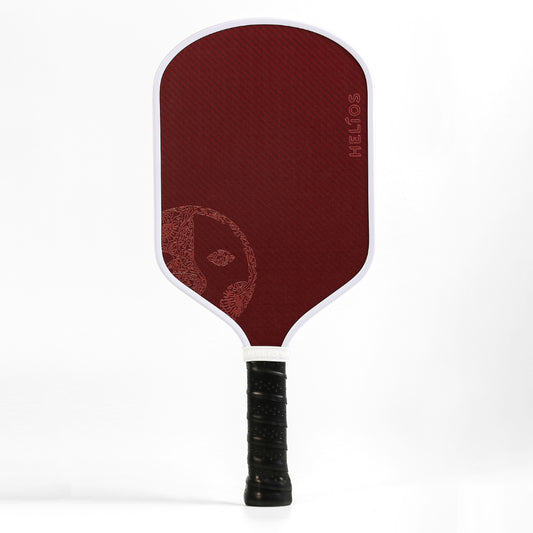
- THE HELIOS at $109 (sale: $76.30): Toray carbon fiber, 13mm reactive core, particle-printed finish for enhanced control recreational perfection
- THE SELENE at $149 (sale: $104.30): Elongated design, lightweight 7.8oz, Toray T700 carbon with texture options competitive edge without premium pricing
Premium materials and construction techniques at half the cost of $250+ options, minus the pro-player sponsorship markup.
Which Performance Paddle Features Actually Change Your Game
Let's separate real advancements from marketing fluff.
Features Worth Paying For:
- Thermoformed Construction - Structural integrity that lasts
- High-Grade Carbon Fiber (Toray T700 or equivalent) - Consistent, predictable performance
- 16-Hour Compression Core Technology - Eliminates dead spots
- Foam-Injected Edge Protection - Prevents delamination, the number one paddle killer
- Ergonomic Shock-Absorption Grip - Reduces injury risk
- USAPA-Approved Grit Level - Maximum legal spin potential
- Lifetime Warranty - Manufacturer confidence signal
Features That Sound Good But Don't Matter:
- LED Lights - Cool. Useless.
- Excessive Logo Real Estate - You're paying for advertising space on your own paddle
- "Aerospace Technology" (without specifics) - Meaningless unless the manufacturer names the actual material
- Celebrity Endorsements (without accompanying tech improvements) - You fund someone else's sponsorship deal
When Your Paddle Stops Being the Problem
Yes, Ben Johns could beat most players with a frying pan. That's not the point.
The question isn't whether skill matters more than equipment obviously skill wins. The question becomes: At your current level, does your paddle hold you back or are you still growing into your equipment's capabilities?
When Your Paddle Doesn't Matter:
- You're learning basic strokes and court positioning
- You're developing consistent contact
- You understand spin concepts theoretically
When Your Paddle Starts Mattering:
- You can execute most shots consistently
- You understand positioning and strategy
- You're working on shot placement precision
- You're developing spin variation
- You play 3+ times per week
At that inflection point, a premium paddle doesn't just feel better the upgrade enables shots that were previously impossible. The grit on THE KHIONE or the thermoformed sweet spot on BLAZE isn't about bragging rights. The difference shows up when you hit your target dink within two inches instead of six.
How to Match Paddle Investment to Playing Commitment
Here's the framework nobody teaches:
Just Starting / Casual Play (Less Than Once Weekly)
Budget: $70-110 Recommendation: Quality entry-level with good materials Why: Learn fundamentals without overinvesting Example: THE HELIOS Toray carbon fiber, proper construction, room to grow
Regular Recreational Play (2-3 Times Weekly)
Budget: $120-160 Recommendation: Premium materials, proven durability Why: You'll notice and appreciate quality differences; worth the investment Example: THE SELENE or THE GAIA performance without premium pricing
Serious/Competitive Play (4+ Times Weekly)
Budget: $180-260 Recommendation: Top-tier materials, advanced construction Why: Equipment becomes competitive advantage; durability pays off Example: THE APOLLO, THE ATHOS, or performance sets like the Toray Performance Set
The One Exception: Injury History
If you have arm, wrist, or shoulder issues, skip straight to premium regardless of skill level. The shock absorption and ergonomic engineering in paddles like THE ATHOS aren't luxury features medical devices disguised as sporting equipment.
Why Are Pickleball Paddles So Expensive? The Real Cost Breakdown
Pickleball paddle pricing isn't arbitrary. When you see a $230 paddle next to a $40 one, the gap reflects real differences in raw materials, manufacturing time, and engineering depth.
Aerospace grade Toray T700 carbon fiber costs roughly six times more per square meter than the basic composites used in budget paddles. DuPont Kevlar (used in THE ATHOS) costs even more. These aren't marketing labels they're the same materials specified for aircraft skins and protective gear, sourced through industrial supply chains with minimum order commitments.
Then there's the 16 hour reactive polymer core compression. Budget manufacturers cure cores in under an hour. The longer process eliminates air bubbles and density variation, which is why premium paddles maintain a consistent sweet spot for years instead of weeks.
Thermoformed unibody construction adds further cost. Heat and pressure fusing the face, core, and edge guard into a single seamless piece requires specialized presses and longer cycle times but it eliminates the glue seams where delamination begins.
Finally, premium brands run hand checked quality control. Every paddle is inspected for delamination, core consistency, and edge-guard adhesion before it ships. That labor cost is built into the sticker price.
What you're paying for isn't a logo. It's molecular consistency, structural integrity, and a paddle that performs identically in month twelve as on day one.
Conclusion: Price Matters, But Not How You'd Expect
The price of a pickleball paddle matters tremendously, but not because expensive automatically equals better. Price roughly correlates with material quality, manufacturing processes, and durability until you hit that $180+ range where pro sponsorships and diminishing returns take over.
The real insight? The best paddle isn't the most expensive one. The best paddle matches your commitment level, playing frequency, and physical needs while exceeding a minimum quality threshold that prevents injury and frustration.
For most players reading now, that sweet spot lives between $100-160. You get premium materials (real Toray carbon fiber, properly compressed cores, thermoformed construction), proven durability, and performance that won't limit your game as you improve.
Does the paddle make the player? No. But a quality paddle stops being the excuse and becomes the tool that lets your actual skill shine through.
Ready to find your perfect match? Check out Helios Pickleball's complete paddle lineup every paddle backed with a lifetime warranty because when you build things right, you can stand behind them forever.
FAQ: Your Paddle Questions Answered
Q. What's the difference between cheap and expensive pickleball paddles?
Ans. Cheap paddles use basic fiberglass faces, low-grade polymer cores, and glued construction that develops dead spots within weeks. Expensive paddles use Toray T700 carbon, 16-hour compressed cores, and thermoformed unibody builds that stay consistent for years.
Q. Do premium paddles actually improve control and spin?
Ans. Yes, but only if you can already execute the shots. Grit levels, carbon fiber quality, and core responsiveness directly impact spin potential (measured in RPM) and shot placement precision. Entry-level players won't notice; intermediate players absolutely will.
Q. Which paddle is better for a beginner's budget or premium?
Ans. Mid-range ($100-130) hits the ideal spot. Budget paddles teach bad habits due to dead spots and inconsistency. Premium might be overkill. Something like THE HELIOS offers quality materials while you learn fundamentals without overspending.
Q. How do materials like core and face affect paddle performance?
Ans. The core determines power/control balance and sweet spot size. The face determines spin potential, durability, and "feel." Polymer cores offer control; Nomex adds power. Carbon fiber faces provide consistent response; fiberglass forgives more but lacks precision.
Q. When should I upgrade from a cheap paddle?
Ans. When you play 2+ times weekly, notice inconsistent performance, develop arm fatigue, or understand shot mechanics well enough to execute with precision. Basically, when the paddle becomes your limitation rather than your skill level.
Q. Why are pickleball paddles so expensive?
Ans. Premium pickleball paddles cost more because of aerospace grade Toray T700 carbon fiber, 16 hour core compression, hand-checked quality control, and thermoformed unibody construction. These materials and processes prevent dead spots and extend paddle lifespan from 6-12 months to 2-3+ years.
Q. Are expensive pickleball paddles worth it?
Ans. For players on the court 2+ times weekly, yes. Premium paddles deliver consistent sweet spots, higher spin RPMs, and shock absorption that prevents tennis elbow. Casual players under one session weekly rarely notice the upgrade and should stick to mid range.
Q. What's the price range for pickleball paddles?
Ans. Pickleball paddles span $40 to $260+. Budget paddles run $40-75, mid-range performers sit at $100-160, and premium tournament-grade options reach $180-260+. The $100-160 sweet spot gives most recreational players premium materials without paying for pro-sponsorship markup.