Carbon Fiber vs. Graphite Pickleball Paddles: The Ultimate Comparison

Walk into any pickleball facility, and you will hear players debating which paddle material performs best. The carbon vs graphite pickleball paddle conversation dominates equipment discussions, and for good reason. These two materials have become the gold standard for serious players, but they deliver distinctly different playing experiences.
Understanding the differences between a carbon fiber pickleball paddle and a graphite pickleball paddle helps you make smarter equipment choices. Both materials offer advantages over basic composite or wooden paddles, but your playing style, skill level, and preferences should guide your decision. Let us break down what actually separates these popular options.
Buy carbon fiber pickleball paddles
Understanding the Materials
Before diving into performance differences, it helps to understand what these materials actually are and how manufacturers use them in paddle construction.
What is Carbon Fiber?
Carbon fiber consists of thin, strong crystalline filaments of carbon atoms bonded together in a microscopic crystal structure. When woven into sheets and combined with resin, it creates an incredibly strong yet lightweight material. Premium paddles like our Toray Performance Pickleball Paddle Set use aerospace-grade Japanese Toray carbon fiber, the same material found in aircraft components and high-performance sporting equipment. A carbon fiber pickleball paddle offers exceptional stiffness-to-weight ratios that translate directly to on-court performance.
[[product:toray-performance-pickleball-paddle-set]]
What is Graphite?
Graphite is a form of carbon arranged in layered sheets. In paddle manufacturing, thin graphite sheets are applied to the paddle face, creating a smooth, responsive hitting surface. A graphite pickleball paddle typically features a graphite face layer bonded to a polymer or honeycomb core. While graphite and carbon fiber both contain carbon atoms, their structural arrangements and manufacturing processes produce different playing characteristics.
Performance Comparison: Carbon vs Graphite Pickleball Paddle
The carbon vs graphite pickleball paddle debate ultimately comes down to how each material affects your shots, feel, and overall game. Here is how they compare across key performance factors.
Power and Pop
Carbon fiber paddles generally deliver more power due to their stiffer construction. The rigid face transfers energy efficiently from your swing to the ball, producing faster shots with less effort. Paddles like The Astraeus harness this stiffness for explosive drives and put-away shots. Graphite paddles offer good power but tend toward a softer feel that some players prefer for touch shots.
[[product:the-astraeus-pickleball-paddles]]
Control and Touch
A graphite pickleball paddle often excels at soft game shots where finesse matters more than power. The slightly softer face provides a longer dwell time, giving players more feel during dinks and drop shots. However, modern carbon fiber pickleball paddle designs have closed this gap significantly. Premium carbon paddles now offer excellent touch while maintaining their power advantages, making them versatile choices for players who want both attributes.
Spin Generation
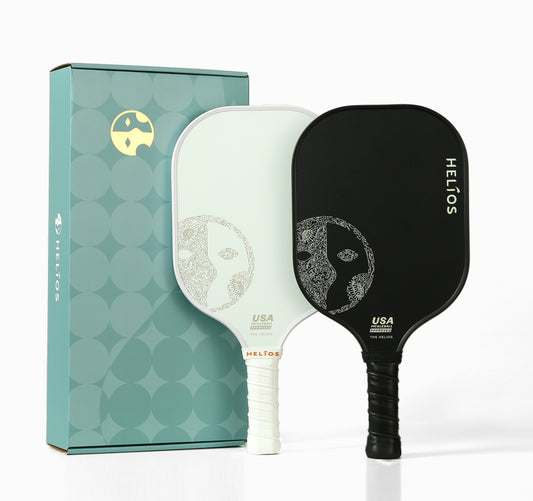
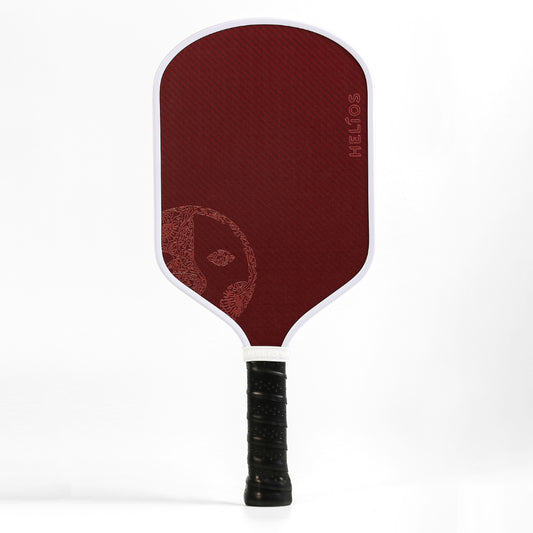
Carbon fiber surfaces typically generate more spin than graphite. The textured weave pattern of carbon fiber creates friction that grips the ball during contact, imparting rotation that makes your shots dive, curve, and bounce unpredictably. If spin is central to your game, a carbon fiber pickleball paddle like The Helios will likely serve you better than graphite alternatives.
[[product:the-helios-pickleball-paddles]]
Durability and Longevity
Both materials hold up well under normal playing conditions, but carbon fiber edges out graphite in long-term durability. The structural integrity of carbon fiber resists dead spots and surface degradation longer than graphite faces typically do. Players who play frequently will notice their carbon fiber pickleball paddle maintaining consistent performance over more months of regular use.
Which Material Matches Your Game?
Your playing style should drive your material choice more than marketing claims or price points. Here is guidance based on how you approach the game.
Power players who rely on drives, overheads, and aggressive baseline play will appreciate the energy transfer of carbon fiber. The stiff face amplifies your swing speed into ball velocity. Control players who prioritize placement, soft game, and strategic shot selection may enjoy the traditional feel of graphite, though premium carbon options like The Selene deliver excellent touch alongside their power capabilities.
Beginners often start with graphite paddles due to their forgiving nature, then graduate to carbon fiber as their skills develop. Our Helios Beginner Pickleball Paddle Set provides an ideal starting point before transitioning to more advanced equipment.
[[product:the-selene-pickleball-paddles]]
Make Your Choice with Confidence
The carbon vs graphite pickleball paddle debate does not have a universal winner. Both materials serve players well, depending on individual needs and preferences. However, the trend toward carbon fiber among serious players reflects its performance advantages in power, spin, and durability.
Ready to experience what premium carbon fiber construction offers? Browse our complete paddle collection featuring aerospace-grade materials, thoughtful design, and the performance that elevates your game.
Light up your game. Choose quality. Play like a champion.
Frequently Asked Questions
Is carbon fiber better than graphite for pickleball?
Carbon fiber offers more power, spin, and durability, but graphite provides a softer feel that some players prefer for touch shots.
Why are carbon fiber paddles more expensive?
Premium carbon fiber requires specialized manufacturing processes and aerospace-grade materials that cost more to produce.
Can beginners use carbon fiber paddles?
Yes, though the stiffer response may feel less forgiving, beginners often benefit from developing fundamentals before upgrading.
Do professional players use graphite or carbon fiber?
Most professional players now use carbon fiber paddles for their superior power, spin generation, and consistency.
How long do carbon fiber paddles last compared to graphite?
Carbon fiber paddles typically maintain peak performance 20 to 30 percent longer than graphite under similar playing conditions.