Fiberglass vs. Carbon Fiber Pickleball Paddles: Which to Choose?

What Is the Best Material for a Pickleball Paddle?
The right paddle material depends on your playing style and skill level. Here is how the main face materials rank:
T700 Carbon Fiber - The highest-grade carbon fiber used in performance paddles. Offers maximum spin, precise touch, and a textured surface that grips the ball. Best for advanced players who prioritize control and feel. Verdict: the top choice for competitive play.
Standard Carbon Fiber - Stiff, lightweight, and responsive. Delivers strong spin and shot control with a crisp ball response. Suitable for intermediate to advanced players. Verdict: the most versatile high-performance option.
Fiberglass - Softer face with more flex at impact, which translates to natural power and forgiveness on off-center hits. Better for beginners and players who rely on baseline drives. Verdict: the best starting material for new players.
Kevlar - An aramid fiber known for impact absorption and durability. Dampens vibration, extends paddle life, and softens ball feel. Less common but effective for players with arm sensitivity. Verdict: a niche choice that prioritizes comfort and longevity over raw performance.
The face material is only half the equation. Core material covered below determines how energy is absorbed and transferred on every shot.
You've probably heard the terms thrown around. Carbon fiber this. Fiberglass that. But what's the actual difference, and why does it matter for your game?
The material your paddle is made from fundamentally changes how it feels, responds, and performs. Carbon fiber and fiberglass represent two very different approaches to paddle construction. Understanding what each one does helps you pick the material that matches your playing style.
Let's dig into what makes these materials different and which one is right for your game.
Understanding Paddle Materials
Pickleball paddles are made of different materials, and the face of your paddle is what matters most. This is the surface that actually makes contact with the ball. The face material determines your paddle's responsiveness, power delivery, and control.
Carbon Fiber Pickleball Paddles
Carbon fiber is a high-performance material made from thin carbon strands. It's lighter than most alternatives while remaining incredibly strong. Carbon fiber faces deliver crisp, responsive ball contact.
Why Players Choose Carbon Fiber
- Exceptional power: Carbon fiber delivers that snappy response that generates real power on drives.
- Precise feedback: You feel exactly what you're doing with the ball. This helps advanced players refine their technique.
- Lightweight: Carbon fiber is one of the lightest materials available, reducing arm fatigue.
- Durability: Carbon fiber resists wear and maintains its performance over time.
- Spin potential: The crisp response helps you put spin on the ball effectively.
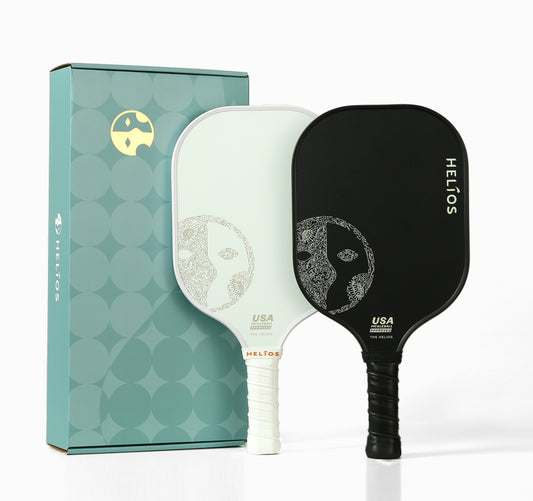
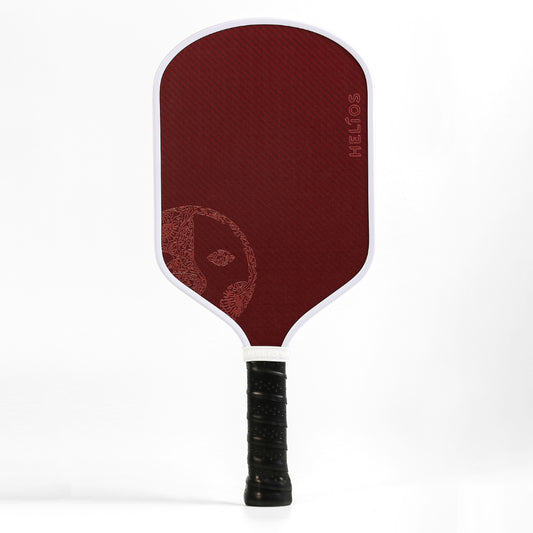
Our Helios, Apollo, and Astraeus feature premium carbon fiber faces built for performance and responsiveness.
[[product:the-helios-pickleball-paddles]]
The Drawbacks
- Steeper learning curve: The responsive feedback rewards good technique but can feel punishing on mishits.
- Less forgiving: Off-center hits feel different than center hits, so consistency matters.
- Higher price: Carbon fiber paddles typically cost more than fiberglass options.
- Can feel stiff: Some players find carbon fiber responses less comfortable for soft touch shots.
Fiberglass Pickleball Paddles
Fiberglass is a composite material made from glass strands woven together. It's softer than carbon fiber, which means it absorbs impact differently. Fiberglass paddles deliver a gentler feel with more forgiveness on off-center hits.
Why Players Choose Fiberglass
- Extremely forgiving: Miss the sweet spot, and the paddle still delivers solid performance.
- Softer feel: Fiberglass absorbs impact, creating a gentler, more comfortable sensation.
- Great for soft shots: Dinking and touch play feel natural with fiberglass.
- Lower price: Fiberglass paddles are typically more affordable than carbon fiber.
- Less demanding: You don't need perfect technique to get consistent results.
- Easier learning curve: Beginners progress faster with forgiving paddles.
Options like our Gaia and Helios Beginner Set showcase fiberglass construction that delivers control and consistency without demanding perfect strikes.
[[product:the-gaia-pickleball-paddles]]
The Trade-Offs
- Less responsive: You don't get that crisp, snappy feedback that carbon fiber provides.
- Heavier: Fiberglass paddles tend to weigh more than their carbon counterparts.
- Less spin: The softer face makes it harder to generate advanced spin techniques.
- Slower performance: Power generation is less explosive compared to carbon fiber.
Carbon Fiber vs. Fiberglass: Direct Comparison
Now let's look at how these two materials actually perform against each other on the court. Here's what changes when you switch from one to the other.
Power and Speed
Carbon fiber wins decisively here. The crisp response generates more power with less effort. Fiberglass delivers steady power but not the explosive snap.
Forgiveness and Control
Fiberglass excels at forgiving off-center hits. Carbon fiber rewards precision but is less forgiving on mishits.
Feel and Comfort
Fiberglass feels softer and more comfortable, especially for soft touch shots. Carbon fiber feels crisp and responsive, but can feel stiff for some players.
Weight and Fatigue
Carbon fiber is lighter, reducing arm fatigue. Fiberglass is heavier but still manageable for most players.
Cost
Fiberglass paddles are typically cheaper. Carbon fiber paddles command higher prices due to performance and durability.
Pickleball Paddle Core Materials: What's Inside Matters
Most paddle comparisons focus on the face. But the core the material sandwiched between the two face layers has an equally significant impact on how a paddle actually plays. Power, dwell time, touch, and durability all trace back to core construction.
There are three core materials you will encounter across most paddles on the market.
Polymer Honeycomb Core
Polymer honeycomb is the most widely used core material at every price point. The hexagonal cell structure is engineered to distribute impact force evenly across the paddle face, which produces a softer, more controlled feel than older materials.
What it gives you:
- Consistent dwell time - the ball stays on the face slightly longer, which improves placement on dinks and drop shots
- Quieter response - polymer cores are the quietest option, relevant for courts with noise restrictions
- Good durability - the cell walls resist compression over time better than foam alternatives
- Balanced power and control - neither the hardest nor softest option, which makes it the default choice for all-around play
Most mid-range and performance paddles - including several in the Helios lineup — use polymer honeycomb cores. If you are buying a paddle without a specified core type, it is almost certainly polymer.
EPP Foam Core
Expanded polypropylene foam cores are softer and more forgiving than polymer honeycomb. The foam compresses more on impact, which generates a noticeably different feel less crisp, more cushioned.
What it gives you:
- Maximum forgiveness - mishits feel less jarring and still produce usable shots
- Vibration dampening - the foam absorbs more shock, which reduces arm fatigue on high-volume play
- Softer touch on dinks - the extra compression creates a gentler feel for net play
- Slightly less pop - the trade-off is reduced explosive power on drives and volleys
EPP foam cores are common in recreational and beginner paddles. They suit players who prioritize comfort or are still building consistency.
Polypropylene (PP) Core
Polypropylene cores sit between polymer honeycomb and EPP foam in terms of firmness. The material is lightweight and responds quickly, with a slightly harder feel than standard polymer honeycomb at lower price points.
What it gives you:
- Lightweight construction - polypropylene is one of the lighter core options, keeping overall paddle weight down
- Solid response - firmer than foam without reaching the stiffness of high-grade polymer honeycomb
- Affordable manufacturing - polypropylene cores are common in entry-level paddles because they keep production costs down without sacrificing basic durability
Core Material at a Glance
|
Core |
Feel |
Best For |
Trade-Off |
|
Polymer Honeycomb |
Balanced, controlled |
All-around play, intermediate to advanced |
None significant |
|
EPP Foam |
Soft, forgiving |
Beginners, arm-sensitive players |
Less drive power |
|
Polypropylene |
Firm, light |
Entry-level performance |
Less refined touch |
Which Material Is Right for You
The best material for your paddle depends on your skill level and what you value most in your game. Let's break it down:
Choose Carbon Fiber If...
- You're an intermediate or advanced player with solid technique
- You want maximum power and responsiveness
- You prioritize spin and shot control
- You play frequently and want equipment that lasts
- You value feedback and want to feel exactly what you're doing
Choose Fiberglass If...
- You're newer to pickleball and are building your game
- You want a forgiving paddle that handles off-center hits
- You prefer a softer, more comfortable feel
- You prioritize dinking and soft touch shots
- You want an affordable option without sacrificing quality
Hybrid Options: Best of Both Worlds
Some paddles use a combination of carbon fiber and fiberglass, or carbon fiber with graphite. The Selene and The Khione blend materials to deliver responsiveness with forgiveness. If you want the benefits of both materials, hybrid construction offers balance.
[[product:the-selene-pickleball-paddles]]
Make Your Material Choice
Carbon fiber versus fiberglass isn't about which is universally better. It's about which serves your game right now. If you're developing your skills, fiberglass offers forgiving consistency. If you want responsiveness and power, carbon fiber delivers.
The best approach is to demo both materials if you can. Feel the difference in your hands. Notice how they respond to your swing. Then make the choice that feels right for your game. Our collection includes carbon fiber, fiberglass, and hybrid options. Explore our paddles and find the material that matches your performance goals.
Light up your game. Choose your material. Play with purpose.
Frequently Asked Questions
Is carbon fiber always better?
Better depends on your definition. Carbon fiber is more responsive and powerful. Fiberglass is more forgiving and comfortable. Better for you is whichever matches your skill level and priorities.
Do pro players use fiberglass?
Most advanced and professional players prefer carbon fiber for its responsiveness and performance. That said, some still use fiberglass based on personal preference.
How long do these materials last?
Both are durable. Carbon fiber tends to outlast fiberglass, especially if you play frequently. Proper care extends either paddle's lifespan significantly.
What is graphite, and how does it compare?
Graphite is another popular face material that sits between carbon fiber and fiberglass. It offers more control than carbon fiber with more power than fiberglass. It's a balanced option if you want the benefits of both materials.
Can I upgrade from fiberglass to carbon fiber later?
Absolutely. Many players start with fiberglass while building their game, then switch to carbon fiber as their technique improves. There's no rule saying you need to stick with your first paddle type.
Is carbon fiber or fiberglass better for spin?
Carbon fiber generates significantly more spin. The stiffer face transfers energy more directly to the ball, and higher-grade carbon fiber especially T700 has a textured surface that grips the ball at contact. Fiberglass faces flex more on impact, which reduces the friction needed to create topspin or slice. If spin is a priority, carbon fiber is the clear choice.
What is T700 carbon fiber, and is it better than standard carbon fiber?
T700 refers to the tensile strength grade of the carbon fiber strands used in the paddle face 700 kilo-newtons per square millimeter. Paddles with T700 carbon fiber faces are stiffer, lighter, and more textured than paddles using standard-grade carbon fiber. In practical terms, T700 provides more consistent spin, sharper ball response, and better durability. Standard carbon fiber is still a high-performance material, but T700 is the premium tier within the carbon fiber category.
What paddle material is USAPA approved?
USA Pickleball approves paddles based on construction standards, not on any single material. Carbon fiber, fiberglass, Kevlar, graphite, and hybrid composite paddles can all receive USAPA approval as long as the paddle meets the Equipment Standards requirements including surface texture limits, size, and weight. Any paddle listed in the USAPA approved paddle list has passed these standards regardless of face material. Always verify approval status on the official USAPA equipment list before purchasing for tournament play.
What core material lasts the longest?
Polymer honeycomb cores hold up the best over time. The rigid cell walls resist compression and deformation even with heavy use. EPP foam cores are durable in light to moderate use but can soften permanently with frequent high-impact play, which gradually changes the paddle's feel. Polypropylene cores fall in the middle. For players who train daily or compete regularly, polymer honeycomb is the most reliable long-term option.
What paddle material is best for beginners?
Fiberglass face with a polymer honeycomb or EPP foam core. Fiberglass forgives off-center hits and generates power without demanding perfect technique. EPP foam adds extra cushion for players still developing timing and consistency. Carbon fiber paddles work for beginners but are unforgiving on mishits and create feedback that can reinforce bad habits early in development. Most players transition to carbon fiber once they have built consistent stroke mechanics.
Does Kevlar affect ball feel?
Yes, noticeably. Kevlar absorbs more vibration than carbon fiber or fiberglass at impact, which creates a dampened, muted feel rather than the crisp response those materials produce. Players describe Kevlar-faced paddles as quieter and softer at contact. This makes Kevlar a practical choice for anyone managing tennis elbow or wrist sensitivity, since less vibration transfers to the arm. The trade-off is reduced tactile feedback you feel less of what the ball is doing, which can make it harder to read spin and adjust shot placement at higher skill levels.