Best Pickleball Paddles for Tennis Players: Transition Guide & Top Picks (2026)

If you are a tennis player switching to pickleball, you are joining a wave. Players with a tennis background are flocking to pickleball because it offers the competitive thrill of a racquet sport with less wear on the body, a more social format, and a learning curve that rewards existing skills almost immediately. Your footwork, hand-eye coordination, court awareness, and competitive instincts all transfer. What changes is the equipment, the swing mechanics, and the strategy.
The biggest adjustment? The paddle. A pickleball paddle is nothing like a tennis racquet. No strings, smaller face, lighter weight, completely different feel on contact. Choosing the best pickleball paddle for tennis players means finding one that respects the power and spin instincts you already have while helping you develop the touch and control that pickleball demands. That is exactly what we built our Energy Series to deliver. Let us walk through what tennis players need to know and which Helios paddles match each playing style.
What Changes When You Go From Tennis to Pickleball
Before we talk paddles, you need to understand the key differences between the two sports. Knowing what changes helps you understand why certain paddle features matter more for players with a pickleball paddle tennis background.
The Court Is Smaller, and That Changes Everything
A standard doubles tennis court is 78 feet long by 36 feet wide. A pickleball court is 44 by 20. That is roughly one-third the size. You no longer need to cover massive ground or hit deep baseline rallies. Instead, the game happens fast and tight, especially at the net. Your positioning, not your footspeed, becomes the primary weapon. Tennis players who relied on baseline power need to recalibrate toward precision and placement.
The Serve Goes Underhand
For most tennis players, the overhead serve is a defining weapon. In pickleball, all serves must be underhand, struck below waist level. Power serving is essentially removed from the equation. Serve placement and depth matter far more than velocity. Tennis players need to let go of the serve-as-weapon mentality and view the serve as a way to start the point strategically. The adjustment takes less time than most people expect.
Shorter Swings, Softer Hands
Tennis rewards long, fluid strokes with significant follow-through. Pickleball punishes them. The smaller court and faster exchanges at the net demand compact, controlled swings. Big backswings pull you out of position and create pop-ups that your opponent will put away. The players who transition fastest are the ones who learn to shorten their swing early and develop soft hands for dinking, resetting, and drop shots. Your wrist and forearm do most of the work in pickleball, not your shoulder and full arm.
The Kitchen Changes Net Play Completely
In tennis, charging the net and hitting aggressive volleys is a legitimate winning strategy. In pickleball, there is a 7-foot non-volley zone (called the kitchen) on each side of the net where you cannot hit the ball out of the air. That means net play in pickleball is about patient dinking, soft touch, and waiting for the right ball to attack rather than smashing everything at close range. For tennis players, mastering the kitchen is the single biggest mental and tactical shift.
What Tennis Players Should Look for in a Pickleball Paddle
Knowing what features matter in a pickleball paddle tennis background context helps you skip the trial-and-error phase and start with the right equipment.
Extended Handle for Two-Handed Backhands
Many tennis players hit a two-handed backhand. If that is you, paddle handle length is critical. A standard pickleball paddle handle is shorter than a tennis racquet grip, which makes two-handers feel cramped. Look for paddles with elongated handles that give your bottom hand room to grip without choking up. Several Helios paddles accommodate this comfortably, giving tennis crossover players the grip space they need.
Balance Between Power and Control
Tennis players naturally swing hard. Your instinct will be to drive the ball, and that instinct is not wrong. It just needs to be paired with control. The best pickleball paddle for tennis players delivers enough pop on drives and overheads to reward your power while providing the touch needed for dinks, drops, and resets at the kitchen. A paddle that is all power will send your soft shots sailing. A paddle that is all control will feel dead on your drives. You need both.
Generous Sweet Spot for Swing Adjustment
While you are adapting from a strung racquet face to a solid paddle face, you will mishit more often than you are used to. That is normal. The ball pops off a solid face faster and with less dwell time than a stringbed, which changes your timing. A paddle with a wide, forgiving sweet spot keeps those off-center shots in play while you recalibrate. Wider paddle faces and thicker cores both contribute to forgiveness.
Textured Face for Spin Generation
Tennis players who rely on topspin will feel the difference immediately. Generating spin on a solid paddle face requires surface texture. A rough, gritty face grabs the ball and allows you to brush up on it, mimicking the spin mechanics you are used to. Without texture, your topspin attempts will float and sit up for your opponent. Premium carbon fiber faces with textured surfaces deliver the best spin performance for crossover players.
Best Helios Paddles for Tennis Players Making the Switch
Every paddle in our lineup was designed with performance as the priority. Here is how each Helios model maps to different tennis playing styles, so you can find the right fit for your game.
The Helios: The All-Rounder for Baseline Players
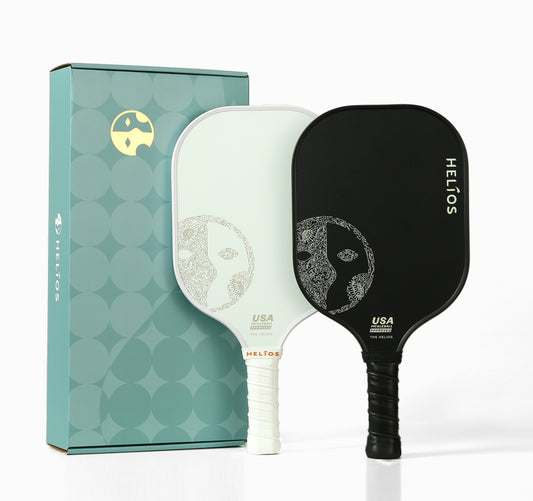
If you were an all-court player in tennis who hit from the baseline and came to the net when the opportunity presented itself, The Helios is your natural match. Our flagship paddle delivers the balanced blend of power, control, spin, and touch that makes it the best pickleball paddle for tennis players who do not want to be pigeonholed into one style. It gives you the pop to drive when the ball sits up and the finesse to dink when the rally goes soft. For a tennis player switching to pickleball, that versatility shortens the learning curve significantly.
The Astraeus: For the Aggressive Net Rusher
Were you a serve-and-volley player? Someone who loved closing on the net and finishing points? The Astraeus is designed for quick transitions between soft and aggressive play. Named after the Titan god of dusk, it blends responsiveness with a controlled feel that rewards players who like to dictate the tempo of a rally. Your tennis net instincts will translate beautifully once you learn the kitchen rules, and The Astraeus gives you the control to execute from the non-volley zone with confidence.
The Apollo: For the Power Hitter
If your tennis game was built on heavy groundstrokes and winners, The Apollo channels that energy. Named after the god of light and truth, The Apollo delivers extra pop on drives and overhead put-aways while maintaining enough control for the soft game that pickleball demands. Tennis players who love hitting with pace will feel immediately at home. The key is pairing that power with the patience pickleball requires, and the Apollo gives you both options in a single paddle.
The Selene: For the Finesse and Placement Player
Were you the player who frustrated opponents with placement, angles, and variety rather than raw power? The Selene is your pickleball paddle. Named after the goddess of the moon, it is crafted for precision, touch, and directional control. In a sport where the soft game wins more points than the hard game, The Selene gives finesse-oriented tennis players an immediate advantage. Your ability to construct points and move opponents around the court is exactly what pickleball rewards, and The Selene amplifies those instincts.
The Khione: For the Defensive Counter-Puncher
Tennis players who excelled at absorbing pace, neutralizing attacks, and redirecting the ball with precision will love The Khione. Named after the goddess of snow, it represents composed performance under pressure. In pickleball, the ability to reset hard drives back into the kitchen softly and accurately is an elite skill. If your tennis game was built on defense and patience, The Khione turns those strengths into a serious weapon.
5 Quick Tips for Tennis Players New to Pickleball
1. Shorten your backswing immediately. Compact strokes keep you balanced and ready for the next shot. Long tennis swings create openings your opponents will exploit.
2. Learn the third-shot drop. In tennis, the third shot is often a winner. In pickleball, the third shot is usually a soft drop into the kitchen that lets you approach the net. Mastering this shot is the fastest way to level up as a crossover player.
3. Respect the kitchen. You cannot volley inside the non-volley zone. Period. Tennis players who charge the net and swing aggressively from inside the kitchen will commit faults constantly. Stand behind the line and learn to dink.
4. Slow down. Pickleball rewards patience more than tennis does. Wait for the right ball to attack. Dink until your opponent gives you a high ball, then put it away. Rushing leads to unforced errors.
5. Play doubles first. The vast majority of pickleball is played in doubles, and the team dynamic adds a layer of strategy that makes the game more engaging. Your tennis doubles skills will transfer more directly than your singles habits.
Getting Started: Gear Up for the Transition
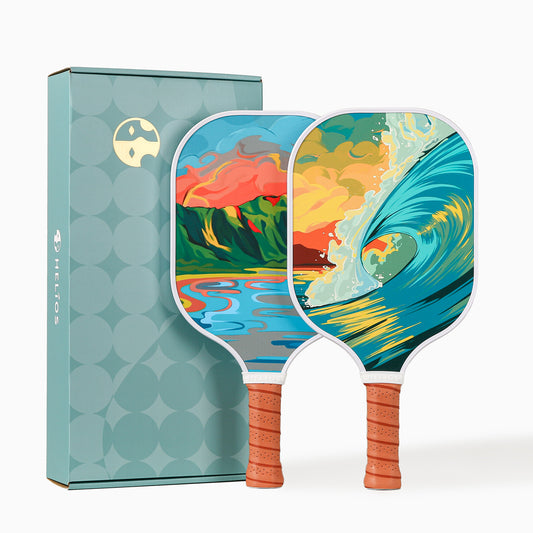
If you are a tennis player switching to pickleball for the first time and want to ease in before committing to a specific paddle model, our Helios Beginner Pickleball Paddle Set is a solid starting point. It includes everything you need to get on the court immediately. As your game develops and you identify your preferred style, you can move up to The Helios, The Astraeus, The Apollo, The Selene, or The Khione, depending on which fits your evolving play.
Pair any paddle with our Organic Overgrip to customize the grip feel, especially important for tennis players accustomed to specific grip thicknesses. And our On The Court Tote Bag carries your paddles, balls, water bottle, and accessories in the same organized way your tennis bag did. You will feel at home before you even step on the court.
Frequently Asked Questions
What is the best pickleball paddle for tennis players?
A paddle that balances power and control with a generous sweet spot and a textured face for spin. In the Helios Energy Series, The Helios is the top pick for all-court players, The Apollo for power hitters, and The Selene for finesse players.
How long does it take for a tennis player to adjust to pickleball?
Most tennis players can rally comfortably within their first session. Developing a consistent soft game, mastering the kitchen, and learning proper shot selection typically takes 2 to 4 weeks of regular play. The tactical adjustment takes longer than the physical one.
What is the hardest part of transitioning from tennis to pickleball?
Learning to slow down. Tennis players want to hit hard and finish points quickly. Pickleball rewards patience, soft touch, and strategic shot placement. The kitchen (non-volley zone) forces a completely different approach to net play than what tennis teaches.
Do tennis skills help in pickleball?
Absolutely. Hand-eye coordination, lateral footwork, competitive mindset, net awareness, and shot-making instincts all transfer directly. Tennis players typically progress faster than complete beginners because they already have the athletic foundation that pickleball requires.
Should tennis players use a heavier or lighter pickleball paddle?
A mid-weight paddle in the 7.8 to 8.3 ounce range typically works best. Heavier paddles give tennis players the familiar "substance" they are used to from a racquet, but anything too heavy will slow down reactions at the net. Mid-weight paddles deliver the best balance of power and maneuverability for crossover players.