Best Pickleball Paddle for Tennis Elbow: Low-Vibration Picks That Protect Your Arm

That burning sensation on the outside of your elbow after a 2-hour session is not normal soreness. It is lateral epicondylitis, commonly called tennis elbow, and it is one of the most reported injuries in pickleball. The condition develops when the extensor tendons on the outside of the elbow degrade from repeated impact and vibration traveling up the forearm.
A paddle cannot treat tennis elbow. No equipment replaces a doctor or physical therapist. But the right paddle changes how much shock reaches your arm on every contact, how tightly you need to grip, and how much effort each swing demands. Those three variables are measurable and controllable. Here is what to look for in the best pickleball paddle for tennis elbow and which models get it right.
What Causes Paddle-Related Arm Pain
Three things drive tennis elbow in pickleball. Understanding the chain tells you where equipment can intervene. Every paddle in the Helios line is built with vibration dampening, but knowing why it matters helps you choose the right model.
| Factor | What Happens | Equipment Fix |
|---|---|---|
| Shock and vibration | Ball impact sends a vibration pulse through the handle into the forearm with every hit | Thicker core, vibration-dampening materials |
| Grip strain | Squeezing the handle too tightly overloads the extensor tendons | Larger grip circumference, tackier overgrip |
| Off-center contact | Hitting outside the sweet spot causes the paddle to twist, sending torque to the wrist and elbow | Larger sweet spot, higher twist weight |
Most players address one factor and ignore the other two. The best results come from addressing all three simultaneously.
Core Thickness Is the Single Biggest Variable
A thicker core absorbs more impact energy before it reaches your hand. This is the spec that matters most for tennis elbow. A 16mm core transmits significantly less vibration than a 13mm core because there is more material to dampen the shock pulse.
| Core Thickness | Vibration Level | Power | Control | Arm Friendliness |
|---|---|---|---|---|
| 11 to 13mm | High | High | Lower | Not recommended for tennis elbow |
| 14mm | Moderate | Moderate-high | Moderate | Acceptable for mild sensitivity |
| 16mm | Low | Moderate | High | Best for active tennis elbow |
| 19mm | Very low | Lower | Very high | Maximum protection, niche availability |
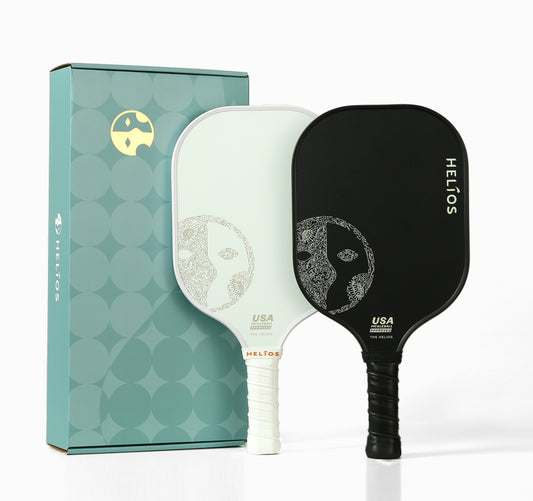
The Helios performance paddle line uses a reactive honeycomb polypropylene core compressed over 16 hours during manufacturing. That compression creates uniform cell density, which means the dampening effect is consistent whether you hit center or off-axis. The recreational paddles with fiberglass faces add a softer contact feel on top of the core dampening.
If you are currently experiencing tennis elbow symptoms, a 16mm core should be your starting point. A 13mm "power" paddle is the opposite of what your arm needs right now.
Face Material Matters More Than You Think
Carbon fiber faces are stiffer than fiberglass. That might sound worse for arm comfort, but the opposite is true. Carbon fiber distributes impact force across a wider area of the face rather than concentrating it at the contact point. The result is a lower peak vibration that travels to your hand.
Carbon Fiber (Best for Vibration Distribution)
Helios uses Toray T700 carbon fiber with a multi-layer design. The multiple layers spread the impact energy and produce a broader sweet spot. A larger sweet spot means fewer off-center hits, and off-center hits are the contacts that generate the most torque and vibration.
Fiberglass (Best for Softer Contact Feel)
Fiberglass faces flex more at contact, creating a softer, cushioned feel. The ball stays on the face fractionally longer (higher dwell time), which reduces the sharpness of the vibration pulse. Players who find carbon fiber too "crisp" on a sore arm often prefer fiberglass for the gentler contact response.
Kevlar (Best for Maximum Vibration Reduction)
Kevlar is the quietest face material in pickleball. It absorbs the most vibration at contact and produces the softest feel. The trade-off is reduced tactile feedback. Players managing active tennis elbow symptoms who need maximum protection should consider Kevlar as a short-term solution while their arm recovers.
Grip Size and Overgrip: The Underrated Fix
A grip that is too small forces you to squeeze harder, and grip tension is the most controllable variable in the tennis elbow chain. Every extra pound of grip pressure loads the extensor tendons.
Build Up the Circumference
- Standard paddle grips measure 4 to 4.25 inches in circumference.
- Adding a Helios Organic Overgrip increases circumference by about 1/16 inch per layer.
- For tennis elbow management, aim for a final grip circumference of 4.25 to 4.5 inches.
- The larger handle lets you hold the paddle securely with less pressure.
Keep the Grip Fresh
- A worn overgrip loses tack, which forces you to squeeze harder to prevent slipping.
- Replace every 10 to 15 hours of play.
- Carry spares in your court bag.
- A fresh overgrip with good tack lets you hold at 3 to 4 out of 10 grip pressure instead of the 7 to 8 that a dead grip demands.
Paddle Picks for Tennis Elbow in 2026
Here are specific paddles worth considering across different price points and brands, including the Helios models that fit the arm-friendly criteria.
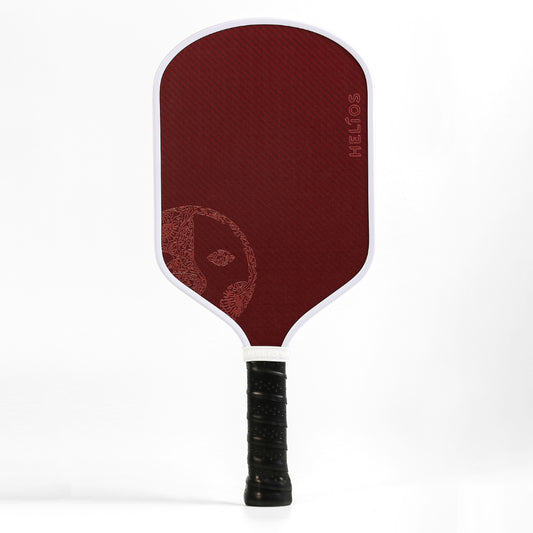
Helios Performance Paddles (Carbon Fiber, Reactive Core)
The Helios performance line checks every box:
- Toray T700 carbon fiber face for vibration distribution
- Reactive honeycomb core with 16-hour compression for consistent dampening
- A perforated anti-slip grip with built-in shock absorption.
- Add an organic overgrip for maximum grip circumference and tack. USAPA-approved, lifetime warranty.
Compare models on the performance paddle comparison page.
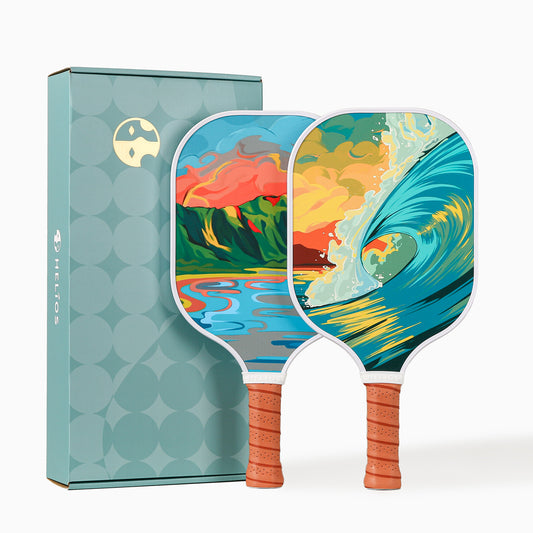
Helios Recreational Paddles (Fiberglass, Softer Feel)
For players who want the softest contact feel, the recreational line uses fiberglass faces that flex more at contact. The softer response reduces the sharpness of the vibration pulse reaching your arm. A good match for players recovering from tennis elbow who are easing back into play.
Engage Pursuit Pro1
A premium arm-friendly paddle with a specialized inner foam perimeter that absorbs vibration before it reaches the handle. 16mm core. Widely regarded as one of the best arm-protection paddles on the market.
Vatic Pro PRISM Flash
Best value pick for tennis elbow. Raw carbon fiber face, forgiving sweet spot, and a 14mm core that balances power and dampening. A strong entry point for players who want arm-friendly specs without the premium price.
ProKennex Black Ace Pro
ProKennex has been the go-to brand for arm-friendly racquet sports equipment for decades. The Black Ace Pro uses kinetic energy redistribution technology to absorb shock at the paddle head. A 16mm core adds additional dampening.
Technique Changes That Help Alongside Gear
The best pickleball paddle for tennis players transitioning from tennis is one that reduces the arm load they are accustomed to. But technique matters too.
- Shorten your backswing: A compact stroke generates less force at impact, which means less vibration.
- Stay at the kitchen line: Dinks and drops require less swing effort than baseline drives.
- Use your body, not your arm: Rotate your torso on groundstrokes instead of muscling the ball with your forearm.
- Take breaks: Fatigue increases grip tension and makes every contact harsher on the arm.
Protect Your Arm, Stay on the Court
A paddle is not a treatment for tennis elbow. If pain persists for more than 2 to 3 weeks after switching equipment and adjusting technique, see a sports medicine doctor or physical therapist. Tennis elbow is treatable, but it becomes chronic when you push through it.
What equipment can do is change the variables: thicker core, larger grip, vibration-dampening materials, and a sweet spot that forgives off-center hits. Get those right and your arm absorbs less shock on every contact.
Browse the Helios collection for paddles, overgrips, and sets engineered with vibration-dampening built into every layer.
Frequently Asked Questions
What is the best paddle spec for tennis elbow?
A 16mm core thickness with a carbon fiber or Kevlar face, grip circumference of 4.25 to 4.5 inches, and a swing weight between 100 and 115. Avoid 13mm thermoformed power paddles if you are experiencing arm pain.
Is a lighter paddle better for tennis elbow?
Not necessarily. A very light paddle (under 7.3 oz) lacks the mass to absorb the ball's impact, which means more vibration reaches your arm. A moderate weight (7.5 to 8.0 oz) with a thick core is generally better than an ultralight paddle for arm comfort.
Does carbon fiber or fiberglass feel better on a sore arm?
Both help in different ways. Carbon fiber distributes vibration across a wider area, reducing peak shock. Fiberglass flexes more at contact, producing a softer feel. Kevlar offers the most vibration reduction of all three. Try fiberglass or Kevlar if carbon fiber feels too crisp on your arm.
How does grip size affect tennis elbow?
A grip that is too small forces you to squeeze harder, which overloads the extensor tendons. Increasing grip circumference by 1/16 to 1/8 inch (one to two overgrip layers) lets you hold the paddle securely with significantly less pressure, reducing the strain on your elbow.
Should I stop playing pickleball if I have tennis elbow?
Not necessarily, but you may need to reduce volume and intensity while your arm heals. Switch to a thicker-core, arm-friendly paddle, increase your grip size, and focus on a soft game (dinking and drops) rather than hard drives. If pain persists beyond 2 to 3 weeks despite equipment and technique changes, see a medical professional.
What is the best pickleball paddle for tennis players with arm issues?
Tennis players transitioning to pickleball often carry over habits (long backswing, heavy topspin, tight grip) that load the arm harder than pickleball requires. A 16mm core paddle with a fiberglass or Kevlar face, combined with a built-up grip and compact stroke technique, reduces the arm strain that tennis players are most prone to in pickleball.