Best Pickleball Paddle for Control in 2026: Top Picks for Dinking and Placement

Power paddles get the headlines. Control paddles win the matches. If your game is built on dinks, drops, resets, and making the other team hit one more ball than they want to, the paddle in your hand needs to prioritize touch over pop.
The best pickleball paddle for control in 2026 is not the one with the highest power rating turned down. It is a paddle designed from the core out for predictability, dwell time, and a sweet spot that forgives the shots you barely mis-hit. Here is what to look for and which paddles deliver it.
What Makes a Paddle a Control Paddle
Control is not a single spec. It is the result of several design choices working together. Every paddle in the Helios line incorporates these elements, but here is how the broader market defines the category.
| Spec | Control Paddle Profile | Power Paddle Profile |
|---|---|---|
| Core thickness | 16mm or thicker | 11 to 14mm |
| Sweet spot size | Large, forgiving on off-center hits | Concentrated, rewards center contact |
| Dwell time | High (ball stays on face longer) | Low (ball rebounds quickly) |
| Face stiffness | Moderate (some flex) | High (rigid, snappy) |
| Swing weight | 100 to 115 (lighter swing) | 115+ (heavier swing) |
| Best for | Dinks, drops, resets, placement | Drives, serves, power shots |
The 16mm core is the defining spec. At 16mm, the ball stays in contact with the face for fractionally longer than on a 13mm core. That extra dwell time is what gives you the ability to steer, angle, and place your shots with precision instead of just launching them.
How Spin and Control Work Together
The best pickleball paddles for spin and control share a trait: textured faces that grip the ball during contact. Spin is not the opposite of control. It is a component of it. Topspin on a third-shot drop makes the ball dive into the kitchen. Backspin on a dink keeps the bounce low. Slice on a reset changes the angle and pace.
Carbon fiber faces generate more spin than fiberglass because the tighter weave creates more microscopic friction points. Helios performance paddles use Toray T700 carbon fiber with a particle-printed finish that extends surface grit life. That means the spin performance holds over months, not just the first few sessions.
For players who want spin with a softer touch, the recreational line uses fiberglass faces that flex slightly at contact. Less spin than carbon fiber, but more cushioned feel on soft exchanges at the kitchen.
The Best Control Paddles of 2026
Every paddle on this list prioritizes touch, dwell time, and predictable response. Listed by standout trait, not ranked.
Helios Performance Paddles
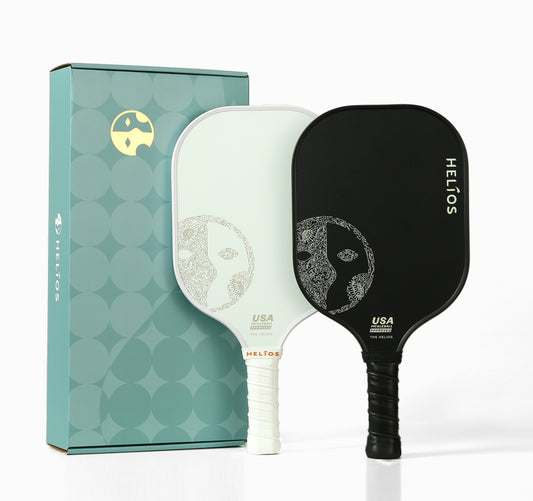
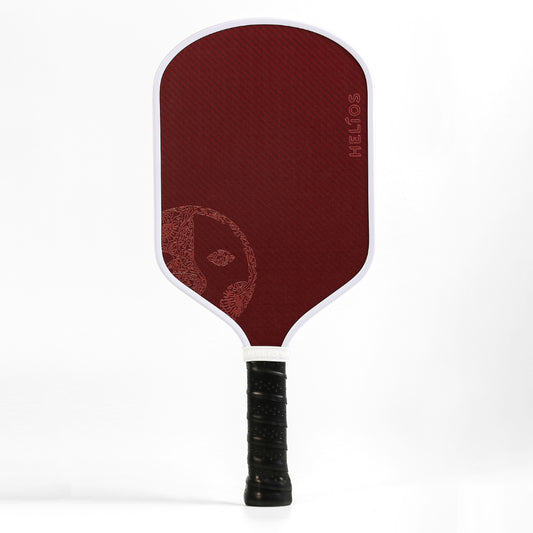
The Helios performance collection uses a reactive honeycomb polypropylene core compressed over 16 hours. That compression creates uniform cell density across the face, which means consistent energy return whether you hit dead center or slightly off-axis. The Toray T700 carbon fiber face adds spin control and precise feedback. Multi-layer carbon construction broadens the sweet spot beyond what single-layer faces deliver. USAPA-approved, lifetime warranty. Compare models on the performance comparison page.
Six Zero Ruby
One of the most talked-about control paddles in 2026. Plush feel, elite dwell time, and soft resets that make the ball seem to pause on the face before going where you point it. The Ruby rewards patient, placement-first play. Popular among high-level doubles players.
CRBN TruFoam Genesis
The first CRBN paddle with a 100% foam core. Maximum dwell time is the headline feature. Every reviewer mentions it. The foam absorbs energy so completely that drives feel dampened, but dinks, drops, and resets feel impossibly precise. For pure dinkers who build every point from the kitchen line.
Selkirk LUXX Control Air Invikta
An elongated shape that gives you reach and control in the same frame. The InfiniGrit surface lasts longer than raw carbon, keeping spin consistent across months of play. The paddle balances forgiveness and stability, which means off-center shots still go where you intended. A strong pick for players who want control from the kitchen line and length for transition zone resets.
JOOLA Scorpeus CFS 16mm
Designed with input from Collin Johns. The Carbon Charged surface gives a crisp, responsive feel while the wide-body shape maximizes the sweet spot. Good spin generation with a control-first response. Forgiving enough for developing players, precise enough for tournament doubles.
11SIX24 Jelly Bean Series
The best value control paddle in 2026. Affordable, forgiving, and designed for players who want to build their soft game without spending $200+. A recognized sub-category in 2026: control with offensive potential for players who construct points with placement and finish with speed.
What to Look For When Shopping
Beyond the specific picks, here is a checklist for finding control in any paddle you demo.
Core Thickness: Start at 16mm
- This is non-negotiable for control-first play.
- A 16mm core gives you the dwell time and dampening that make dinks, drops, and resets feel intentional rather than reactive.
- Going thinner (13mm to 14mm) adds power but removes the cushioned response that defines a control paddle.
Shape: Widebody or Hybrid
- Widebody paddles offer the largest sweet spot. Hybrid shapes (between widebody and elongated) balance sweet spot size with reach.
- Pure elongated paddles add length but narrow the hitting area.
- For kitchen-line play where touch matters most, widebody or hybrid is the safer choice.
Swing Weight: 100 to 115
- Lower swing weight means the paddle moves faster through the air with less effort.
- At the kitchen line, quick hands beat heavy hands.
- A swing weight above 115 starts to feel sluggish during fast dink-and-volley exchanges.
Face Texture for Spin
- Control without spin is incomplete.
- A textured face (carbon fiber or long-lasting grit coatings) lets you shape every shot.
- The Helios particle printed finish maintains grit over a longer playing life than raw carbon alone.
How to Test a Paddle for Control
Before committing, test any paddle with these three shots:
- Dink from the kitchen line to a target cone across the net: If you can hit 7 out of 10 within a paddle-length of the target, the paddle has the touch you need.
- Third shot drop from the baseline into the kitchen: A control paddle lets you place the ball softly with margin over the net.
- Reset against a hard drive: Feed yourself a fast ball and try to softly redirect it into the kitchen. The paddle should absorb the pace without popping the ball up.
If all three feel predictable and intentional, the paddle fits your control game.
Let the Paddle Do Less So You Can Do More
The best pickleball paddle for control does not make your shots fancier. It makes them more reliable. Every dink goes where you aimed. Every drop clears the net by the margin you chose. Every reset absorbs the pace you needed to take off. That consistency wins more points than any power paddle ever will.
A fresh overgrip and the right accessories round out a control setup. Browse the Helios collection for paddles and sets built for players who win with placement, not power.
Frequently Asked Questions
What makes a pickleball paddle good for control?
A 16mm or thicker core for dwell time, a large sweet spot for forgiveness, moderate face stiffness for touch, and a swing weight between 100 and 115 for quick hands. Control paddles prioritize predictable ball response over raw power.
Is a 16mm or 13mm paddle better for control?
16mm. The thicker core keeps the ball in contact with the face fractionally longer, giving you more ability to steer and place shots. A 13mm core prioritizes power and quick rebound, which works against the touch and feel that control play demands.
What is the best pickleball paddle for spin and control?
A paddle with a textured carbon fiber face and a 16mm core. The texture generates spin at contact while the thick core provides the dwell time and dampening that define control. The Helios performance line, Six Zero Ruby, and Selkirk LUXX all deliver this combination.
Can beginners use a control paddle?
Yes. Control paddles are arguably the best starting point for beginners because the forgiving sweet spot and predictable response build good habits. The 11SIX24 Jelly Bean Series is specifically designed as an affordable control paddle for developing players.
Does a control paddle sacrifice too much power?
Modern control paddles in 2026 retain more offensive capability than older models. Paddles like the JOOLA Scorpeus CFS and the Selkirk LUXX offer control-tier touch with enough pop for drives and put-aways. You give up some peak power, but you gain consistency on every other shot.
How do I test whether a paddle has enough control for my game?
Test three shots: dink to a target from the kitchen, third shot drop into the kitchen from the baseline, and a reset against a hard drive. If all three feel predictable and you can place the ball where you intend with consistent margin, the paddle has the control you need.