What's the Best Age for Kids to Start Playing Pickleball?

Pickleball is everywhere right now, and it is not just an adult thing anymore. Parks, recreation centers, PE classes, and backyard driveways are full of kids swinging paddles and chasing plastic balls across makeshift courts. If you are a parent watching all of that and wondering, "when can kids start pickleball," the answer is probably earlier than you think.
The beauty of pickleball is that it was designed to be accessible. The court is small, the equipment is lightweight, the rules are straightforward, and the underhand serve removes the frustrating overhead mechanics that keep young players stuck in other racquet sports. All of that adds up to a game that children can genuinely play, not just attempt, at a surprisingly young age. But the experience looks different at five than it does at eight, and different again at twelve. Let us walk through it age by age so you know exactly what to expect and when to get your child started.
A Quick Look at the Right Pickleball Age to Start
Here is the honest answer: there is no official minimum age for pickleball. If your child can hold a paddle and track a ball, they can start learning. Most youth coaches and organizations agree that kids as young as four or five can begin familiarizing themselves with the basics, even if full-game play comes a little later. The key is matching your expectations to their developmental stage. A five-year-old is not going to keep score or follow the double-bounce rule perfectly, and that is completely fine. What matters at that age is movement, fun, and building a positive relationship with physical activity.
Let us break it down by age group so you can see exactly what each stage looks like.
Ages 4 to 5: Paddle Play and First Contact
At this stage, the goal is not pickleball. The goal is paddle play. Children between four and five are still developing their gross motor skills, balance, and hand-eye coordination. Handing them a lightweight paddle and a soft ball and letting them hit back and forth is the perfect introduction to racquet sports in general.
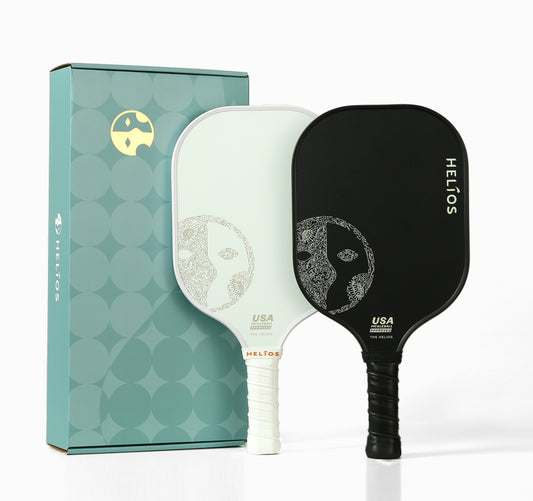
Keep the court small. Forget regulation dimensions and set up a mini zone with cones or chalk lines in the driveway or backyard. Focus on getting the ball over the net (or a rope strung between two chairs) and celebrate every contact. At this age, repetition builds confidence, and confidence is the single biggest predictor of whether a child sticks with a sport. A lighter paddle makes a huge difference here. Our Helios Beginner Pickleball Paddle Set is a popular choice for families because the balanced design gives small hands a responsive feel without unnecessary weight.
Ages 6 to 8: Real Rules, Real Rallies
Between six and eight is where things start to click. Children in this age range can grasp the basic rules of pickleball: underhand serve, double-bounce rule, scoring to 11, and the concept of the non-volley zone (the kitchen). They can sustain rallies, move laterally with intent, and begin developing actual stroke mechanics rather than just swatting at the ball.
When can kids start pickleball in a meaningful, game-like way? For most children, this window is the sweet spot. The combination of improved coordination, cognitive development, and social readiness means they can play with partners, follow rules, and experience the satisfaction of winning a point through their own effort. It is also the age when many schools and recreation programs introduce pickleball. Stevenson High School partnered with Helios to bring paddles into their student activities, and programs like that are increasingly starting younger, reaching elementary-age players with modified courts and lighter equipment.
Drills at this age should focus on consistency: how many times can you hit the ball back and forth without a miss? Set targets on the court for accuracy practice. Introduce the service as a routine. The underhand motion in pickleball is natural for young arms and does not carry the shoulder and elbow stress that an overhead tennis serve would.
Ages 9 to 11: Strategy, Competition, and Confidence
Children between nine and eleven are ready for the full game. Their coordination is sharp enough for intentional shot placement, their stamina can handle full matches, and their brains are wired for the strategic thinking that makes pickleball so engaging. Dinks, drops, volleys, and court positioning all become part of the conversation at this level.
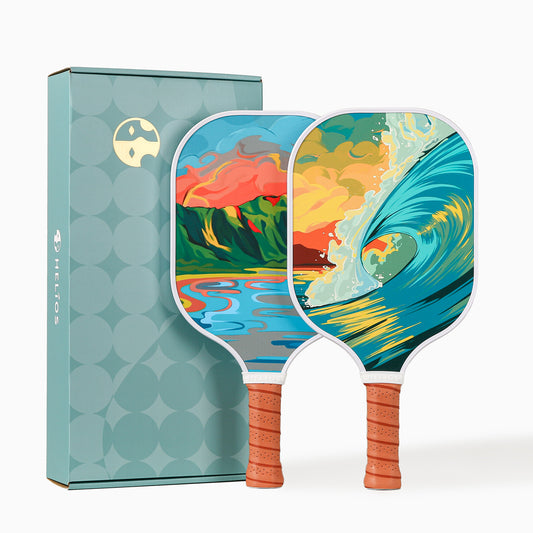
For families with kids in this age range, now is the time to invest in quality equipment that matches their developing skills. Our Selene Swift Pickleball Paddle Set offers a step up in performance for players who have outgrown beginner gear, while the Gaia Nature Set combines beautiful design with the kind of balance and control that young athletes can feel in every swing.
Many local clubs and community centers now offer junior pickleball leagues and clinics for this age group. USA Pickleball has also expanded its youth programming, and junior tournaments are popping up across the country. If your child is competitive by nature, this is the stage where they can start channeling that drive into organized play.
Ages 12 and Up: The Full Competitive Pathway
Once kids hit twelve, most can play pickleball at a level that holds its own with adults. Their reflexes are quick, their power is building, and their understanding of game strategy is sophisticated enough for competitive play. Teens who pick up pickleball at this age often progress rapidly because they already have the physical literacy and cognitive maturity to absorb coaching quickly.
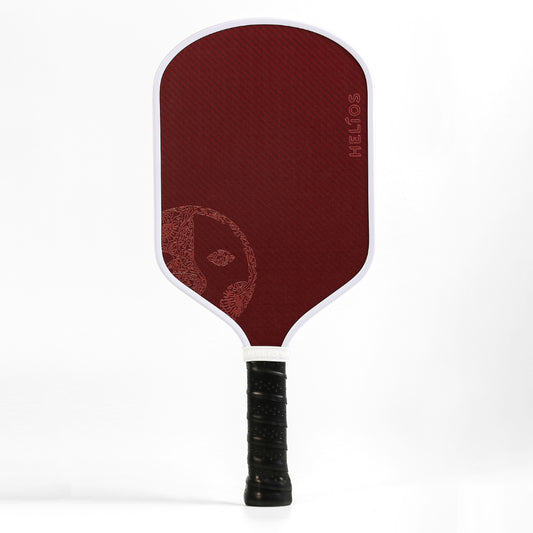
For this age group, paddle selection should match their intensity. The Helios flagship paddle, The Astraeus, and The Apollo all deliver the performance-grade balance, control, and power that serious young players need. Paired with our Organic Overgrip for a customized grip feel, these paddles grow with a teen's game rather than holding them back.
College pickleball clubs are also expanding rapidly. While pickleball is not yet an officially sanctioned NCAA sport, club programs exist at hundreds of universities, and the USA Pickleball Grant Program provides funding for student groups. Starting in the early teen years gives players a real head start if they want to play at the collegiate club level.
Why Starting Young Pays Off
Regardless of the exact pickleball age to start, earlier exposure to racquet sports creates lasting benefits. Children who play pickleball develop hand-eye coordination, lateral agility, reaction speed, and spatial awareness, all of which transfer directly to other sports and physical activities. The social component matters just as much. Pickleball is primarily a doubles game, which means kids learn teamwork, communication, and sportsmanship in every session.
Perhaps most importantly, pickleball is a sport children can play for life. It does not require the physical intensity that sidelines athletes in their thirties or forties. A child who picks up a paddle at six can still be playing at sixty, which means you are not just introducing a hobby. You are building a lifelong habit of active, social, joyful movement.
How to Get Your Child Started
Getting into pickleball requires very little. A paddle, a few balls, and access to a court are all you need. Courts are appearing in parks, recreation centers, and school gymnasiums at an incredible pace. Many tennis courts are now lined for dual use as well, so check your local options.
For equipment, our Helios Beginner Pickleball Paddle Set is designed to get families on the court with everything they need. Pair it with our On The Court Tote Bag to carry it all, and you are ready to go. Start with short, playful sessions. Let your child set the pace. If they are having fun, they will come back. And once they come back, the skills take care of themselves.
Frequently Asked Questions
When can kids start pickleball?
Children as young as four or five can begin with paddle play and basic ball contact. Most kids are ready for real game play with simplified rules between ages six and eight, and full competitive play typically starts around nine to eleven.
What equipment do young children need to play pickleball?
A lightweight paddle and a few pickleballs are all that is required. The Helios Beginner Pickleball Paddle Set is a popular family starter option that includes everything needed to begin playing immediately.
Is pickleball safe for young kids?
Pickleball is one of the safest racquet sports for children. Most shots are hit below shoulder height, reducing stress on developing joints. The smaller court limits the explosive sprinting that can strain young bodies, and the lightweight equipment minimizes wrist and arm fatigue.
What is the right pickleball age to start competing?
Most kids are ready for organized junior clinics and local tournaments between the ages of nine and eleven. USA Pickleball has expanded its youth tournament programming significantly, and many communities now offer junior leagues for various age brackets.
Can pickleball help kids transition to other sports?
Yes. The hand-eye coordination, footwork, reaction speed, and court awareness developed in pickleball transfer directly to tennis, badminton, table tennis, and other racquet sports. Many coaches recommend pickleball as a first racquet sport because the skills it builds create a strong athletic foundation.